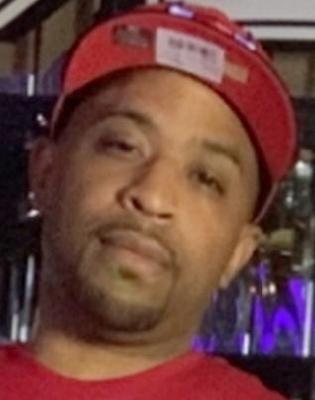
Oscar Ochoa-Tello, a 46-year-old man and father from Beach Park, Illinois, began his last morning like countless others, stepping into the chilly pre-dawn darkness to warm up his car before work. He sat in the driver’s seat in the driveway of his home on the 38400 block of North Sheridan Road, the engine idling around 5:20 a.m., when the quiet of the neighborhood was shattered by a burst of gunfire. A relative, later identified in court records as his son, rushed outside to find him gravely wounded, then sped him to Vista Medical Center East in Waukegan, where doctors fought to stabilize him before he was airlifted to Advocate Condell Medical Center, a Level 1 trauma hospital. Despite intensive care and emergency surgeries, Ochoa-Tello succumbed to complications from multiple gunshot wounds that Saturday afternoon, days after the ambush outside his own home.
In the hours after the shooting, detectives from the Lake County Sheriff’s Office began piecing together what had happened in the dim light of that early morning. Shell casings were conspicuously absent at the scene, a clue later tied to a revolver believed to have been used in the attack. Investigators canvassed the area and obtained surveillance footage that showed a suspicious vehicle creeping slowly through the neighborhood around the time of the shooting. Their attention sharpened when Ochoa-Tello’s son told them he had noticed a similar Saturn the previous morning acting oddly near the family home. He had followed the car at a distance and taken photographs of it, uneasy but unaware that the vehicle was part of a plan that would unfold fatally the next day. Those images gave detectives a crucial starting point.
Using the photos and neighborhood surveillance, detectives captured a clear license plate and turned to the Flock Safety automatic license plate reader network to trace the car’s movements. The system confirmed that the vehicle had been in the Beach Park area both on the day before and the morning of the shooting, behavior that stood out because the car was registered to an address across the state line in Mount Pleasant, Wisconsin. Investigators alerted law enforcement agencies across the region, and officers in Mount Pleasant soon spotted the owner of the suspect vehicle, 28-year-old Cristian Noel Ruvalcava Torres, also known under the alias Cristian N. Ruval-Cavatorres. He was stopped while driving a different vehicle and initially taken into custody on a suspended-license charge, then held as Lake County detectives traveled to Wisconsin to question him about the shooting.
During interviews with detectives, Ruvalcava Torres admitted that he had traveled to Beach Park in the Saturn and approached Ochoa-Tello as the victim sat in his warming car. He told investigators he fired multiple shots at close range before fleeing and later led them to the Saturn, which had been hidden in a barn, and to a revolver believed to be the murder weapon. Detectives also recovered a cellphone he allegedly used to communicate with the person who had hired him. In subsequent court proceedings, prosecutors revealed that Ruvalcava Torres said he had been paid $1,200 to kill Ochoa-Tello and had even driven to the neighborhood the day before the shooting but backed out at the last moment, only to return the next morning to complete the contract. Authorities indicated they had found evidence of cash payments made shortly after the killing, consistent with his account of being compensated for the hit.
As the investigation widened, detectives focused on finding the person they believed had ordered the killing. Within days, they tracked a second suspect to North Chicago, where officers moved in on the 1600 block of Park Avenue and took a man into custody. His name and precise role have not been made public, but authorities describe him as the alleged mastermind who hired Ruvalcava Torres to carry out the shooting. Separate reports suggest that investigators have been examining possible links between the murder and a drug-related killing in Mexico, indicating that the motive may reach beyond neighborhood disputes or personal grudges into the realm of organized criminal debt or retaliation. While those potential connections remain under investigation, the picture emerging for residents is one of a carefully arranged, paid execution intruding into the routine of a man who was simply getting ready for work.
In the wake of Ochoa-Tello’s death, charges against Ruvalcava Torres were intensified. After his initial arrest, he was charged with attempted first-degree murder, aggravated battery with a firearm, and aggravated discharge of a firearm, but as soon as Ochoa-Tello died, prosecutors moved to file full murder charges, emphasizing that this was not a random crime but a cold, calculated killing-for-hire. Ruvalcava Torres, held first in the Racine County Jail on a federal immigration hold before being extradited to Lake County, now faces the possibility of spending the rest of his life in prison if convicted. The second suspect remains in custody as investigators and prosecutors work to build a case that explains who wanted Ochoa-Tello dead and why.
Neighbors describe the scene that morning as surreal and horrifying: the sound of rapid gunshots slicing through the early-hour silence, a relative frantically rushing the wounded man to the hospital, and then days of uncertainty as word spread that he was clinging to life in an intensive care unit. For several days, residents watched patrol cars and unmarked vehicles come and go, then saw the story unfold as authorities announced that not only had the shooting been targeted, but that two suspects had already been tracked down and arrested across city and state lines. The revelation that someone had allegedly paid a stranger from another state to sit outside their quiet street and wait for the right moment to kill a neighbor has left the Beach Park community shaken, a reminder of how the most ordinary routines—a man warming up his car before dawn—can be pierced by violence planned far beyond the view of those who live nearby.