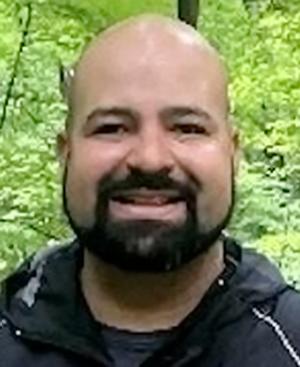
Savion Johnson, a 24-year-old man from Lorain, Ohio, was killed in the early hours of Thursday, November 6, 2025, in what police described as an accidental shooting inside a home on the city’s east side. Officers were called to a residence near East 35th Street after a report that a man had been shot in the head, and the scene they arrived to was quiet but tense, with the house and surrounding block quickly sealed off by patrol cars and crime scene tape.
Inside, investigators found that the shooting had happened while several people were together in the home and a firearm was being handled, turning what had been an ordinary gathering into a sudden and irreversible tragedy.
Police dispatch logs and local reporting indicate that officers were sent to the address at about 8:40 a.m., after someone in the residence called for help. Responding officers ordered the occupants to come out with their hands visible and then entered carefully to secure the weapon and check on the victim. Paramedics from LifeCare pronounced Savion dead at the scene, the single gunshot wound leaving no chance for lifesaving measures. In the course of their search, officers recovered several firearms that were described as legally owned, gathering them as evidence while detectives worked to reconstruct how a weapon meant to be under control ended up discharging inside a crowded room.
Attention quickly focused on the man believed to have fired the shot, Savion’s cousin, 22-year-old Anthony D. Wilson of Lorain. According to police and jail records, Wilson was taken into custody later that day and booked into the Lorain County Jail on a charge of involuntary manslaughter, a first-degree felony, in connection with the shooting. The records show he was arrested at 5:59 p.m. on November 6 and held without bond pending an initial appearance in Lorain Municipal Court, scheduled for the following afternoon. Other summaries of the incident describe the case as involving reckless handling of a firearm and note that Wilson has also been identified in public reports as facing a reckless homicide charge, underscoring that prosecutors are treating the shooting as a serious criminal matter even as it is still characterized as accidental. At the same time, investigators have emphasized that the case remains open, with detectives continuing to interview witnesses and review forensic evidence to determine exactly how the gun was handled and why it went off.
In the days that followed, the sterile language of police reports stood in stark contrast to the way Savion was remembered by those who knew him. An online memorial on a national gun violence website quickly filled with virtual candles and short messages, as friends, relatives, and community members tried to put into words the shock of losing someone so young to a preventable shooting. Local coverage described a neighborhood struggling to process how a familiar family home had become the site of a fatal incident, and how a moment of carelessness with a weapon had shattered two branches of the same family at once—one mourning a son, the other watching another young man sit in jail awaiting his day in court.
Arrangements for Savion’s funeral were handled through a Lorain funeral home, which noted that he “passed away unexpectedly” on that Thursday and announced services at Sacred Heart Chapel on Pearl Avenue, where loved ones could gather for a morning visitation followed by a Mass of Christian burial. There, amid prayers, music, and shared memories, mourners tried to reclaim his story from the brief headlines that had reduced his life to a line about an accidental shooting. Even as the criminal case moved forward and investigators continued their work, the people closest to him were left to live with the quieter, longer echoes of that morning—an empty chair at family gatherings, the lingering sense that a different decision about a firearm could have changed everything, and the hope that telling the story of what happened might spare another family from standing outside a similar house, behind another strip of yellow tape.