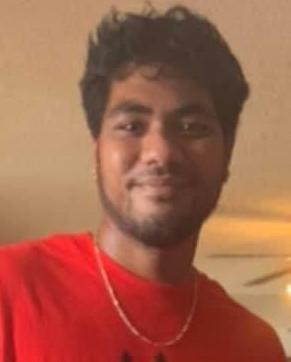
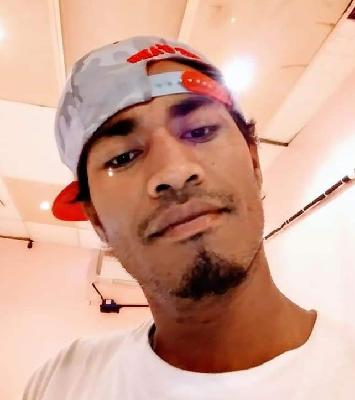
Jonnaven Monalim, a 55-year-old man from Kapolei, slipped out of his Ae Street home on the evening of November 5, 2025, telling loved ones that he was heading out to pick up money he had won from gambling and that he was with his friend, 42-year-old Clarence Luke. It was the kind of late-night errand that didn’t seem unusual for someone who moved in circles where cash, favors, and old histories often overlapped. When he stopped responding to calls and messages, worry slowly turned into fear.
By Friday afternoon, Honolulu police had opened a missing person case and issued an alert, noting that he had last been heard from on Wednesday night and had not come home.
That same Friday, November 7, the search for him took a grim turn. Late that night, officers were called to a dirt road near the Waipio Soccer Complex, in the Waipahu area, where a man’s body lay off the roadway with clear gunshot wounds. Hours earlier his disappearance had still been a mystery; now, the crime scene lights and evidence markers cast stark shadows over the brush and gravel. The remains were in such a condition that, according to his longtime attorney, authorities relied on fingerprints rather than a visual identification, something the attorney associated with especially violent, personal attacks or “payback” killings. Two days later, on November 9, the Medical Examiner’s Office formally confirmed that the body was Jonnaven’s, and police announced that the Homicide Detail was actively investigating his death. An autopsy determined that he had died of multiple gunshot wounds, fixing the tragedy to that Friday night.
For many in Hawaiʻi, his name was already familiar. Decades earlier, Jonnaven had stepped into a dangerous spotlight as a government informant in the notorious 2004 Pali Golf Course shooting, a gun battle tied to an illegal gambling ring. He had worn a wire for federal agents and helped secure life-without-parole sentences for his cousin Rodney Joseph Jr. and another man, Ethan “Malu” Motta, a decision that, according to his attorney, had left him with enemies and complicated relationships in the years since. He also had a criminal record dating back to the 1980s, and those who knew him described a “street” savvy man who tended to be cautious about whom he met and where. That history made the news of his death feel like the closing of a long, violent chapter, yet investigators publicly stressed there was no evidence linking the shooting that killed him to his past cooperation in the Pali Golf Course case.
As detectives retraced his last movements, the evening of November 5 came into sharper focus. Using cell phone GPS data, police reconstructed a route that began at his home in Kapolei and led to an industrial stretch of Pearl City, to Waihona Street, where a witness later recalled seeing two men beside a dark-colored pickup truck. One of them, identified as Jonnaven, appeared to be defending himself, bleeding from his forehead and pleading with the other man to stop. As the witness drove away, he heard two gunshots echo behind him. The next day, loved ones who were trying to track Jonnaven’s phone were drawn to that same area, where police discovered blood on the sidewalk, a hearing aid that belonged to him, shell casings, and other signs that a shooting had taken place there.
Investigators turned quickly toward the man Jonnaven had said he was with: Clarence Luke. In initial statements, Luke told officers that he had picked Jonnaven up, chatted with him at a park, and dropped him back at his Kapolei home by 8 p.m., implying that whatever happened afterward did not involve him. But the electronic trail told a different story. According to police, GPS records showed the two phones traveling together well past that time, from Kapolei to the Pearl City industrial area, and then along major roadways including the H-1 and H-2 freeways, Kunia Road, and Fort Weaver Road. Detectives later said that the data demonstrated Luke’s original account was false and placed him in the locations that became central to the case.
Physical evidence began to accumulate as well. Surveillance footage captured a man in an Alpha Construction uniform—Luke’s employer—disposing of items in a dumpster behind a business called Encore Collision in Waipahu. When confronted, a witness recalled, the man appeared anxious and nervous. Inside the dumpster, investigators recovered a hard hat from Alpha Construction and a Walmart bag containing a black T-shirt and pants that matched what Luke had been seen wearing on November 5. Luke’s girlfriend—who was also one of Jonnaven’s sisters—identified the man in the footage as Luke, confirmed that the truck shown belonged to him, and said the clothing looked like his usual attire. Testing later showed that DNA on the shirt was Jonnaven’s, tying those discarded garments directly to the victim.
As investigators pieced together motive, a picture emerged of longstanding tension over money between the two men. Police and local news reports indicated that Jonnaven was believed to have been involved in running a gambling house and that he was owed a substantial sum—tens of thousands of dollars—in unpaid debts. Luke, according to police, both assisted him in collecting some of those debts and was himself deeply in arrears to others, creating a fraught mix of loyalty, obligation, and financial pressure. Family members told reporters that Jonnaven had been ignoring Luke’s calls in the days before his disappearance and that there had been tension between them, suggesting a friendship that had soured under the weight of money and mistrust. Police later said they believed his killing stemmed from a dispute over money rather than any lingering connections to the old gang case.
On November 11, 2025, after days of gathering GPS data, surveillance footage, witness statements, and forensic results, Honolulu Police Department homicide detectives secured a warrant for Luke’s arrest in connection with Jonnaven’s murder. A judge approved the warrant and set bail at $1 million. The next morning, November 12, specialized HPD units tracked Luke down in Waipahu and arrested him on suspicion of second-degree murder; prosecutors later formally charged him with that offense along with using a firearm in the commission of a separate felony. He was brought before the court, with another appearance scheduled as the legal process moves forward.
Even with a suspect in custody, the story of Jonnaven Monalim’s final days remains under active investigation. Detectives continue to examine his gambling activities, his network of associates, and the chain of decisions that led him to trust a man he had apparently begun to keep at arm’s length. For his family and for a public that once saw him as the brave insider who helped expose a deadly gang shooting, his killing feels like a grim coda—a man who tried to leave one violent world behind, only to be drawn into another confrontation on a dark roadside, far from home, where the final act played out with no one there to stop it.