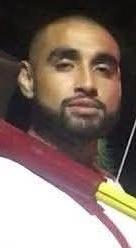
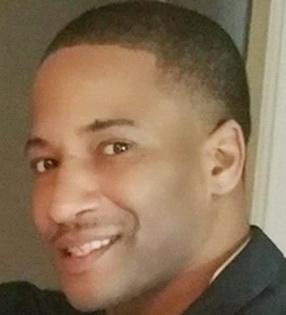
David Mireles, a 37-year-old man from Dallas, spent his final evening in the Cedar Crest area, just south of the city’s zoo, on November 10, 2025. As daylight faded, a call came into Dallas Police reporting gunfire in the 400 block of South Fleming Avenue, a residential stretch that sits in the broader Oak Cliff area. Responding officers arrived around 7:35 p.m. and found Mireles wounded from at least one gunshot near the street.
Dallas Fire-Rescue crews rushed him from the scene to a nearby hospital, but despite their efforts, he did not survive his injuries.
In the hours that followed, the address on South Fleming Avenue was transformed from an ordinary block into the center of a homicide investigation. Police cordoned off the area, documenting the scene and searching for physical evidence that might explain what had happened in those brief, violent moments before the 911 call. The surroundings—so close to the Dallas Zoo and the everyday traffic of people passing through Cedar Crest—stood in stark contrast to the sudden loss of life, underscoring how quickly a familiar neighborhood can become the backdrop to tragedy.
Details released by authorities in the days after the shooting remained sparse, adding to the sense of unease. Investigators confirmed that Mireles had been shot near the location where he was found, and that his case would be recorded under Dallas Police Department case number 162015-2025. Beyond that, officials did not publicly disclose a motive, the circumstances that brought him to South Fleming that night, or whether there had been any confrontation or warning before the gunfire erupted. The unanswered questions left a gap that could only be filled by whatever the investigation might eventually uncover.
The broader city context made the loss feel even heavier. That Monday, Dallas authorities were already strained by multiple violent incidents, including other homicides reported across different neighborhoods. In news coverage that grouped Mireles’s killing with these separate cases, police emphasized that they did not yet know whether any of the incidents were connected. For Mireles, reporters could only repeat the same limited facts: he had been shot near South Fleming Avenue, taken to the hospital, and pronounced dead. No narrative of his life, no personal history, only a brief outline of how it ended.
As of the latest public reports, investigators stated that a suspect had not yet been identified. Police made repeated appeals to the community, asking anyone who might have seen or heard something that night to come forward. Detective J. Castillo was named as the lead contact, with a direct phone number and email address circulated through official channels and local news outlets, a reminder that the case was still very much active and dependent on the eyes and ears of nearby residents. Authorities also stressed that even small, seemingly insignificant details—an unfamiliar car, a sudden argument, the sound of shots in the distance—could help reconstruct the moments leading up to the shooting.
In memorial listings that record those lost to gun violence across the country, Mireles’s name appears with the barest of descriptors: his name, his age, the city where his life ended, and the date—November 10, 2025. There, he is one of many, each entry representing a story cut short. Yet in Dallas, on that block of South Fleming Avenue, his death is more than a statistic; it is the focal point of an ongoing search for answers, a homicide file that remains open until someone steps forward, evidence emerges, and the person responsible is finally identified. Until then, the case of David Mireles lingers in that space between a life lived and a justice not yet found.