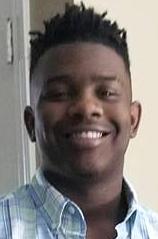
James Edward Hubbard Jr., a 50-year-old Black man from Forrest City, Arkansas, left his loved ones and neighbors searching for answers after he was shot to death in the early hours of November 13, 2025, only steps from his home. What should have been an ordinary night on South Rosser Street turned into a crime scene before dawn, as patrol officers were dispatched to check on an unresponsive person inside a car parked outside an apartment complex not far from the intersection with St.
Francis Avenue.
According to police and local news reports, officers arrived around 3:06 a.m. to find Hubbard inside a black Chevy Malibu sitting in front of his residence, slumped over in the driver’s seat. He had suffered a single gunshot wound to the head, with investigators later specifying that the shot entered near the right temple, and two spent shell casings were discovered on the passenger-side floorboard. The vehicle, still and silent in the dim light of the parking area, became the center of a rapidly unfolding homicide investigation as officers secured the scene and called in detectives and the coroner. Not long after, the St. Francis County coroner pronounced Hubbard dead at approximately 4:15 a.m., confirming that the gunshot wound was fatal.
His death did not occur in isolation. Within the same 24-hour period, authorities in Forrest City were already dealing with another killing, a woman found dead at a home on Mann Street, and the community was suddenly confronted with the reality of two violent deaths in less than a day. The Forrest City Police Department publicly labeled Hubbard’s case a homicide and noted that it was the second such case in the city that week, heightening anxiety in a town more accustomed to quiet nights than to overlapping murder investigations. In the earlier killing, the victim’s daughter was arrested and charged with first-degree murder, a stark contrast to Hubbard’s case, where in the first days there were no immediate answers, no clear motive, and initially no named suspect at all.
In those first hours and days, detectives began the painstaking process of reconstructing what had happened before that 3:06 a.m. call. They canvassed the apartment complex and surrounding streets, collected shell casings and other physical evidence from inside the Malibu, and appealed to the public for information. Reports emphasized that tips from residents could be crucial, and the absence of early suspect information only deepened the unease in St. Francis County. Hubbard’s death quickly appeared on regional and national gun-violence trackers, which noted simply that he was “lost to gun violence” on November 13 in Forrest City, while local outlets carried more intimate details about the place and manner of his killing.
As the investigation continued, that silence around a suspect eventually broke. Within days, police announced that they had identified and located a man they believed was responsible. Local news reported that witnesses at the apartment complex helped place 54-year-old Jerome McDaniel of Madison at the scene around the time of the shooting. Early on a Saturday morning, November 15, officers took McDaniel into custody, and shortly afterward authorities confirmed that he had been charged with first-degree murder in connection with Hubbard’s death and was being held at the St. Francis County Detention Center. While the arrest brought a measure of movement in the case, police statements and subsequent coverage made clear that the investigation was still active, with no publicly disclosed motive and no detailed account yet of what, if any, relationship existed between Hubbard and the man now accused of killing him.
Behind the official reports and charges, the picture that emerges of James Edward Hubbard Jr. from tributes and obituary-style pieces is of someone whose presence woven into everyday life made his sudden absence especially painful. Community-focused outlets described him as a steady, warm-hearted figure whose kindness and quiet reliability left a lasting impression on those around him. Friends and neighbors recalled how he had a way of making people feel seen and understood, whether through a simple greeting, a shared laugh, or a patient ear when times were hard. After his death, residents gathered in homes, churches, and local meeting places to share stories, pray for his family, and try to make sense of a killing that had taken place right outside the place where he should have felt safest.
As Forrest City continues to process the shock of those November days, Hubbard’s name has come to symbolize both the toll of gun violence and the resilience of a community determined not to let him be remembered only as a case file. Vigils, online memorial pages, and quiet acts of support for his family all speak to an ongoing search for justice and healing. The investigation into his death, now centered on the man charged with his murder, moves forward through the courts, but for those who knew him, the deeper work lies in holding on to the memory of the life he lived before the gunfire on Rosser Street brought it to an end.