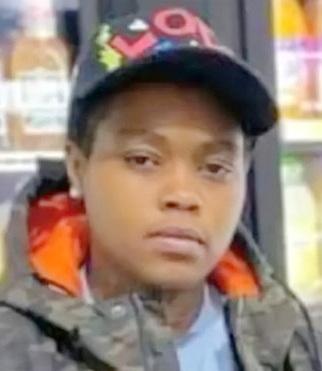
Tiffany Clerenia Adkins, a 42-year-old White/Caucasian woman from Marmet, West Virginia, was fatally shot shortly after midnight on May 27, 2025, outside a Sheetz convenience store in the 5600 block of MacCorkle Avenue in Charleston’s Kanawha City area. Adkins had stopped at the gas pumps, gotten out of her vehicle and begun walking toward the store entrance when she passed in front of a vehicle occupied by Charleston resident Jacob Fields.
A gunshot was fired from inside Fields’ vehicle, traveled through the front windshield and struck Adkins in the back of the head. She collapsed in the parking lot and was transported to a hospital, where she was pronounced dead. Investigators said Adkins and Fields did not know each other, and authorities found no evidence that they had argued or otherwise interacted before the shooting. Her family later described her as a beloved mother, sibling and friend whose death left an irreplaceable void, while thanking the community for its support and asking that law enforcement continue pursuing justice.
The case initially appeared to police to be a catastrophic firearms accident. Fields, who was 18 at the time, told investigators that he had been handling or wiping down his handgun while sitting in his vehicle at the gas pumps when it unexpectedly discharged. Based on that early account and the evidence available at the time, Charleston police arrested Fields on charges of involuntary manslaughter and wanton endangerment. He was arraigned and initially held on a $50,000 bond. That version of events changed dramatically when investigators reviewed surveillance footage from the Sheetz. According to the criminal complaint, the footage showed Fields looking in Adkins’ direction and waiting until she moved into the path of the firearm before raising a Glock Model 20 Gen 5 10mm pistol with both hands and pointing it toward her. Police said the footage showed a muzzle flash and the windshield shattering at the moment the shot was fired. Investigators said Fields later acknowledged having pointed the weapon after he was confronted with the surveillance evidence. Prosecutors concluded that the footage was inconsistent with the initial account of the gun simply discharging while it was being cleaned, and the case was upgraded to first-degree murder.
Fields remained the sole publicly identified suspect in Adkins’ death. In early June 2025, his attorney waived the preliminary hearing on the first-degree murder charge, sending the case forward to a Kanawha County grand jury and circuit court while Fields remained jailed without bond. In September, a Kanawha County grand jury indicted Jacob Isaah Fields on first-degree murder, wanton endangerment and use or presentment of a firearm during the commission of a felony. He pleaded not guilty to the murder charge in October. Bail remained a major issue as the prosecution and defense prepared for trial. A judge rejected a request for bond in July 2025 and again declined to release Fields in January 2026. At the January hearing, prosecutors argued that evidence concerning Fields’ familiarity with firearms and statements or material they believed showed a fascination with killing strengthened their theory that the shooting was intentional; Assistant Prosecuting Attorney Madison Tuck characterized the incident as a “thrill kill.” The defense continued to maintain that the shooting had been an accident.
The murder trial was repeatedly delayed. It was first moved after prosecution witnesses, including a detective and the doctor who conducted Adkins’ autopsy, were unavailable. A later continuance followed a change in Fields’ legal representation. By April 2026, another delay occurred after defense attorney Michael Del Giudice received a large quantity of evidence that had not previously been reviewed by the defense, including hundreds of jail-call recordings and transcripts, the 911 call and a computer-aided dispatch report. The defense said some of the material could contain exculpatory information, and the 911 evidence helped identify a previously unknown person seen at the scene. Although prosecutors had publicly maintained that they were prepared to try Fields for first-degree murder, those proceedings never reached a jury.
On May 18, 2026, Fields resolved the case through a plea agreement, pleading guilty to misdemeanor involuntary manslaughter and four felony counts of wanton endangerment involving a firearm. In court, Fields admitted that his reckless and negligent handling of the gun caused Adkins’ death and endangered other people, but he continued to deny intentionally shooting her. He said he had removed the magazine and wiped down the firearm, believed it was unloaded and attempted to “dry fire” it, unaware that a round remained in the chamber. Forensic testing supported the claim that the magazine had been removed, according to prosecutors, although a cartridge was still chambered when the trigger was pulled. Fields said he had been bringing the firearm up toward the dashboard expecting to hear the click of an empty gun when it fired instead. He also said he panicked after realizing Adkins had been hit, remained at the scene and tried to obtain help. The plea meant that the original first-degree murder prosecution would not proceed to trial and that Fields would instead be convicted of the lesser offenses to which he admitted guilt.
At sentencing in July 2026, Kanawha County Circuit Judge Maryclaire Akers imposed the maximum aggregate punishment of 21 years of incarceration. Fields received one year for involuntary manslaughter and five years for each of the four wanton-endangerment convictions, with the sentences ordered to run consecutively. Prosecutors explained that the manslaughter conviction concerned Adkins’ death, while the four wanton-endangerment counts represented three Sheetz employees and one customer who were placed in danger when the gun was fired toward the occupied convenience store. The prosecution continued to emphasize what it described as Fields’ history of reckless firearm behavior, arguing that the fatal shooting was the culmination of escalating negligence rather than an isolated mistake. Fields apologized to Adkins’ family and friends at sentencing and said she did not deserve what happened, while again maintaining that he never intended to hurt anyone. Akers credited him with more than 400 days already served in jail. Under the sentence reported after the hearing, Fields will be eligible for parole in 2031. The final outcome therefore left Fields convicted and imprisoned for causing Adkins’ death and endangering others, but not convicted of the first-degree murder charge on which he had originally been indicted.