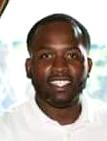
On May 31, 2004, Lottie Mae Thompson, 31, a Black woman, was found slain inside her Syracuse apartment, the violence leaving little doubt it was a deliberate killing rather than an accident or sudden illness. The discovery set off an urgent police response on the city’s West Side, in and around the West Onondaga Street building where the attack occurred, and it would soon become clear investigators were staring at something bigger than a single, isolated death.
Behind the headlines was a life rooted in Syracuse: she had grown up there, attended Fowler High School, and was connected to St. Lucy’s Church. Her death left a family circle suddenly split between grief and practical heartbreak, including three children and close relatives who would be the ones to field calls, identify what was hers, and try to make sense of a loss that arrived with no warning and no goodbye.
As detectives worked the scene and widened their timeline, attention tightened around Nicholas L. Wiley, a man living in the same West Onondaga Street building at the time. Within days, the investigation widened beyond Thompson’s case as police examined other violence connected to the same location and period, and Wiley emerged as the central suspect in a string of killings that investigators treated as linked by method and circumstance.
The case ultimately moved from suspicion to courtroom proof. A jury in Onondaga County Court convicted Wiley in October 2006 on murder and weapons charges tied to the killings, and an appellate court later upheld those convictions—rejecting arguments that his statements to police had been coerced and concluding the evidence supported the finding that the murders were carried out “in a similar fashion,” a key element underlying the first-degree murder count.
With the convictions affirmed, the case’s legal outcome solidified around a single perpetrator rather than a rotating list of suspects: Wiley was held responsible for Thompson’s killing as part of the group of murders for which he was convicted, and reports of broader claims beyond those proven deaths were treated as uncorroborated. For Thompson’s family and the Syracuse community, the story did not end with a clean sense of closure—only with the grim certainty that her death had not been forgotten, and that the person found responsible would not be walking free again.