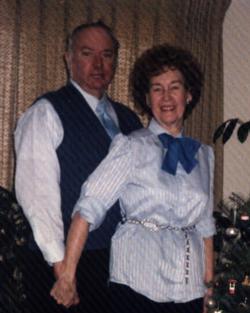
In the autumn of 1980, the life of a 29-year-old White / Caucasian woman named Cherie Lynn Ayers was tragically cut short in her Portland, Oregon apartment. An X-ray technician and a graduate of the University of Oregon, Cherie was found by her fiancé on October 11, 1980, two days after she was brutally murdered. The scene was grim; she had been bludgeoned and stabbed multiple times in the neck.
Suspicion almost immediately fell upon a former classmate, Randall Woodfield, a man Cherie
had known since the second grade. They had attended the same schools in Newport, and had even corresponded through letters during one of Woodfield's prior prison sentences. Investigators learned that the two had recently reconnected during the planning of their 10-year high school reunion. When questioned by homicide detectives, Woodfield's answers were described as "evasive and deceptive," and he refused to take a polygraph test. However, a significant piece of evidence at the time, a semen sample, did not match Woodfield's blood type, and therefore, no charges were filed against him. This allowed Woodfield to remain free, and he would go on to commit a series of violent crimes along the Interstate 5 corridor, earning him the infamous moniker, the "I-5 Killer."
For years, Cherie's case remained officially unsolved, a cold case that haunted her family who remained convinced of Woodfield's guilt. Decades later, advancements in forensic technology would finally bring the truth to light. The Portland Police Bureau's Cold Case Squad reopened the investigation, and a sample of vaginal fluid and semen that had been preserved from the original crime scene was subjected to modern DNA analysis. This time, the results were conclusive, providing a definitive link between Randall Woodfield and the murder of Cherie Lynn Ayers.
Despite this breakthrough, the Multnomah County District Attorney's office made the decision not to prosecute Woodfield for Cherie's murder. By this time, he was already serving a life sentence plus additional time for the numerous other murders and sexual assaults he had committed. The Ayers family agreed with this decision, with the understanding that charges would be pursued if he ever became eligible for parole, an outcome corrections officials deemed impossible. As a measure of closure for the family, the Portland Police Bureau also made a point to clarify that Cherie Lynn Ayers was not involved in a high-risk lifestyle, as some earlier reports had inaccurately suggested, and confirmed that Randall Woodfield was the sole suspect in her murder.