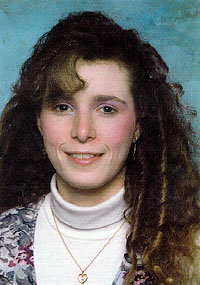
On a summer evening in Hays, Kansas, on June 30, 1976, the life of 20-year-old Carla Joan Baker, a Caucasian female, was tragically cut short. A student at the University of Kansas, Carla was home visiting her parents when she went for a bicycle ride near the western edge of the city and vanished. The following day, her father discovered her abandoned bicycle, prompting a report of her disappearance.
For months, there was no sign of Carla, leaving her family and the community in a state of anxious uncertainty.
The search for Carla ended in sorrow on September 21, 1976, when her remains were found in a remote area near the Cedar Bluff Reservoir in Trego County. The grim discovery was made possible by information provided by her killer. The investigation into her disappearance and murder was part of a larger, more terrifying series of violent crimes that had plagued the area. Authorities had been pursuing a serial killer responsible for multiple abductions and homicides in Kansas during the mid-1970s.
The perpetrator was identified as Francis Donald Nemechek. He was arrested on August 24, 1976, in connection with the murder of another young woman, 16-year-old Paula Fabrizius. Following his arrest, Nemechek confessed to the abduction and murder of Carla Baker, leading investigators to her body. His confession detailed how he had abducted her during her bike ride, taken her to a secluded location, and killed her.
Nemechek's reign of terror extended beyond the death of Carla Baker. He was also responsible for the murders of Paula Fabrizius and a separate triple homicide in 1974 involving Sheryl Lynn Young, her young son Guy William Young, and Diane Lynn Lovette. During his trial, which was relocated to Salina, Kansas, due to the extensive publicity, Nemechek faced five counts of first-degree murder. The prosecution presented overwhelming evidence, including his detailed confession. While his defense team attempted to argue insanity, the jury found him guilty on all counts. Francis Donald Nemechek was sentenced to five life terms in prison, bringing a close to the harrowing chapter of his violent crimes that had deeply scarred the community and left an enduring legacy of pain for the victims' families.