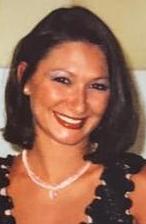
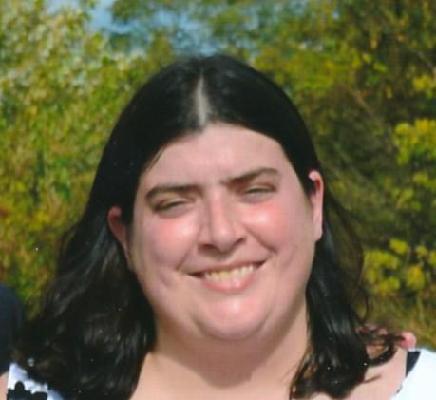
Sylvester “Bud” Rearden, a 36-year-old white man, was living in the small community of Fairdale, near Louisville, Kentucky, when his life came to an abrupt and deeply questioned end on September 8, 1974. Officially, his death was attributed to cancer, the culmination of a serious illness that had already put him in and out of the hospital. Those who knew the story later, however, would come to see his death not as an isolated tragedy, but as one chapter in a disturbing pattern of
“accidents” and sudden losses surrounding his wife, Virginia Rearden, later known as Virginia McGinnis.
Bud had married Virginia in 1971 in Santa Clara County, California, and by the early 1970s the couple were living with her children and moving back and forth between California and Kentucky. Life around Virginia already carried a sense of unease. In 1972, her three-year-old daughter, Cynthia Elaine Coats, was found hanging in a barn in Louisville under circumstances that were officially ruled accidental but later regarded by criminologists as highly suspicious and possibly insurance-motivated. Bud, as Virginia’s second husband, became part of this household history of tragedy, fires, and frequent brushes with catastrophe.
By the time Bud’s cancer worsened, Virginia had learned how to present herself as indispensable to his care. Accounts compiled later describe her persuading physicians that she was a qualified nurse and could safely administer injections and medications at home. Hospital records cited in those same accounts document at least one alarming incident in which Bud received a double dose of powerful painkillers yet survived, an early warning sign that something was wrong in the way his treatment was being managed. Eventually, Bud was released from professional care and placed under Virginia’s supervision, a decision that, in hindsight, would haunt those who studied the case.
The night Bud died, the sequence of events around the Rearden home in Fairdale would later read like a grim script. Virginia gave her children money and sent them out for the evening, ensuring that there were no witnesses in the house. When they returned, Bud was already dead. In the narrow window between his last contact with others and the discovery of his body, Virginia took complete control of the scene: she washed and prepared the body herself, declined an autopsy, and accepted the listing of cancer as the cause of death on the paperwork. With the stroke of a pen, any immediate chance to verify whether medications, injections, or anything else had hastened his end was erased. Shortly afterward, she collected on his life insurance policy, just as she had after her young daughter’s death and, later, after other family losses.
At the time, Bud’s death did not trigger a criminal investigation in Kentucky. To the outside world and to the authorities who only saw the documents, he appeared to be a seriously ill man who had simply succumbed to his disease at home. No charges were filed, and there was no inquest; his death remained classified as a natural one linked to cancer. Suspicion, where it existed, stayed mostly in whispers and private doubts among those who thought his passing had come too suddenly, under circumstances too carefully controlled by the one person who stood to benefit.
Years later, the story of Bud Rearden’s final days was pulled back into the light when Virginia’s life was reexamined in connection with a new and undeniably violent crime. In 1987, she arranged a life insurance policy on her son’s girlfriend, Deana Hubbard Wild, and the young woman was pushed off a cliff in Big Sur, California. What was first viewed as a tragic fall was eventually exposed as murder, and in 1989 Virginia was arrested. In 1992 she was convicted of first-degree murder and sentenced to life without parole. As investigators, journalists, and criminologists pieced together her past, Bud’s death joined the deaths of her daughter and her mother in a suspected series of staged “accidents” and hastened natural deaths linked by insurance payouts and opportunity.
Within that reconstructed narrative, Bud is described as one of Virginia’s four likely victims, the lone adult male among them. Yet the record remains stubbornly incomplete. She never confessed to killing him, and no prosecutor ever took a case about his death to court. In the Radford University case study that analyzes Virginia’s criminal history, Bud is explicitly listed as a victim who died under suspicious circumstances, but with the notation that there was no confession and no conviction tied to his name. That tension—between strong suspicion and the absence of formal charges—defines the legacy of his case. He is remembered as a husband who died in a house where everything was under the control of a woman later proven capable of killing for money, but whose exact role in his final moments can no longer be tested by autopsy, cross-examination, or trial.