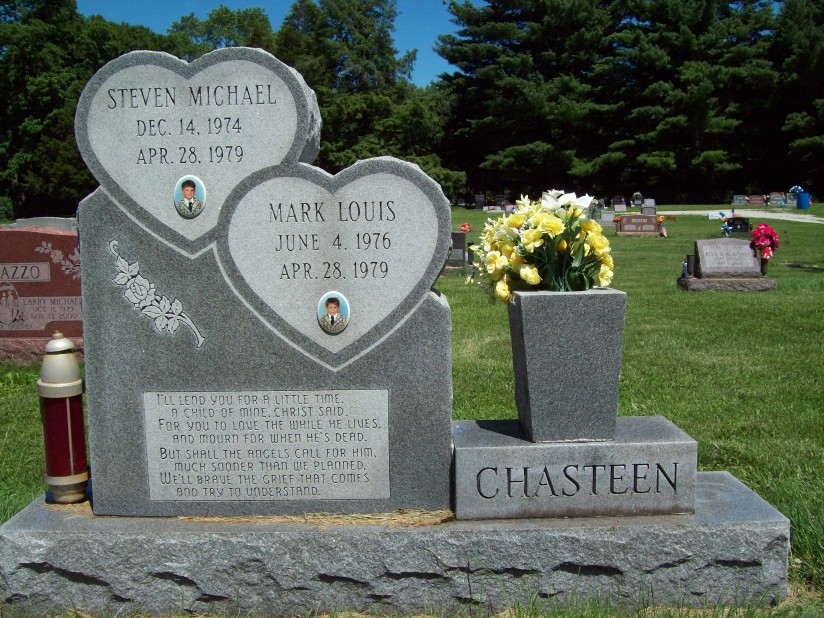
On April 28, 1979, the life of 5-year-old White female Misty Zollars came to a tragic end in Morgan County, Indiana. The events unfolded on a Saturday morning when Misty, along with her mother, 23-year-old Terry Lee Chasteen, and her two younger brothers, Stephen, 4, and Mark, 2, were traveling on Interstate 465. They were en route to a babysitter’s home so that Terry could report for her shift at a local grocery store.
As they drove, a man in a construction truck signaled to Terry that her vehicle had a mechanical issue, prompting her to pull over to the shoulder. The man, later identified as Steven Timothy Judy, offered assistance but instead disabled the vehicle's ignition coil, rendering the car inoperable. Feigning a "Good Samaritan" act, he offered the stranded family a ride, which Terry accepted, unaware of his malicious intent.
Judy drove the family to a secluded area near White Lick Creek in Mooresville. Once they arrived at the isolated location, he directed the children to walk down a path toward the creek while he remained behind with their mother. Judy then bound Terry with strips torn from her own clothing, sexually assaulted her, and strangled her to death. The three children, hearing their mother's distress, reportedly ran back toward the scene. In a horrific sequence of events, Judy intercepted the children and forcibly drowned them one by one in the shallow waters of the creek. Misty and her brothers died from asphyxia due to drowning. Their bodies were discovered later that day by hunters who stumbled upon the crime scene, finding the victims scattered along the creek bank.
Law enforcement officials quickly identified Steven Timothy Judy as the primary suspect. Witnesses had observed his distinctive truck and noted his physical description near the abduction site. Judy, who was out on bond for an unrelated armed robbery at the time of the murders, was arrested shortly after the bodies were found. During interrogation, he confessed to the crimes, providing details that corroborated evidence found at the scene, including the method of killing and the specific location of the bodies. Despite his confession, he entered a plea of not guilty by reason of insanity.
The ensuing trial drew significant public attention due to the brutality of the crime and the age of the victims. Prosecutors argued that Judy was fully aware of his actions, characterizing him as a sociopath rather than legally insane. The jury rejected the insanity defense, convicting him on four counts of murder. In February 1980, the court sentenced him to death. Judy subsequently waived his right to appeal, expressing a desire to expedite his execution. On March 9, 1981, Steven Timothy Judy was executed by the electric chair at the Indiana State Prison, marking the first execution in the state in nearly two decades.