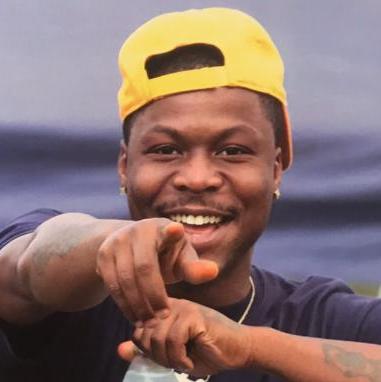
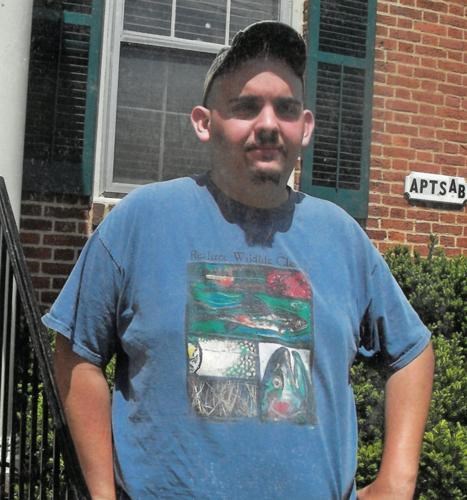
James Lee Haynes was a 32-year-old White/Caucasian male whose disappearance on December 7, 1963, became a long-running homicide investigation in southern West Virginia. Haynes was a U.S. Army sergeant and Purple Heart recipient who had served during the Korean War, where he had been shot in the chest. By late 1963 he was returning from duty in West Germany and was in the process of transferring to Fort Knox, Kentucky. While on leave, he spent time with his wife and children in the Baltimore, Maryland, area before setting out for his parents' home in Saulsville, Wyoming County, West Virginia, carrying Christmas presents. Because a van he had purchased overseas had been delayed in shipment, he made the trip largely by hitchhiking. A driver reportedly carried him as far as Oak Hill in Fayette County, after which his exact movements became less certain. He never reached his parents' home.
Investigators and members of his family have long believed that he was killed later that day, although his remains have never been recovered; he was formally declared dead on December 8, 1964.
The trail investigators reconstructed led toward the Bolt Mountain area near the Raleigh-Wyoming county line. According to accounts preserved in police reports and later given by Haynes' family, he stopped at a tavern in the Bolt area while traveling toward Saulsville. He reportedly wanted coffee or hot chocolate rather than alcohol because his father was a minister and he did not want to arrive at his parents' home smelling of liquor. Three patrons allegedly ridiculed him for refusing to drink with them, and an altercation developed. Haynes eventually picked up his suitcase and duffle bag and left the tavern. A witness later said the same three individuals followed him. The central theory developed by investigators was that the confrontation did not end at the tavern and that the group caught up with Haynes as he traveled along Bolt Mountain Road.
According to the homicide theory that emerged from subsequent interviews, Haynes was beaten and deliberately struck with the suspects' vehicle. Accounts attributed to relatives of one of the suspects said the attackers then backed the vehicle over Haynes because they were uncertain whether the first impact had killed him. His body was allegedly placed in the trunk of the vehicle. Another person who had been at the tavern reportedly encountered the three individuals standing beside the road with their trunk open later that night. When that witness slowed and offered assistance, the group allegedly told the witness to keep moving. Investigators came to believe that Haynes' body was transported across the county line and concealed or buried somewhere on or near Bolt Mountain or Little Bolt Mountain. Stories associated with the investigation also described personal property being discovered in the search area, including a wallet or billfold, bloody material, and an item attached to a tree. Sources conflict over whether Army dog tags were actually recovered: some later reporting and investigators have referred to a dog tag believed to have belonged to Haynes, while another detailed missing-person account states that reports of recovered dog tags were incorrect. No body was found during the original searches.
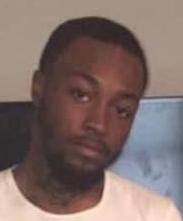
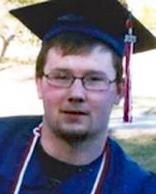
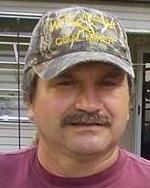
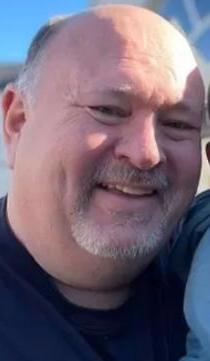
Three suspects eventually became associated with the case: William Lundy Trump, James Paul Cozort, and James Floyd Cox. Authorities believed the three had been involved in the tavern confrontation and the events that followed. Investigators were told that members of the group had later boasted to other people about what they had done, but obtaining admissible evidence sufficient to prove the homicide was far more difficult. In 1971, William Lundy Trump was arrested and charged in connection with Haynes' murder and was indicted. The prosecution never reached a trial. Contemporary and later accounts indicate that Trump was found incompetent to stand trial and committed to Sharpe Hospital. His competency was eventually restored, but when he returned from the hospital, the criminal case was dismissed. Modern Raleigh County Prosecuting Attorney Tom Truman has said that surviving office records do not explain why the case was dismissed. Other summaries describe the ultimate problem as insufficient evidence. Whatever the precise procedural reason, Trump was released without being tried or convicted for Haynes' death.
James Paul Cozort was also investigated. By 1971 he had moved to Oregon, where authorities questioned him about Haynes' disappearance and suspected killing, but he was never formally charged. James Floyd Cox was the third identified suspect. After Trump's arrest, investigators attempted to locate Cox for questioning but were unable to find him. None of the three suspects was ultimately convicted in connection with the case. Later authorities reported that all three had since died, effectively eliminating the prospect of bringing the original suspects to trial. The lack of a body, the passage of years, and gaps in the surviving investigative record left the case without the physical and testimonial evidence necessary for a successful prosecution.
For decades, Haynes' family continued searching for his remains, particularly his twin daughters Brenda Haynes-Lester and Linda Haynes, who were toddlers when he vanished. Their efforts eventually contributed to renewed attention from the U.S. Army Criminal Investigation Division and the Raleigh County Prosecuting Attorney's Office. Investigators revisited decades-old reports, interviewed people familiar with the Bolt Mountain area, and attempted to reconstruct landmarks described in the original investigation. By 2025, that work had narrowed a search area once measured in several square miles to an area of roughly half a square mile. Investigators were especially interested in Little Bolt Mountain and property formerly associated with one of the suspects.
On November 7, 2025, a large multi-agency search brought cadaver dogs, local law enforcement, the West Virginia National Guard, Department of Defense personnel, firefighters, and other volunteers into the area. The dogs did not indicate the presence of remains at the primary wooded Little Bolt site, but investigators received an indication near a former residence connected to a suspect. A chemical test at the location reacted in a manner consistent with the possible presence of blood, and investigators collected samples for laboratory analysis to determine whether the material was human and, if possible, whether it could be connected to Haynes. As of January 2, 2026, authorities publicly reported that those laboratory results were still pending. The family had previously searched portions of the same property, including the basement, without locating remains.
The investigation has continued despite the practical impossibility of prosecuting the three original suspects. A 2026 account of the renewed investigation stated that Haynes still had not been located and that the case remained open. Modern investigators have emphasized that their principal objective is now to recover his remains and return them to his family rather than to obtain a criminal conviction. His daughters have said they hope to bury him with one of his surviving Army uniforms and have sought an Arlington National Cemetery burial connected to his military service and Purple Heart. More than six decades after the night investigators believe Haynes was killed on or near Bolt Mountain, William Lundy Trump's arrest remains the only known murder prosecution in the case; it ended without a trial, while Cozort and Cox were never charged. The killing therefore remains officially unresolved, and the location of Haynes' remains remains the central unanswered question.