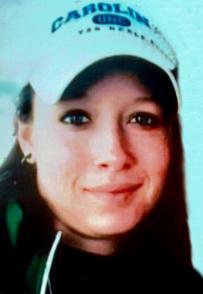
Vernita Wheat was a 9-year-old Black/African American girl from Kenosha, Wisconsin, whose disappearance on May 29, 1984, became the opening case in a violent multistate crime spree associated with Alton Coleman. Coleman had approached Vernita’s mother, Juanita Wheat, several weeks earlier using the name Robert Knight. He claimed that he lived nearby and worked for American Motors, and over time he became familiar enough with the family that Juanita allowed him around her children.
On May 29, Coleman arrived while Juanita was visiting a neighbor and later received permission to take Vernita and her younger brother to a carnival. He returned the children to their home at approximately 10:15 that night.
After returning from the carnival, Coleman told Juanita that he wanted to give her a stereo and said he needed to go to his apartment to get it. When Juanita declined to accompany him, Coleman asked whether Vernita could go along. Believing he lived nearby and trusting that he would bring her back, Juanita allowed Vernita to leave with him. When they had not returned by about 10:45 p.m., Juanita and a neighbor began searching. Roughly an hour later, she contacted police. Investigators would later establish that Coleman had lied about where he lived; his actual residence was in Waukegan, Illinois.
Witnesses helped reconstruct what happened after Vernita left her home. At approximately 11:35 p.m., witnesses at the 400 Club in Kenosha saw Coleman and Vernita enter the establishment, where Coleman used a telephone. A taxi arrived minutes later. Cab driver Keith Hach later testified that Coleman initially instructed him to drive toward Zion, Illinois, supposedly to retrieve a stereo and a car. Once there, Coleman changed the destination and directed the driver to Waukegan. Hach ultimately dropped Coleman and Vernita near Slater’s Barbecue in an isolated part of the city. Another witness working nearby reported seeing a man and a young girl walking in the area at approximately 1:30 a.m. on May 30.
The precise time of Vernita’s death could not be established with certainty. On June 19, 1984, nearly three weeks after she disappeared, Andrew Greenwood and Murry Smith entered an abandoned building in Waukegan and discovered her partially decomposed body inside a bathroom. Her chest, neck and hands had been bound with cable wire. Dr. Larry Blum determined that she had been killed by ligature strangulation and estimated that death had occurred approximately three weeks before the discovery. Forensic entomologist Dr. Bernard Greenberg studied insect development on the remains and concluded that the body most likely had been placed inside the building on May 29 or May 30. The building was only a short distance from where the taxi had taken Coleman and Vernita.
The abandoned building produced an important piece of physical evidence. Investigators recovered two fingerprints next to each other on the lower portion of the bathroom door. One remained unidentified, but the second was matched to Coleman. Authorities also developed evidence of his actions immediately after Vernita disappeared. On May 31, he asked a friend to leave town with him, later traveled to Chicago in an effort to obtain false identification, and returned briefly to his sister’s Waukegan home. After his sister told him that police had been asking about a girl from Kenosha, a Waukegan officer arrived and spotted Coleman leaving the residence. Coleman ran when the officer attempted to approach him and escaped that encounter.
Coleman remained at large as authorities connected him and his companion, Debra Brown, to a succession of abductions, assaults and killings across the Midwest. The FBI eventually placed Coleman on its Ten Most Wanted list. On July 20, 1984, an anonymous caller informed Evanston, Illinois, police that Coleman and Brown were sitting near a basketball court in Mason Park. Officers arrested both without significant resistance. Coleman initially gave police a false name, but his identity was confirmed through fingerprints. Federal authorities initially held the pair on extraordinarily high bonds in connection with kidnapping allegations associated with Vernita’s case and the wider investigation. Brown was subsequently prosecuted for crimes committed during the later multistate spree, while the Illinois murder prosecution for Vernita’s death centered on Coleman.
When questioned after his arrest, Coleman admitted knowing Juanita Wheat but denied knowing or killing Vernita. Prosecutors nevertheless built their case around the false identity he had used to gain the family’s trust, the witnesses who placed him with Vernita during the final hours she was known to be alive, the taxi journey from Kenosha into Illinois, his fingerprint inside the building where her body was found, and his flight and attempts to obtain false identification after her disappearance. The defense presented a witness who testified that she had seen Coleman and Vernita walking together in Kenosha during the afternoon of May 30, but the jury ultimately accepted the prosecution’s case.
Coleman was tried in Lake County, Illinois, for murder and aggravated kidnapping. He chose to represent himself for much of the proceedings, with attorneys available as advisers. The jury found him guilty of both offenses. During the capital sentencing proceedings, jurors found him eligible for the death penalty in part because of his previous murder convictions in Indiana and Ohio and because Vernita was under 12 and the circumstances of her killing met Illinois’ statutory standard for exceptionally brutal or heinous conduct indicative of wanton cruelty. The court sentenced Coleman to death for the murder and imposed an additional 15-year prison term for aggravated kidnapping.
Coleman challenged his Illinois convictions and sentence through the appellate and post-conviction process. The Illinois Supreme Court affirmed his conviction and death sentence in 1989, the United States Supreme Court declined review in 1990, and later post-conviction challenges were also unsuccessful. Although Illinois had sentenced him to death for Vernita’s murder, Coleman was ultimately executed by lethal injection in Ohio on April 26, 2002, for the separate murder of Marlene Walters. His conviction for abducting and murdering Vernita Wheat remained intact, leaving the legal record to establish that the man who gained a mother’s trust under a false identity, took her child away with a promise to return her, and fled after the disappearance was ultimately held responsible for Vernita’s death.