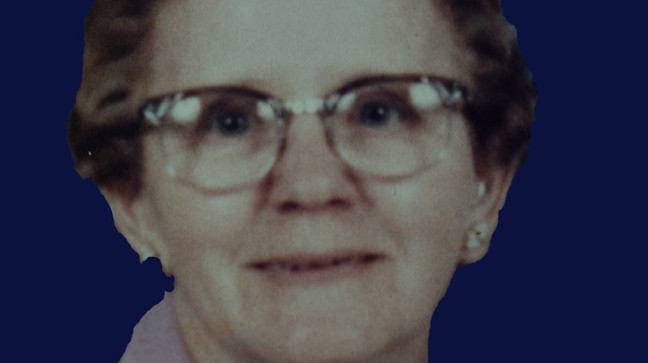
On a cold day in February 1988, the life of 73-year-old Geraldine Spencer Toohey, a White/Caucasian female, was brought to a brutal and tragic end in her Eugene, Oregon home. The night before her body was discovered, she was on the phone with her sister when the line suddenly went dead. The following day, on February 28th, a concerned individual peered into a window of her residence on the 5400 block of Franklin Boulevard and saw her lying on the floor.
Medics who were called to the scene found her death to be suspicious and contacted the Oregon State Police.
Investigators arriving at the residence found a grim scene. There was evidence of forced entry; the back door had been broken down. Inside, it was discovered that Toohey had been sexually assaulted and subjected to brutal homicidal violence. The phone lines to the house had been cut, a chilling detail that explained the abrupt end to her conversation with her sister. The investigation into her murder was launched, but despite their efforts, detectives were unable to immediately identify a suspect, and for years, the case grew cold.
The path to finding Geraldine's killer was a long and arduous one, stretching over decades. Her murder was eventually linked through DNA evidence to two other unsolved homicides in Eugene: the killings of Gladys May Hensley, 62, and Janice Marie Dickinson, 33, both in 1986. The same man was responsible for all three violent deaths. For years, several persons of interest were investigated and ultimately excluded through DNA comparison, leaving the identity of the serial killer a mystery. A breakthrough finally came with the advancement of forensic technology. Using genetic genealogy, investigators were able to build a family tree from the suspect's DNA left at the crime scenes. This cutting-edge technique narrowed the pool of suspects down to one man: John Charles Bolsinger.
John Bolsinger had a history of violence and criminal activity. At the time of Toohey's murder, he was 30 years old and had been released from prison just a few months prior, in December 1987, after serving time for burglary. He had enrolled as a student at Lane Community College for the winter 1988 term. The investigation revealed that Bolsinger had been in the area and had the opportunity to commit the crime. A witness was able to provide a description for a police sketch that was released to the public on March 5, 1988. Less than three weeks later, on March 23, 1988, John Bolsinger was found deceased in his Springfield apartment, having taken his own life. It was only through the tireless work of investigators and the power of DNA technology decades later that he was definitively identified as the man who took the life of Geraldine Spencer Toohey and two other innocent women.