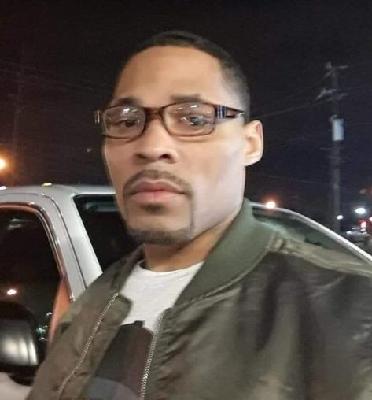
On a June night in 1978 in Dallas County, Texas, Raymond Curley, a 40-year-old White male, crossed paths with a predator whose crimes would not be fully understood for years. His life ended on June 18, 1978, in an attack that, at the time, was just one more violent death in a busy metropolitan area. There is little surviving public detail about where he had been that day, who last saw him alive, or how those close to him learned he was gone.
What remains in the record is his name, the date, and the knowledge that this killing would later be recognized as the opening act in a small but vicious series of murders around Dallas County.
For nearly two years, Curley’s death existed on its own, a solitary entry in official files. It was not yet woven into any larger pattern, and his name did not appear alongside any suspect in the news or public court documents. That changed only after another killing drew attention: the brutal slaying of Janice Ingram in Balch Springs, east of Dallas, in October 1979. Ingram was attacked inside her home; she was found beaten and stabbed after her body lay undiscovered for days. Investigators eventually traced that crime back to a local burglar, Danny Lee Barber, whose break-in at a Dallas County flea market the following spring would become the turning point in understanding Curley’s fate.
On May 4, 1980, Barber was arrested for the flea-market burglary and taken into custody. While jailed, he began to talk. According to later summaries of the case, Barber confessed not only to killing Ingram but also to three earlier slayings in Dallas County. In that confession, he named three additional victims: Mary Caperton, killed on April 21, 1980; Mercedes Mendez, killed on January 17, 1979; and Raymond Curley, killed on June 18, 1978. Mendez’s death had involved extreme violence, including a beating and sexual abuse before her body was shot and abandoned near Mesquite, and Barber admitted that he had engaged in sexual activity with two of the corpses. Curley’s name appears in these accounts as the first victim in Barber’s series, establishing that the quiet 1978 killing was not random at all, but the start of a deliberate pattern of home-invasion murders.
Once Barber’s confession linked Curley’s death to the other killings, prosecutors built a broader case around this string of offenses. Barber was ultimately convicted of multiple murders arising from this spree; official Texas execution records list him as having been convicted of killing Curley, Mendez, and Caperton, with the Ingram case serving as the capital murder for which he received a death sentence. In court, the narrative that emerged was one of a burglar who slipped into houses and left devastation behind, sometimes taking small items, sometimes leaving the bodies where they fell, and sometimes discarding them in remote areas. Curley’s killing, though far less documented than the later cases, was treated as part of this same violent arc and folded into the legal reckoning that followed.
Barber’s path through the courts was long. He was sentenced to death in 1980, and over the years his lawyers challenged the verdict and sentence in appellate courts, winning at least one last-minute stay of execution on technical grounds. But the challenges ultimately failed. On February 11, 1999, at the Huntsville Unit in Texas, Barber was executed by lethal injection for his crimes. In his final statement, he addressed Ingram’s family and expressed regret, but the names of the earlier victims, including Curley, remained in the background—present in the official record, but not at the center of the final scene.
Today, nearly everything publicly known about what happened to Raymond Curley comes through the lens of Barber’s case: a date, a county, and a confession that retroactively made him the first known victim of a serial killer whose violence would spread across Dallas County over the next two years. No detailed obituary, no widely circulated biographical sketch has surfaced to balance the story toward the person he was before that night. In the surviving online record, he is both an individual and a symbol—the first name on a short list of victims whose deaths, once linked by Barber’s confession and the courts’ findings, reveal how his murder on June 18, 1978 marked the beginning of a brief but lethal reign that only ended when the killer was finally brought to justice.