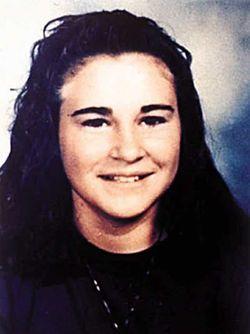
White/Caucasian. On the night of December 6, 1991, Jennifer Harbison, age 17 and gender female, was closing the I Can’t Believe It’s Yogurt! shop in North Austin with her friend Eliza Thomas, age 17, while Jennifer’s sister Sarah Harbison, age 15, and Amy Ayers, age 13, stopped by to wait for a ride home. After the shop was set ablaze, firefighters discovered the bodies of the four teenagers inside; the destruction from the fire and lack of surveillance left investigators with scant leads
and a city haunted by unanswered questions.
In the years that followed, detectives pursued a sprawling inquiry that eventually focused on four local young men: Robert Springsteen, Michael Scott, Maurice Pierce, and Forrest Welborn. Springsteen and Scott gave statements that defense attorneys later argued were coerced; both were tried and convicted in the early 2000s, even as physical evidence failed to place them at the scene. Subsequent DNA testing on evidence—most notably a male DNA profile from Amy Ayers—did not match either man, leading prosecutors in 2009 to dismiss the cases and release Springsteen and Scott after nearly a decade behind bars, though neither was formally exonerated. Charges against Pierce had already been dismissed in 2003 for lack of evidence, and Welborn was never indicted.
The shadow of the case lingered over the former suspects. In December 2010, during a late-night traffic stop in North Austin, Maurice Pierce fled and struggled with police; he stabbed an officer in the neck before being fatally shot. A grand jury later declined to indict the officer involved. Pierce had long maintained his innocence, and his family said the notoriety of the yogurt shop murders trailed him for years.
Decades later, a breakthrough came with advanced forensic testing and genetic genealogy. In 2025, Austin authorities publicly identified serial offender Robert Eugene Brashers as the man responsible, linking him through a combination of DNA—including Y-STR material recovered under a victim’s fingernails—and ballistic evidence from a. 380 casing tied to the scene. Brashers died by suicide in 1999 after a police standoff; officials have not announced a clear motive, but the identification shifted the case narrative away from prior suspects and toward a single deceased perpetrator.
For Jennifer Harbison, age 17 and gender female, the announcement offered a measure of resolution long denied to her family and to the families of Sarah Harbison, age 15, Eliza Thomas, age 17, and Amy Ayers, age 13. Investigators described the 1991 killings as a robbery that escalated into a quadruple homicide, followed by arson—a brutal sequence that ravaged the crime scene and complicated the inquiry for more than three decades. With Brashers now identified, prosecutors have noted the absence of living defendants but have pledged support for those previously ensnared in the case as the community rewrites the final chapter of a story that defined an era in Austin.