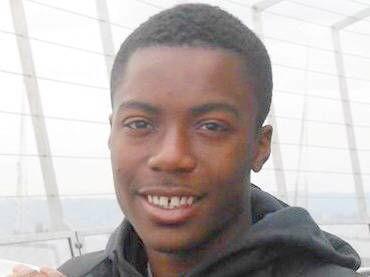
Dominic D. Miller was a 22-year-old Black man from St. Louis, Missouri, and his death left a quiet, aching space that words struggle to fill. When someone so young is gone, it doesn’t just mark an ending; it rearranges everything around it. A life that should have had time to stretch out—more mornings, more plans, more ordinary days that become precious only when they’re taken away—was cut short, and the weight of that loss doesn’t land in one place. It spreads. It touches family, friends, neighbors, and anyone who ever shared a moment with him, whether it was a deep bond or a passing kindness.
St. Louis is a city made of stories—blocks and backyards, busy streets and quiet corners, the hum of everyday life that keeps moving even when someone’s world stops. Dominic belonged to that place, to the texture of it, to the people who knew him there. And when a death happens, the city can feel both too loud and too silent at the same time: traffic still rolls, lights still change, phones still buzz, but somewhere there’s a room that feels hollow, a chair that isn’t filled, a voice that isn’t answering. Grief doesn’t come politely, and it doesn’t arrive on a schedule. It comes in waves: in the middle of a normal afternoon, in the small hours when sleep won’t hold, in the shock of seeing something that reminds you of him and realizing there won’t be another chance to say what you meant to say.
With only the information shared here, the details of how he died and the exact date of his death remain unspoken, and that kind of blank space can feel brutal. When there aren’t clear answers, the mind reaches for them anyway. People replay the last conversations they remember, the last time they saw him, the last text or laugh, and the questions circle: What happened? Who was with him? Was he afraid? Did he know he was loved? Those questions aren’t just curiosity—they’re grief trying to make sense of a world that suddenly doesn’t. They’re love with nowhere to go, looking for a way to land.
What can be said, even with so little detail, is that Dominic mattered. He wasn’t just a name. He was someone’s friend, someone’s family, someone’s bright spot, someone’s memory of a better day. A person doesn’t have to be famous for their absence to be enormous. The size of a loss isn’t measured by headlines; it’s measured by the ripple it leaves behind—by birthdays that now carry a shadow, by holidays that feel different, by the way certain songs, streets, or seasons can tighten the throat without warning.
In the aftermath of a death like this, what people often cling to is the truth of who the person was in life. The way he walked into a room. The way he spoke. The look in his eyes when something made him happy, or when he was determined, or when he was simply being himself. The memories become a kind of shelter, fragile but necessary. They’re how people keep him close when they can’t do anything else. They’re how they say: You were here. You counted. You are not forgotten.
And if there is one thing grief insists on, it’s that a life should be remembered as more than the moment it ended. Dominic D. Miller’s story does not begin with how he died, even if that loss is what brought attention to his name. His story begins with the fact that he lived—here, in St. Louis—until he didn’t. It continues in the people who carry him forward, in the love that doesn’t vanish just because someone is gone, and in the stubborn, human hope that every life taken too soon will still be met with remembrance, dignity, and the insistence that it mattered.