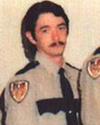
In the small community of Covington, Tennessee, the life of a young law enforcement officer was cut short under a cloud of suspicion and controversy. On a Monday evening, November 28, 1988, a call went out that 22-year-old Deputy Sheriff Richard L. Rose had been shot inside the Tipton County Sheriff's Office. He was airlifted to a hospital but succumbed to a gunshot wound to his head the following morning, November 29, 1988. This tragic event would unravel a story that went far beyond a simple accident, revealing a backdrop of a federal investigation into the very department where the fatal shot was fired.
Initially, the narrative presented by the then-sheriff was that the shooting was a 'terribly bizarre accident.' The official story claimed that Deputy Rose was cleaning a. 380-caliber pistol belonging to his partner, Deputy Jimmy Hicks, when the firearm discharged. It was reported that Hicks was in another room at the time. However, this account was soon challenged by compelling testimony from Rose's girlfriend, who was on the phone with him at the time of the incident. She recounted hearing Rose say, 'You'd better put that gun down before I hurt you,' followed by a clicking sound just moments before the line went dead. This crucial piece of information cast a dark shadow over the initial explanation and pointed towards a more complex and troubling sequence of events.
The investigation into Deputy Rose's death took a significant turn when his partner, Jimmy Hicks, was charged with involuntary manslaughter. Although these charges were initially dismissed in March 1989, with a judge citing insufficient proof of gross negligence, Hicks was later found guilty of criminally negligent homicide. The case's context became even more intricate with the revelation that both Hicks and the sheriff were under a federal investigation concerning the agency's training practices at the time of Rose's death. It was also brought to light that Deputy Rose was scheduled to meet with federal investigators the very next morning. In a separate federal indictment, the sheriff at the time would later be sentenced to three years in prison for extortion and mail fraud, further eroding public trust in the department and leaving a community to grapple with the unsettling circumstances surrounding the loss of a young deputy.