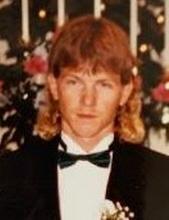
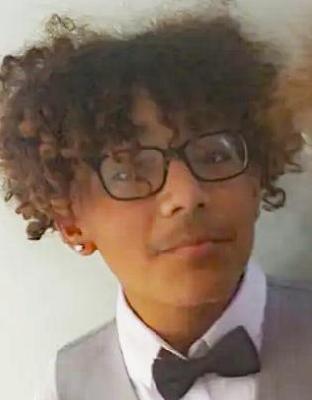
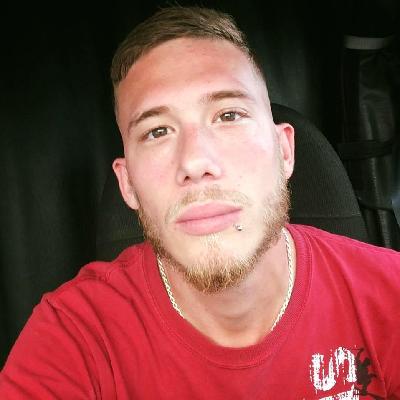
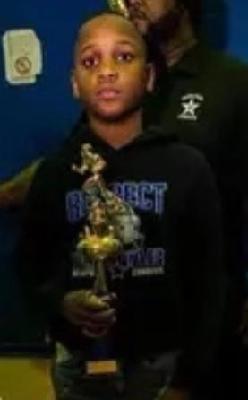
MaKlain Lawson, a 20-year-old white male from Cleveland in Bradley County, Tennessee, had built a life full of friends, sports, faith, and study before violence on a January night in 2018 abruptly cut his story short. He was born in the summer of 1997 and grew up moving through local schools, eventually graduating from Bradley Central High School in 2015.
After high school he stayed close to home, enrolling at Cleveland State Community College and pursuing engineering while remaining active in the churches that had shaped him—Smyrna Baptist Church, Mt. Olive Ministries, and North Cleveland Church of God. Family and obituary tributes remember someone outgoing and sharply funny, the kind of student classmates voted “wittiest,” who poured himself into debate teams, the Duke TIP program, school plays and choirs, and a long list of sports: basketball, BMX, soccer, baseball, football, wrestling, and especially rugby, which he continued to play in club form after graduation.
On Wednesday night, January 10, 2018, Lawson was at a home on the 9800 block of Highway 411 in the Delano area of Polk County with two other young men, Charles D. Buffkin of Polk County and James Meeks of Bradley County. According to Polk County Sheriff Steve Ross, three teenagers from nearby Athens, Tennessee—people known to the three inside the house—came to the residence for what was described as a “transaction of property” between the two groups. In the quiet rural stretch along Highway 411, it might have seemed like a routine late-night meeting among acquaintances, the sort of thing that passes without notice in a small community. Instead, the encounter escalated with stunning speed.
Investigators later said that during the negotiation an argument broke out and a physical fight followed. In the midst of that fight, one of the visiting teens pulled out a gun and began firing. Bullets struck Buffkin and Lawson, while Meeks was left uninjured. Around 11:45 p.m., the Polk County Sheriff’s Office received a frantic call from one of the wounded victims reporting he had been shot. Deputies and emergency responders converged on the residence, and both injured men were airlifted to Erlanger hospital in Chattanooga. Through the night doctors worked to save them, but by the next day Lawson had succumbed to his injuries. His obituary would later note that he “passed away Thursday, January 11, 2018 at a Chattanooga hospital,” tying the sterile language of a death notice to the chaos of the previous night’s gunfire.
News of the shooting rippled through Polk County almost immediately. For Sheriff Ross, it marked the county’s first homicide investigation of the year, an unwelcome milestone in a place that prided itself on its relative quiet. Neighbors along Highway 411 struggled to process the crime. A pastor who lived next door to the scene told reporters that he had grown up in the area and was used to hearing about violence in distant cities, not on the property beside his own home; it felt different, he said, to see crime scene tape and police lights on a road he had always considered peaceful. The sense that this had not been a random act, but something that began as a meeting between people who knew each other, only deepened the shock.
In the days that followed, investigators from Polk County worked with neighboring agencies in McMinn and Bradley counties to reconstruct what had happened. By January 18, 2018, the sheriff’s office announced that three suspects—all teenagers from Athens—had been taken into custody. News reports described how authorities arrested Robert Jerome Benton along with two unnamed juveniles, each of whom was alleged to have been involved in the confrontation at the Delano home. According to the sheriff, the three suspects were already acquainted with Lawson, Buffkin, and Meeks, and had arrived at the house under the pretense of exchanging property, a meeting that devolved into a fight and then into the deadly shooting.
The legal response was swift and severe. Both of the juvenile suspects were charged with felony murder and especially aggravated robbery, serious offenses under Tennessee law that treat a killing committed in the course of a violent felony as murder even if it was not preplanned. Because of their ages, their names were withheld from the public, and their cases proceeded through the juvenile system. Benton, the only adult publicly identified, faced the same charges of felony murder and especially aggravated robbery and was held without bond in the Polk County jail in Benton, Tennessee, as the investigation continued. Authorities credited cooperation among county agencies and the district attorney’s office for the quick arrests, emphasizing how quickly the case moved from a chaotic late-night 911 call to three young suspects sitting in custody.
Beyond those initial criminal charges, however, the public record grows thin. The local news coverage that once tracked every development shifted to other stories, and easily accessible online sources give no clear, detailed account of what ultimately happened in court—whether Benton or the juveniles went to trial, accepted plea deals, or what sentences may have been imposed. What remains is a snapshot from the early phase of the case: three teenagers accused of turning a tense property exchange into a deadly robbery, and a community left with more questions than answers about how the justice system ultimately resolved the tragedy.
For Lawson’s family and friends, the story they tell about him is not defined by the charges filed against those suspects but by the life that preceded that January night. Obituary and memorial pages describe a young man whose “light shined for the world to see,” someone who collected friendships in every classroom, church pew, and locker room he entered. They recall his pride at playing Jem in a production of To Kill a Mockingbird for the Athens Arts Council, his commitment to school activities and church missions, and his excitement about the engineering path he was beginning at Cleveland State. In those memories, the scene is not a bloodstained yard off Highway 411 but a rugby field, a debate stage, or a crowded church where Lawson’s laugh was easy to pick out of the noise—a life interrupted, rather than simply a victim in a case file.