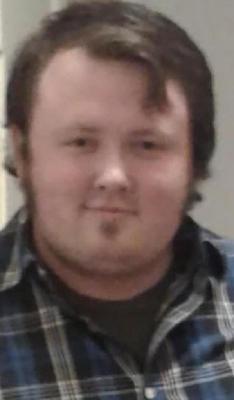
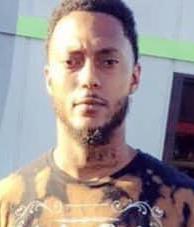
Randall Leslie, a 33-year-old Black man from Chattanooga, Tennessee, disappeared during the final days of May 2020. He was last seen on May 27 and was reported missing the following day. What initially entered police records as a missing-person case quickly took on a more ominous direction. Investigators with the Chattanooga Police Department’s Missing Persons Unit determined that the circumstances surrounding his disappearance were suspicious, leading the department’s Homicide Unit to join
the investigation.
For several weeks, Leslie’s whereabouts remained unknown. Then, on June 21, 2020, the Marion County Sheriff’s Office notified Chattanooga investigators that a body matching his description had been discovered in Marion County, outside Chattanooga. Forensic investigators subsequently confirmed that the remains belonged to Leslie. The discovery established that his disappearance had ended in homicide and suggested that his body had been transported away from the immediate area where the killing occurred.
The investigation eventually centered on Donyell DeWayne Holland. In March 2021, a Hamilton County grand jury indicted Holland on a charge of first-degree murder in Leslie’s death. Holland was already being held on unrelated charges when the murder indictment was announced, so authorities did not have to conduct a separate search to take him into custody. The indictment came nearly ten months after Leslie vanished and approximately nine months after his remains were recovered.
The prosecution did not move quickly to trial. Holland’s case was scheduled for trial in 2023, but the proceeding was postponed while evidence remained backlogged for examination by the Tennessee Bureau of Investigation. The delayed material reportedly included evidence requiring ballistics and forensic-biology testing. The postponement prolonged a case that had already taken months to produce an indictment and left Leslie’s family waiting years for a jury to hear the evidence.
Holland was eventually tried in Hamilton County Criminal Court in 2024. During the proceedings, prosecutors presented their case that he was responsible for Leslie’s killing and the removal of his body to Marion County. The trial reportedly became contentious enough that Holland was removed from the courtroom after being considered a safety risk. Despite his absence from part of the proceeding, the jury returned a guilty verdict for first-degree murder. Court records confirm that Holland received convictions in 2024 and was subsequently incarcerated in the Tennessee state prison system.
The conviction did not end the legal dispute. Holland pursued post-trial relief and attempted to challenge his convictions through both state and federal proceedings. A federal petition for a writ of habeas corpus was dismissed without prejudice in June 2025 because he had not yet exhausted the remedies available to him in Tennessee’s courts. His state criminal appeal, State of Tennessee v. Donyell Dewayne Holland, remained active before the Tennessee Court of Criminal Appeals as of July 2026, with Holland representing himself in portions of the appellate process and filing briefs and motions contesting the judgment. No appellate decision overturning his conviction had been issued at that time.
Leslie’s case therefore progressed from a troubling disappearance to the recovery of his body, the identification and indictment of a suspect, and ultimately a first-degree-murder conviction. Holland remains the person legally held responsible for the killing, although his challenges to the conviction have continued through the appellate courts. The long path from Leslie’s disappearance in May 2020 to a jury verdict four years later reflected the complexity of the investigation, the delayed forensic testing and the years his loved ones were forced to wait for the case to reach trial.