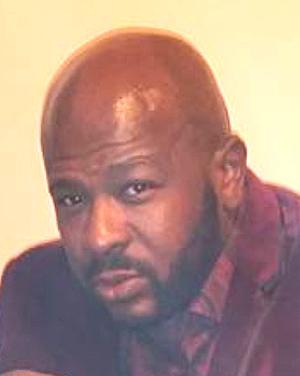
John E. Cooper was a 40-year-old Black man living in Chester, Pennsylvania, a city with a rich industrial history situated on the banks of the Delaware River. By the late 1990s, the city, like many others in the region, was grappling with economic challenges and the crime that often accompanied them. In the community, John was a man in the prime of his life, with connections, relationships, and a future that was his own. Those who knew him were part of his daily world, and his presence was a familiar part of their lives. His sudden and violent death would leave a permanent void for his family and friends, creating a wound that could not be healed by the passage of time alone.
The summer of 1999 began with a tragedy that would become an enduring mystery. On Wednesday, June 2, 1999, John’s life was abruptly and violently taken. An act of gun violence on a street in Chester ended his life, and the specific circumstances of the attack remain shrouded in silence. His death was officially classified as a homicide, marking the start of an investigation by the Chester Police Department, likely in conjunction with detectives from the Delaware County Criminal Investigation Division. Police would have responded to the scene, canvassing the neighborhood for witnesses and searching for the physical evidence left behind by the perpetrator.
In the initial days and weeks of the investigation, detectives worked to piece together a timeline of John’s final hours. They would have sought to understand who he was with, where he had been, and what could have possibly led to his murder. However, in this case, the trail appears to have gone cold quickly. No public announcements were ever made regarding a person of interest or a potential motive for the crime. The silence from law enforcement often indicates that witnesses were not forthcoming or that the evidence collected at the scene did not provide a clear path to a suspect.
As years turned into decades, the homicide of John E. Cooper became what is known as a cold case. The active investigation wound down, and the case file was set aside, waiting for the one piece of new information that could breathe life back into it. For a family, this is a particularly painful reality. They are left in a state of limbo, grieving not only the loss of their loved one but also the absence of justice. Without an arrest, there is no trial, no conviction, and no legal accountability for the person or people responsible. The questions of who took John’s life, and why, remain unanswered, haunting those he left behind.
An unsolved murder leaves an indelible scar on a community. It creates a lingering sense of unease and the painful knowledge that a killer has evaded capture. Each anniversary of John’s death is a quiet reminder of a life cut short and a crime unresolved. For his family, the grief is compounded by the lack of closure, a final chapter that has yet to be written. They are left to wonder if the person responsible still walks free, perhaps even within the same community.
Today, more than two decades after his death, the murder of John E. Cooper remains officially unsolved. The case file sits with law enforcement, a testament to a life lost and a promise of justice yet to be fulfilled. While the investigation is inactive, it is not closed. Detectives believe that even after so much time has passed, there are people who hold information that could be critical to solving the case. Someone may have seen something, heard something, or been told something in confidence that could finally provide the breakthrough investigators have been waiting for. The hope remains that a person’s conscience may compel them to come forward and finally bring answers to a family that has waited far too long.