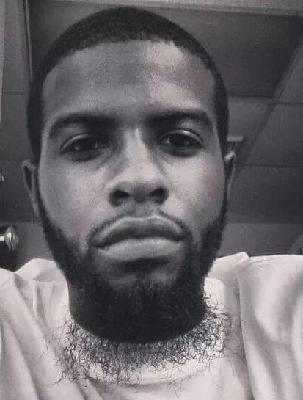
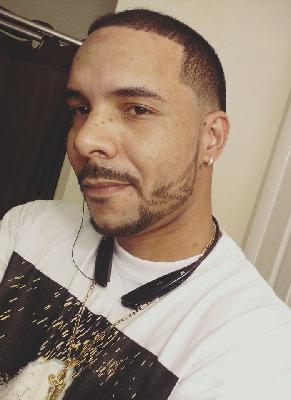
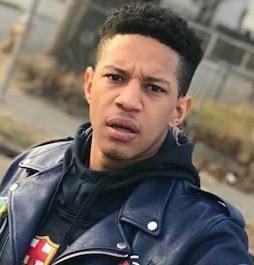
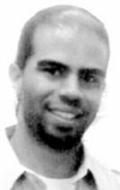
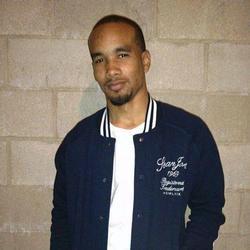
NaGus Lamar Griggs, an 18-year-old male from York, Pennsylvania, was shot on the evening of September 8, 2014, while sitting in the passenger seat of a vehicle in York City. Police were called around 7:02 p.m. to the area of Princess and Charles Streets after reports of a shooting, and when officers arrived they found Griggs wounded inside the car.
He had suffered a gunshot wound to the head and was taken to York Hospital, where he was pronounced dead later that night at 10:33 p.m.
Griggs was remembered as “Gus” by those close to him. He had been born in York on October 3, 1995, and was known locally as a talented basketball player. He played for William Penn Senior High and later helped New Hope Academy win its only District 3-A Championship the season before his death. His obituary described him as someone whose presence would be deeply missed, and also noted that he was a Gift of Life donor.
In the first days after the shooting, investigators moved quickly but the case shifted as witness accounts developed. Police initially issued a criminal homicide warrant for Niam Shabazz Jamison, who turned himself in on September 11, 2014. At that time, police were also looking to question Dysheem Tyquahn Jones, while Troyvon Breeland had already been located. But within days, the case against Jamison unraveled. The York County District Attorney’s Office withdrew the homicide charge against him after detectives found inaccuracies and conflicting information in witness statements, even though officials said probable cause had existed at the time of his arrest.
By September 24, 2014, police identified two new suspects in Griggs’s killing: Troyvon D. Breeland and Daequahn Tyree Ammir Jones, both of York. Criminal homicide warrants were obtained for both men. Breeland was arrested that afternoon on the 100 block of South Queen Street without incident and held in York County Prison without bail. Police said Jones was still being sought at that point and warned that he was considered armed and dangerous.
The prosecution’s later case centered on the shooting at the intersection of Princess and Pine Streets, where Griggs was in the front passenger seat of a friend’s car. Court records said authorities charged Daequahn Jones with criminal homicide and conspiracy in connection with the fatal shooting. The Commonwealth argued that the violence was tied to a neighborhood rivalry and retaliatory tensions between people from different parts of York City, including testimony that Jones and Griggs came from rival areas already connected by previous violence.
At Jones’s trial, witnesses described a red four-door car stopping at the intersection. One witness testified that Jones and Troyvon Breeland approached from across the street, walking behind the car. According to testimony credited by the jury, Jones took a handgun from another young man and fired at the car from close range. Another witness said Jones grabbed the gun and began shooting as the car was turning from Pine onto Princess Street. The defense tried to frame the shooting as self-defense, suggesting that someone in the car may have fired first, but the Commonwealth presented ballistics and forensic evidence to undermine that claim.
The physical evidence became important because a gun was found deep in the glove compartment of the abandoned car where Griggs’s body was located, but investigators established that the weapon was fully loaded and had not been fired during the shooting. Gunshot residue inside the vehicle suggested a gun may have been fired from inside the car at some point, but experts could not say that it happened during the shooting or even on that same day. Investigators also found no spent casings or other evidence proving gunfire came from inside the vehicle.
Forensic testimony also supported the prosecution’s theory. The pathologist found wounds around the fatal head wound that were consistent with glass fragments striking Griggs after the fatal bullet passed through the passenger-side window. Prosecutors argued that this made it unlikely Griggs was leaning out of the passenger window firing a gun when Jones shot him. A trajectory analysis of a bullet strike in a nearby downspout and brick also indicated the shot could not have originated from inside Griggs’s vehicle and more likely came from the Pine Street sidewalk, where witnesses placed Jones.
Troyvon Breeland’s role in the case was complicated by changing statements. At different points, he gave conflicting accounts about what he saw. In one version, he said he saw nothing and ran when shots were fired. Later, he identified Jones as the only shooter. At trial, he claimed he had previously lied and said he saw Griggs with a gun, but the court record noted the inconsistencies in his statements. The jury ultimately had to weigh those shifting accounts against other eyewitness testimony and the forensic evidence.
Daequahn Jones was convicted by a jury of third-degree murder in Griggs’s death. On December 31, 2015, he was sentenced in York County court to 18 to 40 years in prison. He appealed, challenging evidentiary rulings and arguing the evidence was insufficient to disprove self-defense, but the Pennsylvania Superior Court affirmed the judgment of sentence in 2017. The court found that the Commonwealth had presented enough evidence for the jury to conclude Jones was not acting in lawful self-defense when he fatally shot NaGus Griggs.