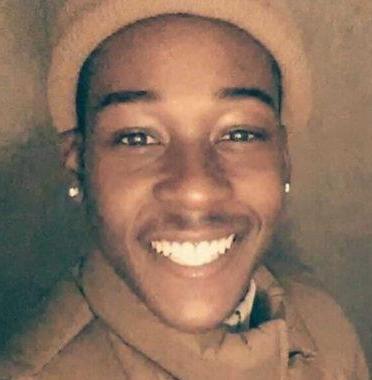
Amir Liverpool Parks, a 22-year-old Black/African American male, was a young father from Philadelphia whose life ended near the edge of Cobbs Creek in Upper Darby, Pennsylvania. The online sources differ on the exact date of death: a gun violence memorial lists him as lost to gun violence on August 2, 2020, while a Philadelphia Obituary Project profile and later Philadelphia Inquirer column describe him as fatally shot in August 2020, with the obituary profile giving August 26, 2020. The strongest location details place the killing around the woods along Cobbs Creek, in the 6500 block of North Church Lane near Marshall Road, just beyond the Philadelphia city line in Upper Darby Township.
Before his death, Amir’s life had recently changed in a way that made the loss even heavier for his family. He had become a father in March 2020 and had moved to Norristown with his child’s mother, trying to build a future and provide for his daughter. Family members remembered him as funny, caring, and full of personality, someone who made people laugh and left behind the kind of memories that stayed vivid after he was gone. As a child, he was remembered for being shy until coaxed into dancing the Harlem Shake for a dollar, and as a student, he was remembered by teachers as bright and likable. At Samuel Fels High School, he had been seen as a student with promise, and in 2015 he was selected for the Philadelphia Futures program, which helps first-generation college-bound students prepare for college.
For a time, Amir’s family was left with few answers. Because the shooting happened close to Cobbs Creek, many people assumed it had occurred in Philadelphia, but the Inquirer later reported that the location was actually about 100 yards beyond the city line in Upper Darby. That small distance mattered because the case was handled by Upper Darby police rather than Philadelphia police. The Inquirer reported that Philadelphia recorded 499 homicides in 2020 and solved only 210 of them, while Upper Darby had 10 homicides that year and eventually solved nine of them, including Amir’s case.
According to police information reported by the Inquirer, Amir was killed while illegally trying to sell guns to a potential buyer. His cousin Shamiese Parks-Gunagan said she believed he had taken up that dangerous activity out of desperation to support his family. Shortly before he was killed, Amir reportedly left a note on his phone that read, “Just in case something happens this is the person in the car.” That message became a chilling detail in the case, suggesting he feared something might go wrong before the meeting that ended with his death.
The public online sources reviewed identify an arrest but do not provide a confirmed suspect name in the accessible text. The Inquirer reported that in November 2022, police arrested a 20-year-old man in connection with Amir’s killing. The article said that arrest made Amir’s case one of the nine solved Upper Darby homicides from 2020. The available accessible reporting does not provide additional confirmed details about the suspect’s identity, specific charges, trial outcome, plea, conviction, or sentence.
Amir’s former teacher, Kelly Ann Coughlin, said she was grateful that police did not give up on the case and specifically credited Detective Matthew C. Rowles for continuing the investigation. Amir’s cousin said she had feared the family would never learn what happened, the way many families of homicide victims never receive answers. Even with the pain of learning some of the circumstances, the arrest gave the family a measure of clarity after more than two years of uncertainty.
In the years after his death, Amir’s loved ones continued to carry him with them. The Inquirer reported that he was cremated and that several family members wore lockets containing some of his ashes. Friends and relatives also held a balloon release in his honor. What remains in the online accounts is the story of a young father whose death began as another painful, unanswered shooting near the Philadelphia border, then became a case where investigators eventually made an arrest, though the public information still leaves important questions unresolved about what happened in court afterward.