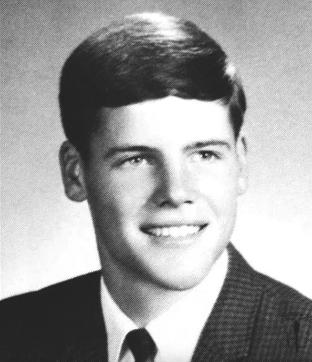
Jeffrey Glenn Miller, a 20-year-old Jewish American student at Kent State University, was killed on May 4, 1970, during the Kent State shootings. Miller was participating in a protest against the expansion of the Vietnam War into Cambodia and the presence of the Ohio National Guard on the Kent State campus. The protests escalated, and National Guardsmen opened fire on the unarmed students, killing Miller and three others: Allison Krause, Sandra Scheuer, and William Schroeder.
Nine others were wounded, including one who was paralyzed for life.
Miller had thrown a tear gas canister back at the Ohio National Guardsmen, who had originally fired it. He was unarmed when he was shot, standing approximately 265 feet away from the Guardsmen. A single bullet entered his open mouth and exited at the base of his posterior skull, killing him instantly. The incident was captured in a Pulitzer Prize-winning photo by John Filo, which shows 14-year-old runaway Mary Ann Vecchio kneeling over Miller's dead body.
In the aftermath of the shootings, there were no arrests or suspects charged with the murder of Jeffrey Glenn Miller. The incident led to widespread protests and a national student strike, causing hundreds of campuses to close due to both violent and non-violent demonstrations. The Kent State campus remained closed for six weeks. Five days after the shootings, 100,000 people demonstrated in Washington, D.C., against the war and the killing of unarmed student protestors by American soldiers on a college campus.
The Kent State shootings remain a significant event in American history, symbolizing the deep divisions and unrest caused by the Vietnam War. The incident also led to several investigations, including a government-commissioned one that determined the firing on Kent State students was completely unwarranted. Despite the findings, public opinion was divided, with some blaming the students for their own deaths.
Miller's death and the Kent State shootings had a lasting impact on the anti-war movement and the broader cultural landscape of the United States. His family, friends, and the nation continue to remember him and the other victims of that tragic day.