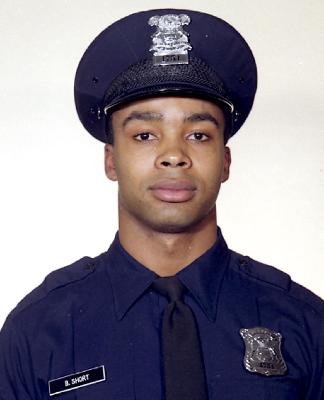
Jason Gill-Best was 30 years old when he died in Detroit, Michigan. He was a Black man, and the simplest facts of his identity—his name, his age, his hometown—carry a weight that is hard to put into words, because they point to a full life that existed beyond a line of text. A person is never just a set of details. He was someone who moved through real streets, under real skies, with people who knew his laugh, recognized his footsteps, and could pick him out in a crowd without trying.
To say he was from Detroit is to place him in a city that shapes its own kind of strength. Detroit can be loud and tender at the same time, the kind of place where you learn to keep going, where families and friends become anchors, where pride and hardship sometimes live in the same breath. Jason belonged to that world—its familiar corners, its rhythms, its everyday moments that don’t seem important until they’re all you can think about afterward. The things that made up his days, the routines that felt ordinary, become sacred in memory when someone is gone.
When a death happens, grief doesn’t arrive neatly. It spreads through phone calls and quiet pauses, through the stunned feeling of reading a name and realizing the world has changed. People who cared about Jason would have felt that shift—the sudden, impossible divide between “before” and “after.” There is the sorrow of what will never happen again: another conversation, another chance to say what should have been said, another moment that could have become a story told years later. There is also the ache of imagining all the time he should have had—because 30 is young in a way that hits the heart like a wave, young enough that dreams still feel close, young enough that a future still seems like something you can reach out and touch.
Even with so little written down, it is possible to understand what his death meant, because loss speaks a language that doesn’t require extra details. It means someone’s seat felt empty. It means names were spoken with care, memories were retold in fragments, and people held on to small things—photos, messages, the sound of a voice in their head—because small things become the last places love can rest. It means there were people who wanted him here, who would trade anything for one more day that ended differently.
Jason Gill-Best’s story, as it is provided, does not come with the explanations that often follow tragedy. There is no public account here of how it happened, no timeline to trace, no courtroom ending to offer closure. What remains is the undeniable truth that he existed, that he mattered, and that his death left a real absence in the place he called home. And in the end, that absence is the most honest measure of a life: not the details that can be written down, but the space someone leaves behind when they are no longer there.