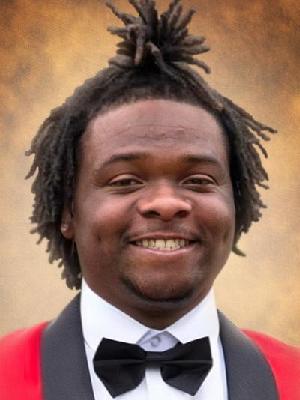
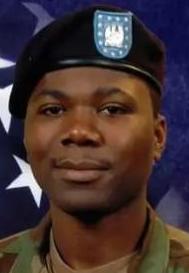
Joseph Roy, a 42-year-old White man from Alexandria, Louisiana, died on March 8, 2018. People who knew him carried him in their memories as more than a name attached to a date; they spoke of a life tied to central Louisiana, shaped by the places that raised him and the relationships that stayed with him. He was known by the nickname “The Hammer,” a simple moniker that sounds tough on the surface, but also hints at the kind of presence that leaves an impression—someone you remember not
just for how he looked on paper, but for how he filled a room, how he showed up in the lives around him.
His story was rooted close to home. He had ties to Pineville, and those connections mattered, the way hometown roots often do in communities where people grow up crossing the same streets and seeing the same familiar faces year after year. When someone like that is gone, it doesn’t just create an empty space in one household; it ripples outward. It reaches old friends who suddenly remember a laugh or a voice, relatives who replay ordinary moments that now feel priceless, and neighbors who can’t help but picture the last time they saw him and realize they didn’t know it would be the last.
The day Joseph died did not settle into quiet grief. His death was described as a murder, and it happened on Bolton Avenue in Alexandria, turning an ordinary stretch of roadway into a place marked by shock and unanswered questions. A violent loss like that is not something a family can gently absorb. It arrives like a rupture—one moment a life is still moving forward, and the next it is stopped, leaving behind the aching task of trying to understand what happened, why it happened, and what comes after.
In the wake of that kind of tragedy, people often cling to small details because they’re all they have to hold onto. Where it happened. The street name. The certainty that someone saw something, someone knows something, that somewhere there is a sequence of events that can be pieced together into sense. And beneath all of that is the raw human truth: Joseph’s loved ones were left to face a world that suddenly felt harsher, a world in which a man they cared about was taken in a way that never should have happened.
Not long after, the investigation moved toward accountability. The Alexandria Police Department announced that two suspects had been arrested in connection with Joseph Roy’s murder: Demarcus Scales, 33, and LaToshia Thomas, 32. The arrests were reported as happening without incident, a phrase that sounds procedural until you consider what it means in the heart of a grieving family—an arrest does not bring someone back, but it can feel like the first solid step in a long road, a sign that Joseph’s death was not being treated as just another headline, that his name mattered enough to pursue answers.
Even with arrests, grief does not ease neatly into resolution. There is still the weight of what was lost: the future Joseph should have had, the conversations that will never happen, the milestones he won’t be there to see. There is the haunting imbalance between the simplicity of who he was to the people who loved him—someone with a nickname, with roots, with a history—and the brutal fact of how his life ended. In the aftermath, what remains is the love that refuses to disappear, the ache that doesn’t ask permission, and the determination—spoken or silent—that Joseph Roy will be remembered as a person, not just as a case.