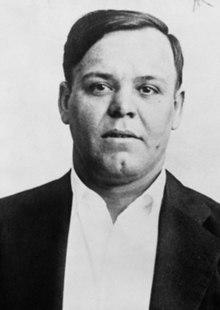
Frank Gusenberg, a 35-year-old American contract killer of German descent, died on February 14, 1929, in Lincoln Park, Chicago, Illinois. He was a member of the North Side Gang and was known for his involvement in the violent gang wars of Prohibition-era Chicago. Gusenberg's death was a result of multiple gunshot wounds sustained during the infamous St. Valentine's Day Massacre.
The St.
Valentine's Day Massacre was a brutal event where seven members of the North Side Gang, including Gusenberg, were lined up against a wall in a garage on North Clark Street and executed by four men dressed as police officers. Despite being shot fourteen times, Gusenberg was the only victim found alive when the police arrived. When questioned by the police, he reportedly replied, 'Nobody shot me,' before succumbing to his injuries hours later.
The massacre was widely believed to be orchestrated by Al Capone's gang, although no one was ever officially charged with the crime. The event highlighted the extreme violence and lawlessness of the time, as rival gangs fought for control over the lucrative illegal liquor trade. Gusenberg's death became a national sensation and remains one of the most infamous mob hits in history.
In the aftermath of the massacre, there were no arrests or litigations directly related to Gusenberg's death. The investigation into the crime was extensive, but the perpetrators were never conclusively identified. The lack of concrete evidence and the code of silence among gang members made it difficult for law enforcement to bring anyone to justice.
Gusenberg's life and death were emblematic of the era's gang violence and the brutal reality of the criminal underworld in Chicago during the 1920s. His legacy as a feared enforcer and a victim of one of the most notorious mob hits continues to be remembered in the annals of American crime history.