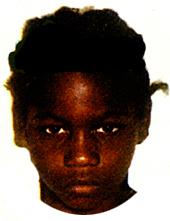
Robert “Yummy” Sandifer was an 11-year-old Black boy growing up in Chicago's Roseland neighborhood, surrounded by crowded housing, family instability, and the constant presence of street gangs. From early childhood he cycled through neglect, abuse, and short stints in juvenile facilities, drifting further from school and deeper into the streets. His nickname came from his love of cookies, a small, almost tender detail that stood in stark contrast to the life he was leading.
By the time he was in preteen years, he had already accumulated a juvenile record and been drawn into the Black Disciples, a powerful neighborhood gang that treated him less like a child than a disposable recruit.
In late August 1994, older gang members handed him a 9-millimeter pistol and sent him to shoot at rivals on a nearby block, counting on his youth to attract less police scrutiny. He fired into a group on the street, wounding several young people and fatally striking 14-year-old Shavon Dean, an uninvolved girl caught by a stray bullet. The killing horrified the neighborhood and drew intense media attention; police launched a citywide search that lasted several days, while his mugshot and the story of a small child turned triggerman were broadcast nationally. Within weeks, his face appeared on the cover of Time magazine as a symbol of inner-city violence and the failures of social systems meant to protect children like him.
As officers combed Chicago's South Side looking for him, he moved between safe houses and friends' homes, trying to stay ahead of both the law and the gang that had used him. Within the Black Disciples, fears grew that if he were captured he might cooperate with authorities and expose older members who had supplied the gun and ordered the shooting. According to later accounts, on the night of August 31 he tried to reach his grandmother by phone and stood on a neighbor's porch asking for prayers, saying he wanted to turn himself in. Around this time, fellow gang members Derrick and Cragg Hardaway, teenagers only a few years older than he was, were sent to “help” him escape the neighborhood, telling him they would take him to safety out of town.
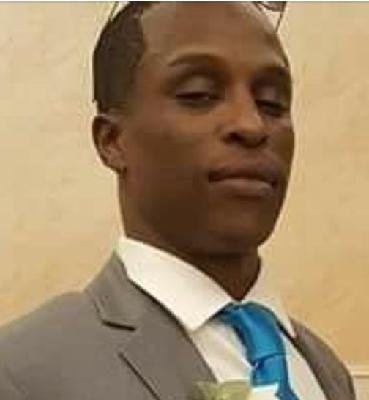
Instead of a refuge, the Hardaway brothers drove him to a railroad underpass near East 108th Street and South Dauphin Avenue on Chicago's far South Side. There, in the darkness beneath the viaduct, they ordered him from the car and told him to kneel. Gunshots echoed under the tracks as he was shot twice in the back of the head, execution-style. His body was discovered in the early morning hours of September 1, 1994, lying under the overpass while police were still publicly searching for him as a suspect in Shavon Dean's killing. In the hours and days that followed, investigators quickly focused on the Hardaway brothers; Derrick ultimately confessed under police questioning, and both brothers were arrested and charged with his murder.
Prosecutors brought first-degree murder charges against both Derrick and Cragg Hardaway in Cook County, initially beginning in juvenile court before Derrick's case was transferred so he could be tried as an adult. At trial, the state presented evidence that the brothers had lured Robert into the car, driven him to the viaduct, and carried out the execution at the direction of gang superiors who feared his potential cooperation with authorities. Juries convicted both defendants; Derrick received a 45-year sentence, and Cragg was sentenced to 60 years in prison. Years later, appellate courts upheld Derrick's conviction against challenges to the voluntariness of his confession, and both brothers ultimately served more than two decades before being paroled—Derrick in 2016 and Cragg in 2020. No higher-ranking gang leaders were ever successfully prosecuted for ordering the killing, leaving the public story focused on three children whose lives had already been shaped and shattered by violence. Decades on, the case remains a grim emblem of how a child could be turned into both a symbol of fear and a victim, and in later interviews Derrick Hardaway has spoken of regret and the weight of having helped end a life that was already marked by abandonment and exploitation.