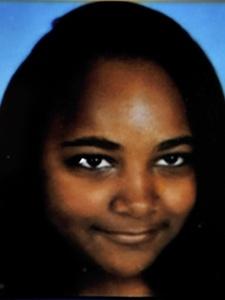
Frances Colon was an 18-year-old Hispanic female whose life was tragically cut short on February 15, 2013, when she was fatally shot in Chicago, Illinois. A senior and honors student at Roberto Clemente Community Academy, Frances was eagerly anticipating graduation and preparing for college. She dreamed of becoming an attorney and had already distinguished herself academically, earning recognition as a student of the month.
Those who knew her described an intelligent, creative, and outgoing young woman who enjoyed drawing, designing clothing, and spending time with friends. She had plans to attend Northeastern Illinois University and was looking forward to a future filled with opportunity.
On the evening of February 15, 2013, Frances stopped at a neighborhood convenience store in Chicago's Humboldt Park area to purchase snacks. At approximately 7:00 p.m., she was leaving the establishment near the 1100 block of North Pulaski Road when gunfire suddenly erupted nearby. Investigators determined that she was not the intended target of the shooting. Instead, she had unknowingly walked into the path of bullets fired during a dispute involving two men. One bullet struck Frances in her upper back, causing a devastating injury. Chicago police officers responding to the shooting found her wounded, and she was transported to Mount Sinai Hospital. Despite efforts to save her life, Frances was pronounced dead at approximately 8:16 p.m. The Cook County Medical Examiner's Office determined that she died from a gunshot wound to the back, and her death was ruled a homicide.
The shooting occurred on a particularly painful day for Chicago. Earlier that afternoon, President Barack Obama had visited the city to address the growing problem of gun violence, following the highly publicized killing of another Chicago teenager, Hadiya Pendleton. Frances and a close member of her family had watched the president's visit and later noticed helicopters flying overhead as he departed. Just hours afterward, the same violence being discussed during the president's visit claimed Frances's life. Her killing also marked the third fatal shooting of a Roberto Clemente student within three months, following the deaths of Jeffrey Stewart in December 2012 and Rey Dorantes in January 2013.
As detectives investigated, they discovered that the gunfire stemmed from a confrontation involving Larry Luellen Jr. and another man, Darius Hammond. According to prosecutors, Luellen, who was associated with the Black P Stones street gang, had become involved in a dispute connected to drugs approximately 20 minutes before the shooting. Following the argument, Luellen reportedly went to a nearby barbershop, obtained a firearm, and returned to confront Hammond. When Hammond fled, Luellen chased him along Pulaski Road and opened fire, discharging approximately six shots. Although Hammond escaped being struck, one of the bullets hit Frances as she walked nearby. Investigators concluded that she had no involvement in the disagreement and was an innocent bystander.
An anonymous tip helped Chicago police identify Luellen as the suspected gunman. Investigators subsequently gathered witness statements and other evidence linking him to the shooting. One witness, who knew Luellen from the neighborhood, described watching him pursue Hammond before hearing multiple gunshots. The witness later identified Luellen during police identification procedures. Surveillance footage from a police-operated traffic camera also showed the pursuit along Pulaski Road. Authorities arrested Luellen, and in February 2013, he was charged with one count of first-degree murder in Frances's death. During an initial court appearance, a judge ordered him held without bond.
The loss devastated Frances's loved ones and classmates. In the days following the shooting, her family struggled with the circumstances surrounding her death. A close member of the family had unknowingly driven past the shooting scene that evening, seeing emergency vehicles and police activity without realizing that Frances was the victim. Her family later described the heartbreak of learning that she had been killed so close to a relative's home. At Roberto Clemente Community Academy, classmates and teachers mourned a young woman remembered for her cheerful personality, artistic talent, and determination to succeed. On February 18, 2013, a close member of her family visited the school and tied balloons to its flagpole in her memory, a painful reminder that she would never return to the classrooms where she had been preparing for graduation.
Frances had been looking forward to choosing her class ring, wearing her cap and gown, and beginning college. Her family recalled her fascination with courtroom proceedings and legal television programs, interests that had helped inspire her ambition to become an attorney. She was also remembered for her creativity, including making clothing from unexpected materials and experimenting with recipes in the kitchen. Her family believed she possessed the determination and intelligence to accomplish her goals. Instead of celebrating her graduation, they were forced to arrange her funeral. Services were held on March 2, 2013, with friends, relatives, and community members gathering to remember her life. A friend performed a song, another recited a poem, and speakers addressed the devastating consequences of violence against young people.
The criminal case against Luellen continued through the Cook County court system. During his trial, prosecutors presented eyewitness testimony describing the confrontation and subsequent shooting. A principal prosecution witness, Bilal Sulieman, testified that he had seen Luellen chasing Hammond and firing in his direction. Sulieman acknowledged that he had initially avoided appearing in court because he feared possible retaliation. His testimony raised concerns among several jurors about their own safety, prompting questions to the judge. The defense requested a mistrial, arguing that the jury's concerns could affect its impartiality. After questioning jurors individually, the judge excused one juror who expressed uncertainty about remaining impartial but denied the request for a mistrial.
On June 23, 2017, a Cook County jury found Larry Luellen Jr. guilty of first-degree murder in connection with Frances's death. On July 31, 2017, Judge Arthur Hill Jr. sentenced him to 75 years in prison. Luellen was subsequently transferred into the custody of the Illinois Department of Corrections, with records at the time showing his placement at Menard Correctional Center. The conviction brought a significant measure of legal accountability more than four years after the shooting.
Luellen later appealed his conviction, challenging the trial court's handling of juror safety concerns, the admission of testimony concerning a witness's fear, and the reliability of the eyewitness identification. On November 25, 2019, the Illinois Appellate Court rejected his arguments and affirmed the conviction. The appellate judges determined that the trial court had taken appropriate steps to address the jurors' concerns and that the eyewitness testimony provided sufficient evidence to support the guilty verdict. The 75-year prison sentence remained in effect.
Frances Colon's death became another heartbreaking example of the consequences of gun violence in Chicago. She had no connection to the dispute that led to the shooting and was simply going about an ordinary evening when her life was taken. Her killing left an enduring impact on her family, friends, school, and neighborhood, where memorials and messages of remembrance honored the future she would never experience. Although the man responsible was ultimately convicted and sentenced to a lengthy prison term, the judicial outcome could not restore the years Frances lost or the accomplishments she had hoped to achieve. Her story remains a reminder of the innocent lives affected by violence and the lasting grief carried by those left behind.