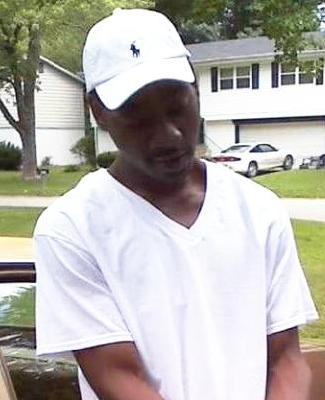
Carl Z. Silas, a 28-year-old African American man from Belleville, Illinois, was killed just before dawn on December 30, 2016, after deputies were called to a report of a home invasion and shooting at an apartment in the 2900 block of West Boulevard, in unincorporated east Belleville. Inside the small apartment, they found Silas dead from gunshot wounds, the victim of what investigators immediately classified as a homicide.
Silas's death tore through a family and community that knew him by the nicknames “Mississippi” and “Wallie,” a nod to his Mississippi roots. Online memorials describe him as a sweet, lovable father who worked hard at jobs that included shifts at the Belleville Boot Factory and at Rally's, trying to build a life in Illinois while supporting his three children. Guestbook messages and candles lit in his honor speak to a man who joked with friends, doted on his kids, and left relatives stunned by the suddenness of his loss.
In the early hours of that December morning, the quiet of the apartment was broken by the intrusion that would end his life. Deputies responding to the emergency call arrived to find evidence of a violent encounter but also a scene that could have been far worse: news accounts later noted that two of Silas's young children were asleep in the apartment while he was shot, spared physically even as their lives were altered forever. The nature of the call, described as a home invasion and shooting, framed the investigation from the start as one involving an armed intruder rather than a domestic or spontaneous dispute.
Because of the seriousness of the case, the St. Clair County Sheriff's Department requested assistance from the Major Case Squad of Greater St. Louis, which formally opened MCS Report #632 that same day. The squad's summary lists the crime as homicide, with Silas as the victim and 20-year-old David E. Fields as the suspect. According to that report, after deputies reached the scene around 4:59 a.m., the investigation quickly focused on Fields, and before long he was charged with two counts of first-degree murder and one count of home invasion. A judge set his bond at $2,000,000, underscoring how gravely authorities viewed the killing.
Fields was not an unknown figure in the local justice system. He had previously been convicted in a case involving the battery of a pregnant woman, and after serving his sentence he was paroled to live in the Belleville home of newly elected St. Clair County Circuit Judge Ronald R. Duebbert. Judicial disciplinary records and news coverage later recounted how Fields and Duebbert had been acquainted since 2013 and how Fields' placement with the judge, who said he was trying to help the younger man rebuild his life, would become a focal point once Fields was accused in Silas's death.
The relationship between the suspect and the judge fueled a broader controversy that reached far beyond a single apartment on West Boulevard. Court documents described in local reporting showed that a cellphone associated with Judge Duebbert sent nine text messages to Fields's iPhone in the hours before Silas was killed, and that Fields's phone responded. Later accounts based on Judiciary Board filings state that on the morning of December 30, Fields called Duebbert to say he had “nothing to do” with the murder; Duebbert, according to those records, urged him to turn himself in, and Fields was in police custody by about 10:30 a.m. that day.
As detectives and prosecutors built their case, attention also turned to the question of what weapon had been used and whether any of Duebbert's firearms were involved. A special prosecutor later acknowledged in a pretrial hearing that police had not tested the bullets recovered in the case and that earlier investigative theories tying the killing to a shotgun were wrong. The prosecutor formally disowned prior witness statements claiming Silas was killed with a shotgun, undercutting suggestions that a weapon owned by the judge might have been the murder weapon and further complicating an already fraught prosecution.
Through it all, the working theory of law enforcement, as reflected in local commentary on police reports, cast the shooting as a robbery gone wrong. An editorial in the Belleville News-Democrat, discussing the scrutiny on Duebbert's personal firearms, remarked that those guns turned out to be “unneeded when Fields went to rob” Silas, presenting the encounter as an attempted robbery rather than a random or purely personal attack. That characterization aligned with the original framing of the incident as a home invasion and suggested a planned intrusion into Silas's apartment, rather than a chance meeting that escalated.
When Fields finally went to trial in St. Clair County, the case did not end the way investigators and some family members had hoped. The first jury, which heard the evidence in July 2018, was unable to reach a unanimous verdict, leading the judge to declare a mistrial. A second trial followed, and on December 10, 2018, a new jury acquitted Fields of the murder charge. An Associated Press account noted that he was 22 years old by then and was released from jail two days after the verdict, his mother calling the acquittal “the right verdict,” even as the killing that had set the case in motion remained unresolved in the eyes of many.
Years after the shots that ended Silas's life, the legal and professional repercussions of the investigation were felt most directly by Judge Duebbert. The Illinois Courts Commission ultimately removed him from the bench in 2020, finding that he had lied to police during the 2016 murder investigation and to the Illinois Judiciary Board about his contacts with Fields and about the cellphone at the center of the case. But for Silas's loved ones—those who called him Mississippi, who remembered him roasting friends in fun and coming home tired from work shifts—the essential fact remained that he had been killed in his own home, with his children nearby, and that no one had been convicted of the crime that took him from them.