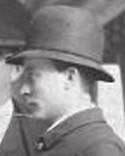
Benjamin H. Crider, a 30-year-old White male and the chief of police in Carrollton, Georgia, was remembered as the town’s earliest documented police chief, a small-town officer working in a community of only a few hundred people when violence overtook him on June 8, 1900. The accounts that survive agree on the heart of what happened: Crider was trying to make an arrest when the man he was confronting opened fire and shot him. Even in the moment he was falling, Crider reportedly fired back, turning the encounter into a fatal exchange that ended with both men dead.
What makes the case striking is how abruptly it seems to close in the surviving record. Modern law-enforcement memorials and local historical summaries describe the shooting as a line-of-duty killing and say the suspect was killed at the scene by Crider’s return fire. Because of that, there was no arrest that led to a jail booking, no prosecution, and no later trial or conviction tied to the killing. The sources available online do not appear to identify the suspect by name, and they do not point to additional accomplices or a wider conspiracy. Instead, the story survives as a brief but grim episode: a police chief attempting to do his job, a suspect resisting with deadly force, and a gunfight that ended almost as soon as it began.
The human outline around the event is a little clearer than the criminal record. Crider had been serving as Carrollton’s chief by the mid-1890s, and later accounts note that he left behind a wife and two children. That detail gives the case a lingering sadness, because the shooting was not only the violent death of a town officer but also the sudden collapse of a young family’s future. In the surviving online record, though, the case remains largely a closed one in the most literal sense: the man who killed Benjamin H. Crider died in the same confrontation, and with him went the possibility of an arrest, courtroom testimony, or a fuller public accounting of why the shooting happened.