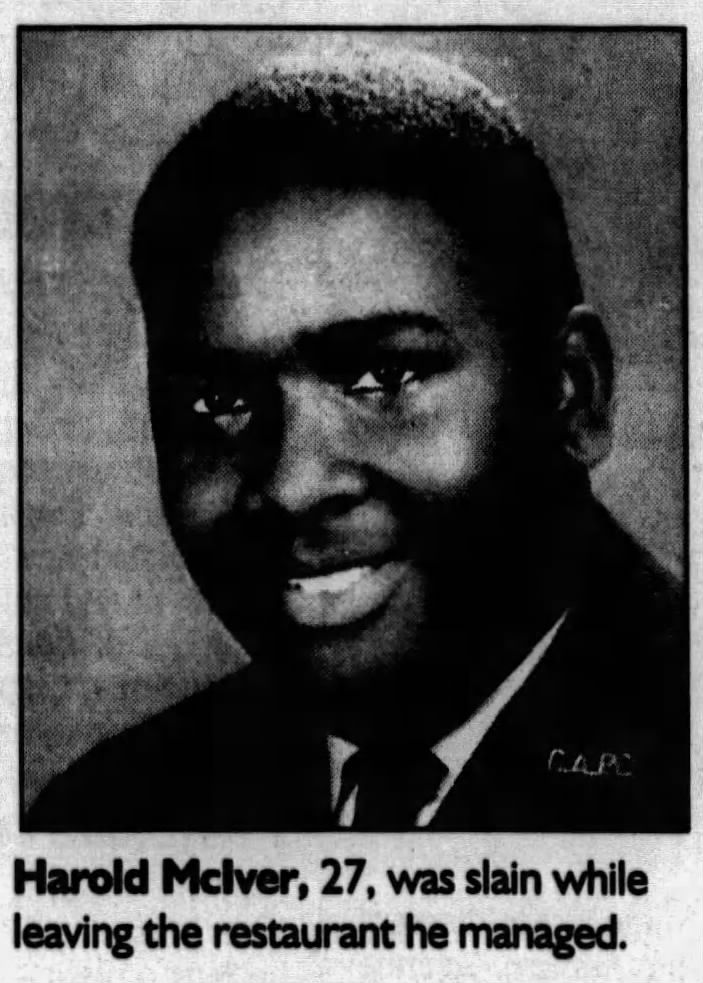
In the summer of 1979, a senseless act of violence cut short the life of Harold McIver, a 27-year-old African American man working as a manager at a Taco Bell in Doraville, Georgia. On July 12th, while on duty, McIver was fatally shot through a restaurant window. The gunman, positioned 150 yards away, carried out the ambush-style attack with a chilling precision that would later become his known signature.
This was not a robbery gone wrong, but a calculated act of racial hatred.
The investigation into McIver's murder eventually led to Joseph Paul Franklin, a white supremacist and serial killer who was actively waging a race war across the country. Franklin, driven by extremist beliefs, targeted African Americans, Jewish people, and interracial couples in a violent spree that spanned multiple states and included murders, bombings, and bank robberies. Years after the killing, Franklin confessed to the murder of Harold McIver, stating his motive was seeing McIver in close contact with a white woman.
Despite his confession, Franklin was never formally tried or sentenced for the murder of Harold McIver. At the time of his confession, he was already incarcerated and facing multiple life sentences for a string of other heinous crimes. The legal complexities of prosecuting a serial killer for numerous crimes across different jurisdictions meant that some cases, like McIver's, did not result in a specific conviction.
Justice for Harold McIver, in a direct legal sense, remained elusive. However, Franklin's reign of terror came to an end on November 20, 2013, when he was executed in Missouri for the 1977 murder of Gerald Gordon. While his execution brought a close to a dark chapter of American history, the memory of victims like Harold McIver serves as a stark reminder of the devastating impact of racial violence.