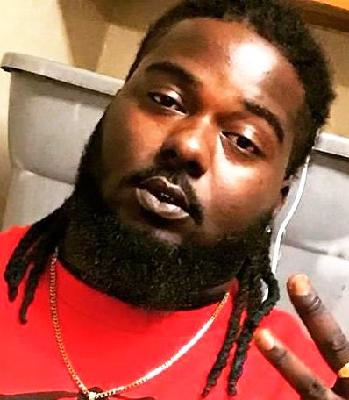
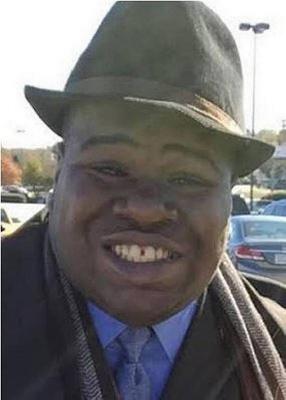
Deondray Lamar Williams, a 26-year-old Black man from Phenix City, Alabama, died on July 8, 2020, after gunfire erupted in Columbus, Georgia. That night ended near Lafayette Drive and Patton Drive, where authorities found him with multiple gunshot wounds, and the killing left behind the kind of silence that settles hard over a neighborhood after sirens fade.
His death was reported as a homicide, and local records and memorial reporting place the loss in Columbus even as his obituary ties him to Phenix City just across the river.
What can be pieced together from the reporting is stark and brief, the way many street-corner killings first enter the public record: a young man shot, a body found near a familiar intersection, and a family left to move from shock into grief while investigators tried to turn a violent moment into a case they could prove. Williams was later remembered in obituary notices as Deondray L. Williams, and those notices fixed the human details that crime blurbs often flatten, marking not only the date of his death but the fact that he was mourned by people who knew him beyond the scene where he was found.
For months, the case appears to have moved in that tense space between rumor and resolution. Then, in April 2021, authorities publicly connected a suspect to the killing. Local reporting and jail-booking records identified Trevarious Jahuan Lee as the person accused in Williams’ death. A Facebook post from WTVM, reflected in search results, said Lee was 20 and accused of shooting Williams in July 2020 near Lafayette Road and the Patton and Prado area, while booking information shows Lee was arrested on April 15, 2021, on a murder charge.
By April 26, 2021, the case had reached Recorder’s Court, where Ledger-Enquirer reporting said Lee was charged in the 2020 slaying of Deondray Lamar Williams. The most revealing public detail from that hearing was not a confession or a dramatic eyewitness account, but the defense’s argument that the prosecution’s case was thin, with Lee’s attorney characterizing it as “just cell phone evidence.” That description suggests investigators believed digital records helped place Lee in the story of what happened to Williams, even as the defense tried to frame that evidence as too weak to carry a murder case on its own.
As for what came after the arrest, the accessible online sources I found do not clearly show a published conviction, acquittal, or final trial outcome in Williams’ case. The reporting available through search results establishes a named suspect, an arrest, and a murder charge, but not a definite end to the prosecution. That leaves the story in an uneasy place: Deondray Lamar Williams’ death is no mystery in the sense that it was recognized as a homicide, yet the public trail that can be readily confirmed online still feels incomplete, stopping after the accusation and the early court fight over whether the evidence was enough.