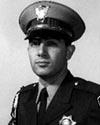
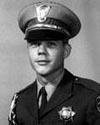
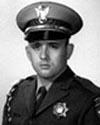
Roger D. Gore, a 23-year-old California Highway Patrol officer, tragically lost his life on April 5, 1970, in what became known as the Newhall Incident. This event marked one of the darkest days in the history of the California Highway Patrol (CHP). On that fateful night, Officers Roger Gore and Walter Frago were alerted by radio about a vehicle carrying individuals who had brandished a weapon. The officers spotted the car, followed it, and initiated a traffic stop in a restaurant parking lot.
As Officer Gore approached the driver, the passenger door suddenly swung open, and the passenger, later identified as Jack Twinning, opened fire, fatally wounding Officer Frago. In the ensuing chaos, the driver, Bobby Davis, turned and shot Officer Gore twice at close range, resulting in his immediate death.
The incident did not end there. Moments later, Officers James Pence and George Alleyn arrived at the scene, only to be met with a barrage of gunfire. Both officers were mortally wounded in the exchange. The suspects, Twinning and Davis, managed to escape, leading to a massive manhunt that lasted for nine hours. Twinning eventually broke into a house and held a man hostage before taking his own life with a shotgun he had stolen from Officer Frago. Davis was captured, stood trial, and was convicted on four counts of murder. Initially sentenced to death, his sentence was later commuted to life in prison following a 1972 California Supreme Court ruling that declared the death penalty unconstitutional at the time.
The Newhall Incident had far-reaching implications for law enforcement procedures. The tragic loss of four young officers prompted a comprehensive review and overhaul of high-risk stop procedures, emphasizing officer safety. This incident underscored the need for better training and equipment for law enforcement officers, leading to significant changes in firearms procedures, arrest techniques, and the introduction of new protective tools. The legacy of the Newhall Incident continues to influence police training and protocols, serving as a somber reminder of the dangers faced by law enforcement officers in the line of duty.