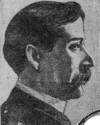
George Richard Moscone, the 37th mayor of San Francisco, was tragically assassinated on November 27, 1978, at the age of 49. Moscone, known for his progressive policies and efforts to diversify the city's government, was shot and killed inside San Francisco City Hall by former Supervisor Dan White. On the morning of the assassination, Moscone was preparing to announce that White's recently vacated supervisor position would be filled by someone else, a decision that enraged White.
White entered City Hall through a basement window to avoid metal detectors and first shot Moscone in his office before proceeding to kill Supervisor Harvey Milk in another part of the building.
The aftermath of the assassinations was marked by significant legal and social repercussions. Dan White was charged with first-degree murder with special circumstances, which could have led to the death penalty. However, during the trial, White's defense argued that he was suffering from diminished capacity, a condition they partially attributed to his consumption of junk food, leading to what became infamously known as the "Twinkie defense." This defense strategy contributed to White being convicted of the lesser charge of voluntary manslaughter instead of murder. He was sentenced to seven years and eight months in prison but was paroled after serving just over five years.
The verdict sparked outrage and led to the White Night riots, a series of violent protests in San Francisco. The public's reaction to the lenient sentence also prompted changes in California's legal system, including the abolition of the diminished capacity defense. Dan White's actions and the subsequent trial had a lasting impact on the city's political landscape and legal practices. White himself struggled with the aftermath of his actions and ultimately committed suicide in 1985, a year and a half after his release from prison.
The assassinations of Moscone and Milk also had significant political ramifications. Dianne Feinstein, who was the president of the Board of Supervisors at the time, announced the deaths to the media and subsequently became the acting mayor. She was later elected as the first female mayor of San Francisco and went on to have a long career in the U.S. Senate. The tragic events of November 27, 1978, remain a pivotal moment in San Francisco's history, highlighting issues of political violence, legal justice, and the fight for civil rights.