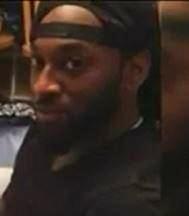
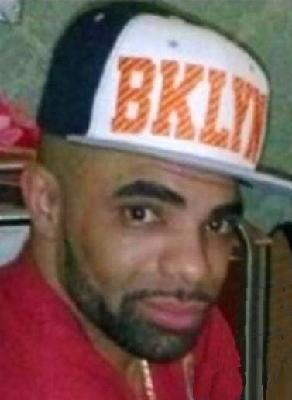
Leonardo “Nardo” Coppola, a 40-year-old man, died on July 12, 1979, in Brooklyn, New York, when a midday meal turned into a carefully staged execution at Joe & Mary’s Italian-American Restaurant on Knickerbocker Avenue. He was there in the orbit of Carmine “Lilo” Galante, and when the violence came it did not come as a chaotic barroom eruption, but as something colder: gunmen arriving with purpose, moving straight toward their targets, and firing at close range on the restaurant’s
patio. Coppola was killed alongside Galante and Giuseppe Turano, and in the same burst of gunfire the restaurant owner’s teenage son was wounded, a bystander caught in the edge of a murder meant for men with underworld titles rather than for the family running the place.
Accounts that later surfaced in federal records described the choreography of the afternoon in unnerving detail: Galante and Turano were already seated on the rear terrace when, about an hour later, Coppola arrived with others and initially kept to a separate table before being drawn into the fatal circle. Shortly before 3 p.m., masked men armed with multiple firearms came in with a getaway car waiting; they walked directly to the patio and opened fire point-blank. The shooting was not just meant to kill, but to send a message that the decision had been made somewhere higher than the patio itself—somewhere far from the plates and glasses left behind in the heat.
In the immediate aftermath, suspicion and rumor clung to the survivors as much as to the unseen shooters. One widely circulated contemporary account described Cesare Bonventre—portrayed as a Galante recruit—as standing by during the attack and then calmly leaving the restaurant, feeding the early belief that someone close had facilitated the hit. Over time, other narratives named additional figures as suspected participants or facilitators, depicting the killing as the product of internal Bonanno conflict and broader Mafia politics, where alliances and approvals mattered as much as trigger pulls.
Years later, the case’s most concrete movement came not from a single street arrest in 1979, but from federal prosecutions that treated the murders as part of a larger racketeering enterprise. Court filings from the U.S. Department of Justice described the killings of Galante, Turano, and Coppola as ordered to realign Bonanno leadership, with Bonanno soldiers and co-conspirators preparing for months, securing a stolen getaway car and firearms, then carrying out the patio shootings in ski masks before escaping and reporting back into the Mafia’s hierarchy. In that telling, Coppola’s death was not incidental; he was one of three targeted victims selected to make the leadership change possible.
The murders also surfaced as a central episode in the Mafia Commission Trial, the landmark case that put the national Mafia “board of directors” on trial under RICO. The government’s evidence and theory pointed to the Commission’s role in approving or ordering major acts of violence, and the Galante patio murders became one of the emblematic acts used to illustrate how power and punishment were administered. In that legal aftermath, Anthony “Bruno” Indelicato was convicted in connection with the Galante murders and, in January 1987, was sentenced to a lengthy federal prison term and a substantial fine for the murders of Galante, Coppola, and Turano—one of the clearest adjudicated outcomes tied to Coppola’s killing, even as other names were discussed in accounts of suspected shooters and planners.