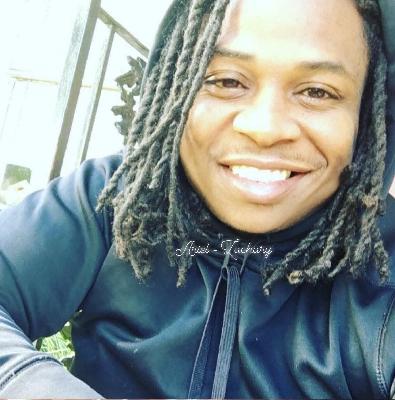
Richard Melcher was 43 when he died in New Orleans, Louisiana, and even with only that small handful of facts, the shape of what follows is heartbreakingly familiar. A person can be reduced to a name and a place in an instant, but a life is never that simple. Behind the words “died in New Orleans” is a man who once moved through ordinary days—days that were supposed to keep unfolding—until they didn’t. Whatever his routines were, whatever streets he knew by heart, whatever people expected to see him again, all of it was interrupted, leaving an absence that doesn’t politely stay in the past.
New Orleans is a city that feels alive even when it’s quiet, where history and personality spill into every corner. It’s the kind of place where people become part of the landscape—recognized, remembered, woven into the rhythm of neighborhoods and familiar stops. Richard belonged to that living tapestry in his own way. And when he died, something in that rhythm broke, not just for him, but for anyone whose life touched his. Loss has a peculiar cruelty: it doesn’t just take the person, it takes the future people assumed they still had with them. Plans that were never written down. Conversations postponed. A “tomorrow” that never arrives.
What makes a death especially difficult when details are scarce is the open space it leaves behind. When there’s no clear narrative to hold on to, grief has more room to wander. It circles the mind with questions it can’t answer. It fills the silence with imagined possibilities. It makes the simplest facts—name, age, city—feel both painfully real and frustratingly incomplete. For those who cared about Richard, the lack of a public story doesn’t lessen the pain; it can deepen it, because uncertainty has its own weight. It keeps the mind reaching, searching, replaying. It turns a loss into an ongoing ache that doesn’t know where to settle.
Even so, the emotional truth doesn’t depend on a case file. It’s there in the way people speak someone’s name after they’re gone—carefully at first, then more often, as if saying it can keep the person close. It’s there in the strange moments when memory catches up unexpectedly: a passing thought, a song, a familiar corner of the city, a time of year that suddenly feels different. It’s there in the way grief is both personal and shared—one person’s private devastation mirrored by others carrying their own versions of it, each from a different angle of the same loss.
Richard Melcher’s death marks a line that can’t be crossed back over. Whatever joys and struggles he had, whatever he was working toward, whatever he still wanted to do, it all stopped. And what remains is what always remains when someone is taken out of the world: love that has nowhere to go, memories that become precious, and a longing that doesn’t behave rationally. People don’t just mourn the moment of death—they mourn the small daily presence that once felt guaranteed. They mourn the way someone might have looked walking through a doorway, the way they might have answered the phone, the casual certainty that there would be another chance to talk.
In the end, even with limited information, the heart of this story is still clear. A man’s life ended at 43 in New Orleans, and that ending rippled outward. It became something others had to learn to live around—an absence that changes the shape of ordinary days. Richard Melcher was here, and now he isn’t, and for the people who knew him, that fact is not a statistic. It is a lasting, personal loss, carried forward in memory, in grief, and in the quiet determination to hold on to who he was, even when the world can’t or won’t provide all the answers.