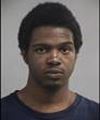
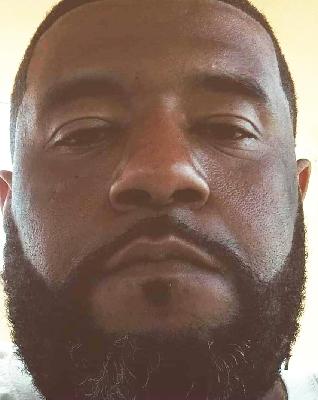
Do you know who murdered Jeffery Johnson? On Saturday, October 9, 2010, 38-year-old Black man Jeffery M. Johnson was murdered at 515 South 18th Street in Louisville, Kentucky, an address at the corner of Madison and 18th in the Russell neighborhood just west of downtown. Russell, long known as “Louisville's Harlem” and recognized as a historically Black community shaped by both its cultural vibrancy and decades of disinvestment, forms the backdrop for the brief but stark entry that now represents Johnson's life and death in public
records. His case appears on the Louisville Metro Police Department's website not in a lengthy narrative, but in a few concise lines: his name, his age, his description, and the fact that he was murdered on that date at that specific West End address.
The building at 515 South 18th Street, part of the East Russell submarket, sits in a section of the city where efforts at revitalization and new housing now stand alongside long memories of redlining, poverty, and higher-than-average crime. In that landscape, Johnson's killing is one of many homicides that never progressed to a public resolution. Louisville Metro Police classify his death as a homicide and include him in their online gallery of “2010 Open Homicides,” a collection of cases from that year where detectives are still seeking information. There, his photograph is arranged among other victims, each entry reduced to a few essential facts and a quiet implication that behind every line is a larger story that has yet to be fully told.
Publicly available records provide no additional detail about what happened in the moments leading up to Johnson's killing, how he came to be at that address on that day, or what motive investigators may have considered. Louisville Metro Police's homicide information page groups his case with other unsolved murders for which they still actively request tips, asking anyone who knows anything to contact the department's homicide unit by phone or email. The continued presence of his name and photograph within the “open homicides” listing indicates that, despite the passage of years, authorities have not publicly identified a suspect, announced an arrest, or reported any resulting prosecution in connection with his death.
More than a decade later, Johnson's case exists in the public eye largely as an entry on an unsolved-homicide roster, intersecting with broader efforts to transform the neighborhood where he was killed. Russell and East Russell have become focal points for major redevelopment initiatives and public–private investments meant to address the long-term effects of segregation, disinvestment, and crime, even as residents and city leaders work to preserve the community's deep African American history and identity. Amid those plans and construction projects, the unresolved killing at 515 South 18th Street remains a reminder that progress in bricks and mortar does not automatically resolve the unanswered questions left behind by violence. Johnson's brief case summary, still posted among Louisville's open homicides, stands as a quiet testament to a life ended abruptly and to an investigation that, at least in the public record, has yet to deliver either a suspect or a measure of formal justice.