On a humid Sunday afternoon in mid-August 2015, 55-year-old David “Dave” R. Anderson, a white man from Laurens County, pulled his Ford F-150 into the Corner Mart gas station at the intersection of Highway 76 and Torrington Road in Clinton, South Carolina. He had built a quiet but accomplished life: born in Crookston, Minnesota, the son of Vergil and Patricia Anderson, he had played baseball at the University of Kansas and gone on to a stint in the St.
Louis Cardinals’ minor-league system before settling into a career as a supervisor at the V.C. Summer Nuclear Plant. At home he shared his life with his wife, Nancy Copeland Anderson, and was a stepfather and grandfather, looking forward to new additions to a growing blended family. The errands of that Sunday, August 16, 2015, should have been forgettable—just another quick stop for gas before heading back to the routines of work, family, and church.
Shortly after 4:50 p.m., Anderson finished inside the store and walked back out to his truck at the pumps. As he stood there by the vehicle, a man approached him and opened fire, shooting him multiple times at close range. Witnesses described a silver compact sedan waiting nearby; after the gunshots, the shooter ran back to that car, which sped away from the Corner Mart and out onto the rural roads skirting Clinton. Emergency responders converged on the scene, but the violence had been too sudden and too precise—Anderson was pronounced dead that afternoon, his final moments unfolding beside the gas pump where he had simply stopped to fill up. There was no robbery, no argument at the scene, no obvious reason for why the man at the pump had been singled out.
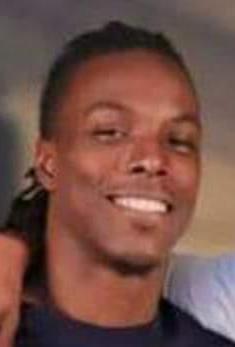
Laurens County deputies began piecing together what had happened almost immediately. The silver sedan described by witnesses became the focal point of the manhunt. Within hours, investigators located a vehicle matching that description abandoned near Joanna Community Park in the nearby town of Joanna. Not far from where the car was found, deputies arrested 30-year-old Marvin Molquie Watson of Laurens. A short time later, 20-year-old Zeryikia Copeland of Clinton surrendered herself at the Clinton Department of Public Safety. Authorities announced that Watson had been charged with murder and with possession of a weapon during the commission of a violent crime, while Copeland was charged as an accessory after the fact to felony murder. Both were booked into the R. Eugene Johnson Detention Center to await bond and the slow machinery of the courts. Even as the charges were filed, Sheriff’s Office officials emphasized that they could find no connection between Anderson and the two suspects, and that nothing had been taken from him; the killing appeared, at least at first, to be motiveless.
In the days that followed, rumors spread through the community that the shooting might have been tied to a Confederate flag sticker supposedly displayed on Anderson’s truck, a theory that quickly gained traction in conversations and on social media. Investigators publicly pushed back, saying they had examined the truck “over every inch” and found no such sticker, and they cautioned the public against jumping to conclusions. Behind the scenes, detectives continued to question Watson and Copeland and reconstruct the hours leading up to the attack. According to later accounts from law enforcement, Copeland eventually told investigators that the violence had its roots in a bout of road rage earlier that afternoon: the couple believed a truck had been following too closely behind them on the highway, making Watson increasingly angry. At some point that other vehicle turned off, but when the pair pulled into the Corner Mart later and saw Anderson’s truck at the pumps, they allegedly convinced themselves it was the same one. Prosecutors and investigators would later describe the shooting as a fatal case of mistaken identity born out of that earlier road-rage encounter—Anderson, they said, had never been involved in the dispute at all, but paid with his life for someone else’s anger at a different driver.
As the case moved forward, the focus shifted from the frantic early hours of the investigation to the question of punishment. State prison records show that Watson was ultimately convicted in Laurens County of murder and of a related firearms offense stemming from the shooting at the Corner Mart. He was given an adult straight sentence of forty years for murder and an additional five years for the weapons charge, all tied to offenses dated in December 2015, and was admitted to the state Department of Corrections in March 2017. He is now housed at Broad River Correctional Institution, with no eligibility for parole or supervised re-entry and a projected release date in late November 2055, meaning he is expected to spend the bulk of his adult life behind bars. Publicly accessible records, by contrast, are much less clear about the final resolution of Copeland’s accessory charge; beyond her initial arrest and booking as an accessory after the fact to felony murder, the easily available court and corrections databases do not spell out how her case ultimately concluded, leaving her legal fate largely outside the public record.
While the legal system processed the case, Anderson’s family and friends were left to mourn a man who had gone out to buy gas and never come home. His obituary described a life that stretched far beyond the few seconds captured in investigative reports: a Minnesota-born son who had chased his baseball dreams through college and the minor leagues, then settled into demanding work at a nuclear plant; a husband devoted to Nancy and proud of his stepchildren and grandson; a brother to three sisters, with parents who still lived to see their son’s life cut short. On Thursday, August 20, 2015, mourners gathered at Leesville Southern Methodist Church outside Clinton for a memorial service at six in the evening, then stayed to share stories and condolences with the family afterward. In the space between the quiet reverence of that sanctuary and the stark details in police reports, the shape of the tragedy comes into focus: a man with a full life and a close family, killed in seconds at a gas pump because two strangers, angry at another driver, saw the wrong truck at the wrong time.