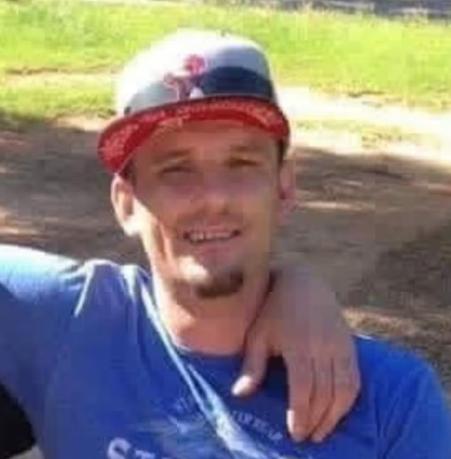
On a humid midsummer night in 2016, Don Russell “Rusty” Turner, a 27-year-old white male from Chesnee, South Carolina, was at home on Whiteside Drive, the modest country road where he had grown up surrounded by family. By day he worked as an electrician connected with BMW, a steady, technical job that spoke to his reliability and attention to detail. His obituary would later describe him as a man of Baptist faith, the son of Don R.
Turner of Spartanburg and Mary Roxanne Whiteside Turner of Chesnee, and a brother to three sisters who still lived close enough for family gatherings to be a regular part of life.
The evening of Wednesday, July 27, 2016, unfolded like any other until just after ten o’clock. Rusty’s grandmother was in the backyard with the family pet when the silence of rural Chesnee shattered into the sharp crack of gunfire. Startled and unable to see what was happening out front, she dialed 911 at about 10:20 p.m. to report shots fired on Whiteside Drive. When she came around to the front yard, she found her grandson lying on the ground, gravely wounded. Deputies and medical personnel rushed to the scene, but there was nothing they could do. Spartanburg County Coroner Rusty Clevenger pronounced Don Russell “Rusty” Turner dead at the scene; the cause of death was listed as internal hemorrhage from gunshot wounds, a clinical phrase that could not convey the violence of what had just torn through the family’s home.
Through that night and into the next day, county violent-crime investigators worked the scene, combing the yard and the quiet road for shell casings, footprints, anything that might point to a shooter. Neighbors had heard the shots but seen little, and investigators quickly admitted they had no substantial leads. The sheriff’s office appealed directly to the public, asking anyone who had noticed cars or people moving along Whiteside Drive around the time of the shooting to come forward. A senior investigator’s phone number and email were released, and Crime Stoppers publicized a cash reward in the hope that money might shake loose the details that grief and fear were keeping silent.
As detectives worked, Rusty’s family turned their attention to the painful rituals that follow a sudden death. Notices in the Spartanburg Herald-Journal and on funeral-home and memorial pages announced that Mr. Don Russell Turner, born in 1988, had “passed away Wednesday, July 27, 2016,” and invited friends and co-workers to visitation and funeral services at Eggers Funeral Home & Crematory in Chesnee in early August. The memorials described a young man whose life had been rooted in the upstate: living at 138 Whiteside Drive, working as an electrician, known in his church community, and survived not only by his parents and sisters but by his grandmother, Mary Jane Whiteside, who had been the one to hear the shots and find him in the yard. Online, his name soon appeared on gun-violence memorial pages, where family members, friends, and strangers lit virtual candles and posted brief notes of remembrance beside his photograph.
For several weeks, the case hung in that tense space between a fresh crime and a cold one. Then, in late August, deputies announced that they had identified and charged suspects. On August 22, 2016, local news reported that two people were being held responsible for the July slaying of Don Russell “Rusty” Turner. The Spartanburg County Sheriff’s Office named Michael Ham, of nearby Gaffney, as the primary suspect; he was charged with murder and with possession of a weapon during a violent crime. A second person, Tiffany Kirby of Chesnee, was charged as an accessory after the fact of a felony, a charge that typically signals investigators believe someone helped a suspect after the crime was committed—by hiding them, helping them escape, or otherwise obstructing justice. Both Ham and Kirby were already being held at the Spartanburg County Detention Facility on unrelated charges when they were served with the new warrants in Turner’s killing.
What happened next played out mostly in courtrooms and case files, rather than in headline-grabbing stories. State prison records show that a man identified as Michael David Ham is now incarcerated in the South Carolina Department of Corrections for a single count of voluntary manslaughter arising from an offense in Spartanburg County dated late July 2016. The record lists the offense as “VOLUNTARY MANSLAUGHTER,” with a 30-year adult-straight sentence, no eligibility for parole or supervised re-entry, and a projected release date of January 22, 2042. The admission date into state prison is May 2, 2018, indicating that by that time the case had moved through the courts and resulted in a conviction or plea that reduced the original murder charge to voluntary manslaughter. Although the public documentation does not spell out the precise terms of any plea agreement or the arguments made at trial, the length of the sentence and the violent-crime context tie his case back to the killing that shattered the quiet on Whiteside Drive in July 2016.
By contrast, the ultimate resolution of the accessory-after-the-fact charge against Tiffany Kirby is far less clear in publicly accessible summaries. Contemporary reports mention her only in connection with that initial charge, and subsequent records that surface online show her name in arrest logs for various, unrelated offenses in the years that followed, without explicitly tying those later cases back to Rusty Turner’s death or clarifying how the 2016 accessory case was resolved. From the outside, it appears that Ham bore the brunt of the criminal liability for Turner’s killing, while Kirby’s alleged role—whatever precisely it may have been—remains only sketchily documented in the public record.
Today, nearly a decade after that summer night, the legal system’s response is fixed in paperwork: a 30-year manslaughter sentence in a state prison, a case number in Spartanburg County’s ledgers, an offense date that matches the week Rusty was shot in his front yard. But for his family and for the small community around Chesnee, the story is less about statutes and sentences than about the empty space he left behind. His name still appears on national gun-violence memorial pages for Chesnee, one entry among many but, to those who knew him, not just a statistic. The path from a grandmother’s terrified phone call to the quiet finality of a prison sentence traces the arc of the case as it can be seen from the outside: a hardworking young electrician cut down at home, an investigation that started with no leads and ended with charges against two suspects, and a conviction that, on paper, offers a measure of justice even as it can never restore the life that was lost.