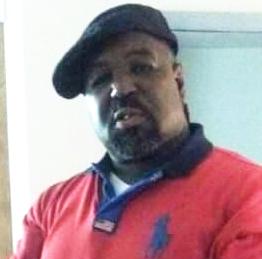
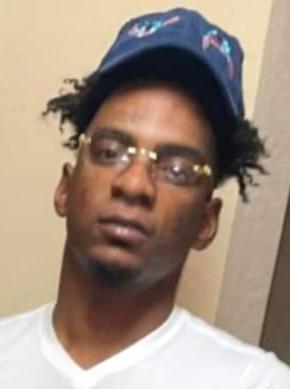
Allen Andrew Jones was a 26-year-old Black man from Columbia, South Carolina, whose life ended violently in the summer of 2017 when he was shot and left beside a quiet road in Beech Island. Sometime on August 3, 2017, he crossed paths with people who would turn that night into a crime scene. By the following morning, August 4, his body lay on top of a brush pile along Avalon Lane, a cut-through road in the Clearwater community of Aiken County.
A bicyclist came upon the body around daybreak and called for help, drawing deputies to the 200 block of the lane just after 7 a.m.
When officers arrived, they found him lying amid the brush at the roadside, near the bicycle the caller said he had been riding. At first, the discovery was handled as a death investigation; there was no immediate explanation for how he had ended up there in the dark hours between the previous evening and dawn. But the scene told its own story. Investigators and the county coroner soon confirmed that he had been shot multiple times, and the wound pattern made it clear this was no accident or self-inflicted injury. The investigation was quickly treated as a homicide, and the quiet stretch of Avalon Lane filled with detectives, crime scene tape, and the low murmur of neighbors trying to understand what had happened in their community.
Behind the official reports was a young man whose life had been rooted in the Augusta area. Online memorials remember him by nicknames shared by friends and family and list the schools he attended in nearby Georgia—Glenn Hills High, Morgan Road Middle, and Cross Creek High—sketching out a childhood and adolescence spent along the Georgia–South Carolina line. People who contributed to those memorials chose words like loyal, life of the party, kind, and friendly to describe him, suggesting someone who was woven into the social fabric around him before his life was cut short.
As the Aiken County Sheriff’s Office and North Augusta authorities began to piece together what had happened, early leads led not to a single gunman but to a small circle of people who, investigators believed, had helped move the body and then tried to outrun the law. Within days, attention focused on two men: 23-year-old Dylan Raborn of Augusta and 30-year-old Kristopher Buckland of Harlem, Georgia. According to investigators, Raborn became the center of a dramatic confrontation on August 12, when deputies tracked him to the Ashley Motel on Jefferson Davis Highway. When they moved in, Raborn and Buckland jumped into a silver Honda and sped away, hitting a parked vehicle as they fled the parking lot. During the pursuit, deputies later said, Raborn climbed partly out of the passenger window and fired several shots back at them as the car raced toward Richmond County. No one was hit, but the chase ended with their capture across the state line.
The charges that followed painted a picture of their alleged role in the aftermath of the killing. Raborn was held on three counts of aggravated assault, weapon possession, firearm possession by a convicted felon, and fleeing to elude law enforcement, with authorities also identifying him as an accessory in the case tied to the dumping of Jones’s body. Buckland, arrested in Columbia County, faced allegations including meth possession with intent to distribute, marijuana possession, multiple counts of aggravated assault, and weapon possession, and like Raborn was expected to be extradited to Aiken County to face charges related to the broader investigation.
A third man, 38-year-old Christopher Shane Blitchington of Langley, soon emerged as another key figure. In mid-August, Aiken County authorities announced that he had been arrested in connection with the death investigation, facing counts that included accessory after the fact to a felony or murder, drug trafficking, and failure to stop for blue lights. Reports from that period describe him being denied bond, with his case bound over to General Sessions Court, underscoring how seriously investigators regarded his alleged role in moving the body and evading police.
Yet even as those alleged accomplices were being rounded up, investigators believed that the person who had actually pulled the trigger was still at large. On August 17, 2017, they publicly named 32-year-old Dimitri Carter as the suspected killer in the death of Jones. Authorities said that the body on Avalon Lane had been dumped on a brush pile after the shooting, and that Carter was the one they believed responsible for the gunfire itself. He was described as armed and dangerous, wanted on a murder warrant, and investigators deliberately withheld details about where and when the shooting had taken place, promising to say more once he was in custody.
The manhunt for Carter ended not with another chase but with a quiet surrender. On September 6, 2017, he arrived at the sheriff’s office with his attorney and turned himself in to investigators. He was booked into the Aiken County Detention Center on a murder charge in the August 4 death, the culmination of weeks of tension in which his name and face had circulated in local crime reports and on social media. In the same reporting, authorities reiterated that Raborn and Blitchington were accused of helping dispose of the body and were facing additional charges tied to drugs, weapons, and their confrontations with law enforcement.
What happened in the courts after those arrests is less clear from publicly available news accounts. Local reporting and crime-focused outlets dwell on the gripping early stages of the case—Jones’s discovery on the roadside, the arrests of the alleged accessories, the naming and surrender of the suspected shooter—but do not provide a detailed public record of any trial, plea, or final verdict in the homicide. Later, in July 2022, news in Aiken County reported that a 37-year-old North Augusta man named Dimitri Carter drowned after disappearing while out in a boat on a pond off Storm Branch Road in Beech Island, the same general area where Jones’s body had been found five years earlier. Those accounts do not explicitly revisit the old murder charge, but the shared name, age, and geography suggest that the man once accused of killing Jones may have died without the community ever seeing a fully documented conclusion to the case in open court.
For the family and friends who remember Jones online, though, the legal intricacies are only part of the story. In those brief memorial notes, he appears not as a case file or a headline but as someone whose absence still hurts—someone loyal and outgoing, the kind of person described as the life of the party. The facts preserved in police reports and news stories capture how he died: shot multiple times, left on a brush pile off Avalon Lane, his death drawing a chain of arrests and accusations. The memories preserved by those who knew him hint at who he was before that night, and what was taken from them when he never came home.