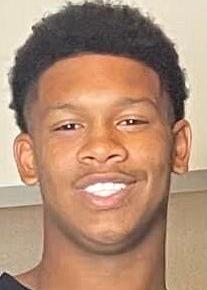
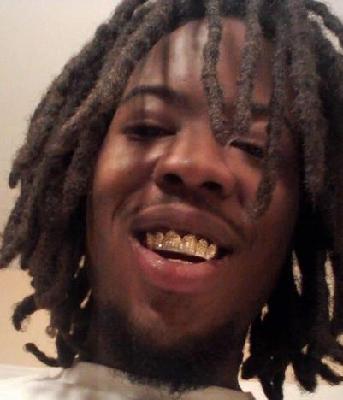
Albert Lee “AJ” Soles Jr., a 24-year-old male from Tabor City, North Carolina, had built a life around family, hard work, and wide-open country spaces before it all ended outside a Cook Out restaurant in Myrtle Beach, South Carolina, just after midnight on September 11, 2020. He grew up a self-described country boy, happiest on the river in a boat, riding back roads, sitting by bonfires, or even chasing coastal storms if it meant being with the people he loved.
Family members remembered how he never met a stranger and seemed determined to make everyone around him feel included and cared for, a role he embraced especially with his many nieces and nephews, acting as a protective big brother who spent his first paychecks on small treats for the kids rather than himself. He had recently completed his first HVAC certification and was excited about the next chapters of his life, while friends said he dreamed of starting his own business and working as a skilled tradesman, welding and building a future that felt solid and honest.
In the early morning hours of that Friday, AJ and close friends were parked at the Cook Out on North Kings Highway in Myrtle Beach, an all-night stop that, on any other night, would have been just another place to grab food after a long day. At roughly 12:45 a.m., another car pulled into the lot: a Mustang driven by 23-year-old Niko Juwan Williams of Murrells Inlet. Williams had come there to confront two women with whom he was reportedly involved romantically, and witnesses later described a long, escalating argument that dragged on for half an hour or more, loud enough and tense enough to draw the attention of others in the parking lot. When one of the women touched a GoPro camera mounted on Williams’s car, the confrontation turned uglier; according to an account later shared in victim memorial records, Williams became enraged, produced a handgun, worked the slide, got out of the vehicle, and began shoving one of the women as the situation shifted from shouting to physical violence.
Sitting just two spaces away, AJ and his best friend, Charles Norris, saw the altercation unfolding and decided they couldn’t simply watch. By nature, Soles was known as a peacemaker, someone who stepped into conflicts to calm things down rather than inflame them, and witnesses later said the men walked over with the intention of getting Williams to stop pushing and hitting the woman. As they approached, Williams lifted the Glock pistol he was carrying and opened fire at close range, striking AJ multiple times; a detailed family account later stated that he was shot six times before he could escape or defend himself. Another friend, Matt Duncan, who had been standing some distance away, ran toward the cars when he heard the shots. Williams turned the gun on him, firing again and hitting Duncan in the leg and lower back, wounds that doctors later described as requiring life-saving surgery.
Inside the restaurant and around the parking lot, people scattered and called 911 as gunfire shattered the ordinary late-night bustle. Myrtle Beach police officers were dispatched to the Cook Out just before 1 a.m. after reports of shots fired and found two victims down in the parking lot when they arrived. Both men were rushed to a nearby hospital, identified in local and regional reports as Grand Strand Medical Center, but Soles could not be saved and was pronounced dead of his injuries; Duncan survived after emergency surgery. Investigators would later emphasize that both victims had been unarmed and that, in the view of police, they had posed no threat to the shooter, but had instead stepped in to protect others in the middle of a domestic confrontation that had spiraled out of control.
Williams did not stay at the scene. Witnesses told officers he drove away immediately after the shooting, leaving chaos and stunned bystanders in the parking lot. An alert went out with a description of his vehicle, and within a couple of hours officers tracked him down in a nearby Walmart parking lot, where he was taken into custody without reported incident. At the time of his arrest, he was identified as a resident of Murrells Inlet, 23 years old, with a valid concealed weapon permit and no prior criminal record. Later that same day, Horry County authorities publicly named him as the suspect, and Myrtle Beach police announced that the case was being treated as a homicide. Initial charges filed against Williams included murder for the killing of Soles, attempted murder for the shooting of Duncan, and possession of a weapon during a violent crime. At his first bond hearing, a judge declined to set bond on the most serious charges; reports from the hearing emphasized the brutality of the encounter and the vulnerability of the unarmed victims.
In the months and years that followed, the case moved slowly through the court system. For Soles’s family, who had already buried a young man they described as a “larger-than-life teddy bear” and a devoted “Mama’s boy,” every delay meant reliving the night in which he died trying to shield others from harm. In August 2022, local news outlets reported that Williams’s trial on the original charges was scheduled to begin the week of October 10, 2022, in Horry County court, raising hopes that a jury would hear the full story. Instead, on the morning the trial was set to start, Williams appeared in court and entered a negotiated guilty plea. Prosecutors announced that he was pleading guilty to voluntary manslaughter in the death of AJ and to assault and battery of a high and aggravated nature for the shooting of Duncan, a set of lesser charges that still recognized the deadly and intentional nature of the attack.
During that October 10, 2022 hearing, Assistant Solicitor Christopher Helms outlined for the court how Williams had argued with the two women in the Cook Out parking lot, how AJ had tried to separate him from them, and how Williams had then emptied his Glock at close range into the unarmed young man before turning the weapon on Duncan. Circuit Court Judge H. Steven DeBerry accepted the plea agreement and sentenced Williams, by then 25, to a total of 20 years in state prison. Under South Carolina law, he is required to serve at least 85 percent of that sentence before he can be considered for release, meaning he will spend the better part of two decades behind bars. Victim-support organizations later summarized the outcome by noting that Williams is now classified as a convicted concealed-carry permit holder whose gun, lawfully carried, became the instrument of a parking-lot killing that began with an argument and ended with a man dying on the pavement and another undergoing emergency surgery.
For AJ’s family, the resolution brought by the plea was complicated. In a memorial account shared through a national victims’ organization, relatives wrote that the twenty-year sentence had been offered and accepted over their objections; they believed the punishment fell short of the loss of a son, grandson, uncle, and friend who had stepped in to stop an assault and paid with his life. Yet, even as they described feeling that the justice system had failed AJ and Matt Duncan, they also framed his final moments through the lens of sacrifice, noting that he died acting on deeply held beliefs about protecting others and reconciling conflicts rather than walking away.
In the days after the shooting, friends organized a memorial ride from Whiteville, North Carolina, to the Cook Out in Myrtle Beach, a caravan of vehicles and motorcycles meant to retrace his last night and reclaim the place where he fell. They talked about how he would rush to help anyone who called, how he was the first to show up when someone’s car broke down, and how he would literally give the shirt off his back to a friend in need. Online, candles continue to be lit on memorial pages created in his name, brief messages stacking up from family, friends, and strangers who learned about the case and saw in it a young man who lived the values that ultimately put him in harm’s way. What remains in the public record is a stark narrative: a late-night argument over relationships and a camera, a gun drawn in anger, a bystander who chose to intervene rather than ignore the violence in front of him, and a community left to mourn someone whose instinct to protect others cost him everything.