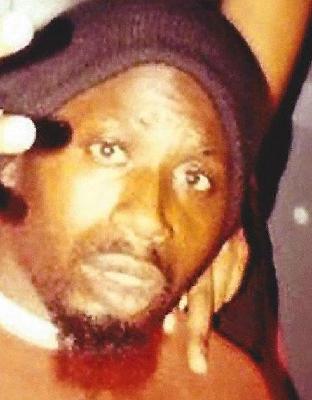
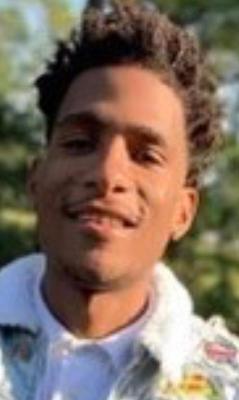
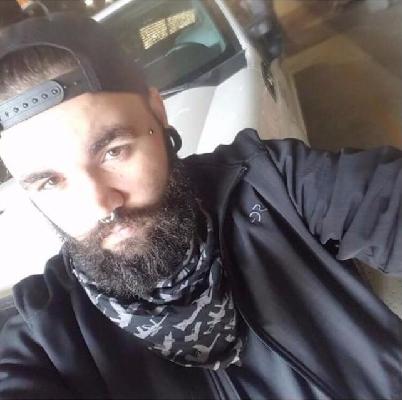
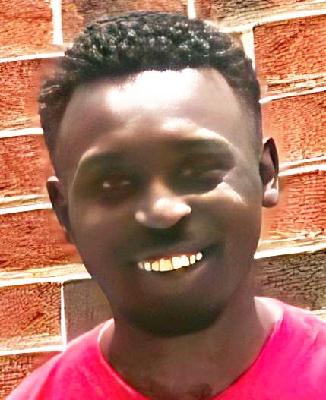
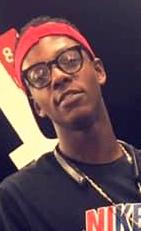
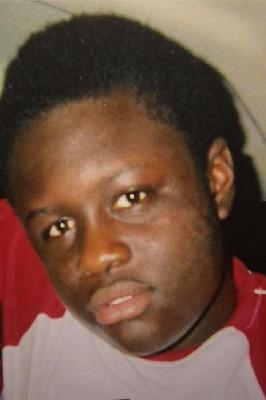
Jordan Antaun Mullins was a 25-year-old White/Caucasian man from the Charleston area whose life began in Jacksonville, Florida, and unfolded between coastal Florida schools and the South Carolina Lowcountry. His obituary notes that he was born on July 24, 1995, and that he left behind a close-knit family that stretched between Charleston and Jacksonville, including his father and stepmother in South Carolina, his mother and siblings in Florida, and grandparents on both sides.
Loved ones later described him as fun-loving and charismatic, the kind of person friends remembered as easygoing and respectful, with a goofy sense of humor that lit up rooms long before anyone spoke of him in the past tense.
On the afternoon of December 21, 2020, Jordan was at the Palmetto Exchange Apartments, a relatively new, multi-building complex on Shipley Street in Ladson, just off Interstate 26 in the North Charleston suburban sprawl. Around 2:15 p.m., North Charleston police were called to the property for reports of gunfire in the parking lot. When officers arrived, they found a vehicle that had become the center of the violence, with two men lying wounded near it and another victim elsewhere on the property. The scene, usually defined by rows of parked cars and the hum of apartment life, had been abruptly transformed into an active crime scene ringed with police tape and investigators.
The Charleston County Coroner’s Office later identified Jordan as the man who had died at the complex, confirming that he succumbed to a gunshot wound at 3340 Shipley Street. Two other men survived but were seriously injured, one shot in the torso and another in the lower torso; both were rushed from the complex to a nearby hospital for treatment. Early police statements described the incident as a triple shooting, with one victim pronounced dead at the scene and two others clinging to life, and investigators said at the time that they had no description of a gunman to share publicly. For Jordan’s family, the first official word came not from a courtroom but from a coroner’s notice and brief news stories that reduced a full life to a name, an age, and a street address.
In the months that followed, additional reporting began to pull back the curtain on what had led to the gunfire that killed him. Documents described by local journalists linked the December 2020 shooting to a feud between two gangs in North Charleston, a simmering conflict that erupted into what one account called a quadruple shooting that left one man dead and three others injured. Later, a summary of court records reported that the shots were fired into a vehicle occupied by four men and that Jordan was found dead inside that vehicle, suggesting that the barrage of bullets which ended his life was not random, but part of a wider, targeted dispute that had little to do with anything he might have done that day.
Court records cited in that same reporting identified a North Charleston man, Jermaine L. Bunch Jr., as the person accused of opening fire on the car in which Jordan was riding. Bunch, then 27, was described as awaiting trial on allegations that he had shot into the occupied vehicle in December 2020 as part of the ongoing gang dispute. The specific charges in the case were not detailed in the public summaries, but the characterization of the incident as a gang-related slaying and a quadruple shooting made clear that authorities believed the attack to be deliberate and organized rather than spontaneous. When Bunch’s name surfaced in local coverage, it marked the first time the public saw someone explicitly tied by law enforcement and prosecutors to the gunfire that had taken Jordan’s life.
Before that case could be resolved, however, the man accused of killing Jordan became a homicide victim himself. On the night of November 23, 2022, Charleston County deputies were called to the Woodside Manor community off Garwood Drive in the Ladson area after reports of gunfire; inside a home, they found Bunch suffering from multiple gunshot wounds, and he was pronounced dead at the scene. Days later, the sheriff’s office announced that 18-year-old Mario Lavell Burgess had been arrested and charged with murder and possession of a firearm during the commission of a violent crime in connection with the Garwood Drive shooting that killed Bunch. Coroner and news reports identified Bunch as the victim in that case, noting that he died while still awaiting trial for the December 2020 shooting in which Jordan was killed.
Because Bunch’s death came while his own case was pending, there is no widely reported record of a completed trial or a conviction related to Jordan’s killing; news coverage continues to refer to Bunch in the context of awaiting trial on those allegations rather than as someone adjudicated guilty or innocent. For Jordan’s family, that sequence of events meant that the path toward legal closure was overtaken by yet another act of violence, leaving their loss tied to a chain of retaliatory shootings in which one accused gunman was slain and another young man was arrested on new murder charges. What remains in the public record is a stark outline: a son and brother who grew up between Florida and South Carolina, remembered by those close to him as energetic and kind; a bright afternoon in a Ladson apartment parking lot shattered by gunfire; and a case whose central figure on the defendant’s side was killed before any jury could decide what exactly happened inside that car when Jordan Antaun Mullins was shot to death.