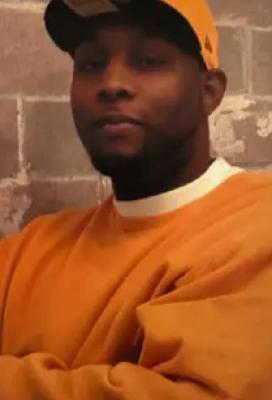
On a quiet Sunday morning in early June, when most of Anderson, South Carolina was just beginning to stir, the course of one man’s life was violently cut short. Ansel Tyrone Austin, a 52-year-old Black man, went about those early hours never knowing that this day would be the last chapter of his story. The sun was still low, casting long shadows across West Market Street, when a confrontation unfolded that would leave a lasting scar on his family and community.
The place itself was
ordinary—a stretch of roadway and nearby parking areas along 1402 West Market Street, the kind of spot people pass a hundred times without a second thought. In those first moments, it was just another corner of town, busy with everyday movement, words exchanged, tensions simmering beneath the surface. What began as a verbal dispute between two men escalated with terrible speed. According to investigators, the argument did not simply fade away as so many do. Instead, it followed Ansel as he moved away, a cloud that refused to lift.
In those next moments, the situation turned deadly. The man identified by authorities as Demetrius D. Carson is said to have followed Ansel a short distance. The lingering conflict, the anger, and all the words that had been thrown back and forth built to a final, irreversible act. Shots rang out on West Market Street. The sound broke the morning calm and left Ansel collapsed in the roadway, struck multiple times. The pavement that had carried the routine footsteps of countless people now held a man whose life was slipping away.
Deputies from the Anderson County Sheriff’s Office arrived quickly after the reports of gunfire. They found Ansel in the street, gravely wounded, and called for emergency medical help. Medics worked urgently to stabilize him and rushed him to a nearby hospital. For a brief time there was still a fragile thread of hope, a chance that he might survive the violence that had torn through the morning. But the injuries were too severe. Not long after, doctors could do no more, and what had begun as a simple June day became the date forever linked to his death: June 6, 2021.
The Anderson County Coroner’s Office formally identified him and ruled his death a homicide, documenting the gunshot wounds that ended his life. An autopsy followed, a clinical step that stood in stark contrast to the warmth and complexity of the person he had been. Behind the official language—“multiple gunshot wounds,” “manner of death: homicide”—was a man with a history, relationships, and a presence that could not be captured in a line of text. As his name appeared in local reports and national gun-violence databases, those who knew him were left to reconcile the public record with private grief.
For some time, the case existed in that difficult limbo so many families know too well: the investigation active, the questions many, the answers few. Detectives retraced the steps along West Market Street, spoke to witnesses, and pieced together the sequence of events that led to the shooting. The place where Ansel fell became a reference point in reports, an address in a file, but for those close to him, it was a landmark of loss. Each passing day without an arrest marked another sunrise he would never see, another reminder that his story had been forced to stop while the world moved on.
Months later, in March 2022, came the announcement that shifted the narrative from unanswered questions to at least the beginning of accountability. Investigators named Demetrius D. Carson as the man they believed responsible for the killing. By then, Carson was already behind bars on other matters, but when questioned about the shooting that took Ansel’s life, authorities said he admitted to the act. Warrants laid out how the verbal altercation turned into a fatal pursuit, how he followed and then opened fire, and how that decision left one man dead and many others carrying the weight of that choice.
Carson was charged with murder in connection with the June 6, 2021 shooting, along with possession of a weapon during a violent crime. He was booked into the Anderson County Detention Center, facing the gravity of those accusations. On paper, the charges marked progress: a suspect identified, an arrest made, a path into the court system outlined. Yet, in many ways, they could never balance what had been taken. Legal documents may speak of counts and statutes, but they cannot restore the sound of a familiar voice, the comfort of a presence that once filled rooms and relationships.
Public records offer only a partial picture of what came after the arrest. They detail the charges and the narrative presented by law enforcement, but they grow quieter when it comes to the full outcome of the case—how the court proceedings unfolded, what final decisions were made, and how justice was measured in the eyes of those who loved Ansel. What remains clearly visible is that a human life ended on a roadway that June morning, the result of anger and a gun, and that another man was brought into custody to answer for that loss. Between those two realities lies a space filled with grief, questions, and the enduring memory of the person at the center of it all.
In the end, the story of Ansel Tyrone Austin is not only about the moment his life was taken, but about the emptiness left behind. His name, the date of his death, and the description of the crime appear in news items and databases, yet behind every line is a life that touched others, a man whose final steps along West Market Street should have led to the ordinary continuation of a day instead of the abrupt silence of violence. The investigation, the arrest, and the charges against the man accused of killing him are the visible markers of a system trying to respond, but they can never fully capture the human cost of that Sunday morning in Anderson, South Carolina.