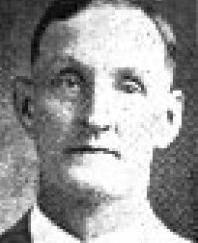
On the afternoon of January 2, 1932, a violent confrontation known as the Young Brothers Massacre took place at a farmhouse near Brookline, just outside of Springfield, Missouri. A group of law enforcement officers, including 42-year-old male Deputy Sheriff Oliver Rufus Crosswhite, assembled to serve an arrest warrant on two notorious brothers, Harry and Jennings Young.
The suspects were wanted for a series of crimes, including the murder of a town marshal in a neighboring community and the operation of a stolen automobile ring. The officers approached the property with limited weaponry, unaware that the brothers were heavily armed and prepared for a siege.
The situation escalated quickly when the Sheriff and another deputy attempted to breach the back door of the residence and were immediately met with fatal shotgun blasts. As chaos erupted, the remaining officers scrambled for cover behind trees and vehicles while the suspects fired upon them from the house's windows with high-powered rifles. Crosswhite, a veteran officer who had previously served as a city marshal and constable, took a defensive position behind a storm cellar in the backyard. While he was pinned down by the gunfire, one of the assailants managed to maneuver around the structure and shot him in the back of the head, killing him instantly.
The gun battle resulted in the deaths of six law enforcement officers and the wounding of several others, marking it as the deadliest single incident for U.S. law enforcement in the 20th century up to that time. Taking advantage of the devastation and the posse's dwindling ammunition, Harry and Jennings Young retrieved weapons from the fallen officers and fled the scene in a stolen vehicle. Their escape triggered a massive, multi-state manhunt as authorities tracked their movements south.
Three days later, on January 5, 1932, the fugitives were located at a boarding house in Houston, Texas. Police surrounded the building and deployed tear gas in an attempt to force a surrender. Realizing escape was impossible and refusing to be captured, the brothers turned their weapons on themselves, committing suicide before officers could storm the room. The tragic loss of Oliver Crosswhite and his colleagues deeply affected the Springfield community and eventually led to significant reforms in police tactical training and equipment standards.