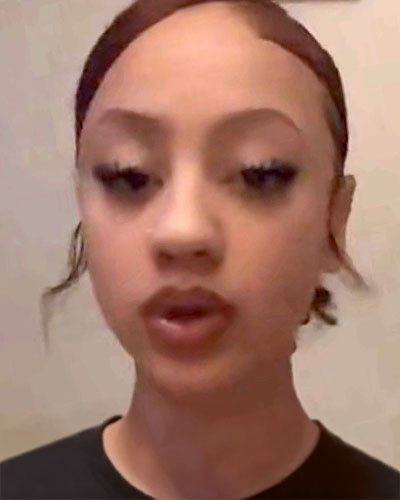
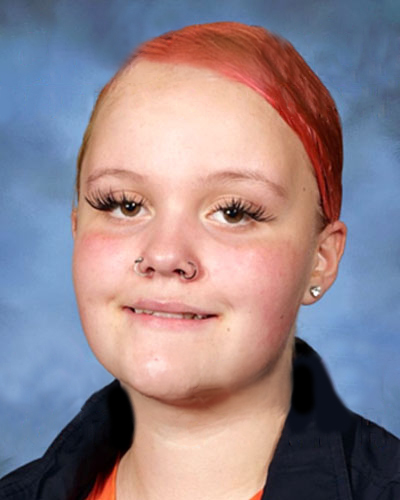
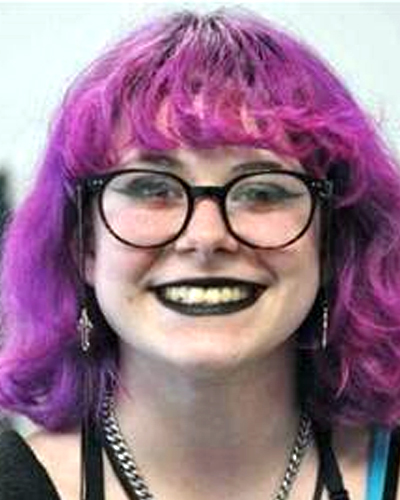
Sunny Jone Sramek was 18 years old when she vanished from Trenton, Nebraska, on April 20, 2019. She was a young woman with brown hair and blue eyes, remembered publicly through the identifying details investigators released: a feather tattoo with the letters “FLY” on her left shoulder, a red tribal sun tattoo on her right ankle, and several scars, including marks on her right shoulder and forehead.
She was last described as wearing a black tank top and denim shorts, and she had a hoodie and jeans with her. Official missing-person records list the Hitchcock County Sheriff’s Office as the primary investigating agency and note that she was believed to be traveling in a white 2004 Ford Explorer with Iowa license plate HGJ341.
That day, Sunny left Trenton with Floyd Clifford “Cliff” Coates Jr. in the white Ford Explorer. Early public information said the trip was supposed to be to Omaha, roughly 300 miles away, and that Sunny believed they were making the journey as a day trip. At about 12:45 p.m., she called her mother from a borrowed phone and said she was in Holdrege, Nebraska; nothing in that call suggested she was in immediate distress. After that contact, her family never heard from her again. The FBI said she was reported missing to the Hitchcock County Sheriff’s Office by her mother on April 21, 2019, and that there had been no reported sightings or contact from Sunny after her disappearance.
As the search continued, investigators and public missing-person organizations circulated Sunny’s description and the vehicle details in hopes that someone might remember seeing her. The FBI later offered a reward of up to $10,000 for information leading to Sunny’s recovery or to the arrest and conviction of the person or people responsible for her disappearance. The National Center for Missing & Exploited Children continued to list her as missing and asked that anyone with information contact law enforcement, including the Hitchcock County Sheriff’s Office or the FBI Omaha Division.
Over time, accounts connected to Sunny’s disappearance shifted. Public case summaries reported that Coates gave more than one explanation for what happened, including a claim that Sunny disappeared after he left her outside a casino because she was underage, and another claim that she vanished during a stop at a gas station. In both accounts, he allegedly said he left without notifying police or Sunny’s family that she was missing. Those changing stories deepened the concern surrounding the case and left Sunny’s loved ones facing the devastating uncertainty of not knowing where she was or what had happened to her.
Years later, federal prosecutors publicly described a much darker version of events presented at trial. According to the U.S. Department of Justice, evidence showed that Coates was involved in a drug-trafficking organization in spring 2019 and had arranged a drug run during Easter weekend. Prosecutors said Coates and Sunny left Trenton in the white Ford Explorer, but there was no evidence Sunny knew Coates intended to go to Kansas City; she had told friends and family she was going on a day trip to Omaha. Trial evidence placed them in Blair, Nebraska, where a driver later testified that she saw Sunny’s motionless body and that Coates said he had provided Sunny methamphetamine.
The Justice Department said the driver testified that Coates then canceled the planned drug run and went to the home of Dennis Lawson near Whiting, Iowa, on the banks of the Missouri River. According to that testimony, Coates and Lawson disappeared for a time, and when they returned, Sunny’s body was gone. Federal prosecutors also said Coates later told people that Sunny had overdosed, told others a more violent story, and in both versions claimed he had thrown her body into the Missouri River to conceal evidence. Forensic testing later found Sunny’s DNA and a significant amount of blood in the Ford Explorer, evidence prosecutors said helped support the convictions of Coates and Lawson.
On November 25, 2025, after an 11-day federal trial in Sioux City, Iowa, Floyd Clifford Coates Jr. and Dennis Lawson were convicted on charges connected to drug, gun, and obstruction-related conduct; Coates was convicted of multiple charges including conspiracy to distribute a controlled substance and concealment-related offenses, while Lawson was convicted of using threats to hinder communication with law enforcement. The Department of Justice framed the convictions as the result of years of work by investigators who continued pursuing answers after Sunny disappeared. Although public records and law enforcement materials have described evidence and testimony about Sunny’s death, her listed missing-person materials have continued to ask for information related to her recovery, and no publicly cited source here states that her remains have been recovered. In overview, Sunny Sramek’s case began as the disappearance of an 18-year-old who left home expecting a day trip, became a prolonged search for a missing daughter, and ultimately developed into a federal case built around testimony, forensic evidence, and allegations that others concealed what happened to her after she was last seen alive.Last Seen: Apr 20, 2019