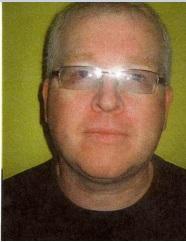
Trevor Anthony Thomas O'Brien was an 11-year-old boy who disappeared on November 9, 1996, after he and his two brothers were picked up from their mother's apartment in Mount Pearl, Newfoundland and Labrador, for a scheduled visit with their father, Gary O'Brien. Trevor was born on May 8, 1985, and was the middle of the three brothers: Adam was 14 and Mitchell was four.
Trevor had dark brown hair and blue eyes and stood approximately 4 feet 8 inches tall, weighing about 70 pounds when he disappeared. Contemporary case information describes him as white and notes a small scar on the back of his head. He was remembered as a boy who enjoyed joking and horseplay, small personal details that preserved something of his personality beyond the photographs used in missing-child appeals. He was reportedly wearing blue jeans and black-and-white Adidas sneakers when he was last seen. What began as an ordinary Saturday visitation would become one of Newfoundland and Labrador's most enduring missing-child cases.
That Saturday, Gary O'Brien was expected to spend time with all three sons and return them afterward. Mitchell was reportedly not feeling well, and the boys' mother, Diana Boland, suggested that the youngest child remain home, but Gary insisted that all three boys be ready for the visit. He collected Adam, Trevor and Mitchell and took them away from Mount Pearl. At approximately 8:30 that evening, Gary telephoned Diana and told her that he would not be returning the children. He also warned that the family residence in nearby Torbay had been rigged to explode if anyone entered or interfered with it. Diana asked to speak with her sons, but Gary did not allow a conversation with them before the call ended. Her sister, who was present, contacted police, setting in motion an emergency response that quickly showed that Gary's warning about the Torbay house was not an empty threat.
When police reached the Torbay residence, investigators discovered an elaborate explosive trap involving large propane tanks. Reports concerning the investigation have described two tanks, each weighing roughly 400 pounds, positioned so that entering or otherwise triggering the house could have caused a devastating explosion. The discovery made the circumstances surrounding the boys' disappearance considerably more alarming and suggested that significant preparation had occurred before the children were taken. Gary O'Brien, who was 40 years old at the time, disappeared along with the three boys. A warrant was issued for him, and the case was treated as an alleged parental abduction. Gary and the children were initially believed to be traveling in his gray 1989 Ford Tempo, a vehicle that soon became an important focus of the search as police attempted to determine whether the family had remained in Newfoundland or managed to leave the province.
The search took another disturbing turn the following year when part of Gary's Ford Tempo, including its engine, was recovered from the ocean near the Flatrock area of Newfoundland. No bodies were recovered with it, and the discovery did not establish what had happened to Trevor, his brothers or their father. Diana came to believe that the vehicle had been deliberately used to misdirect investigators rather than representing proof that the four had died. Police continued receiving information from well beyond Newfoundland, and the possibility that Gary had taken the boys elsewhere in Canada or into the United States remained part of the investigation. The disappearance attracted widespread attention, generating tips and reported sightings while leaving investigators without the evidence necessary to reconstruct where the boys went after leaving with their father.
One of the most significant later leads emerged from Thunder Bay, Ontario. In 1998, a woman contacted Child Find Canada and claimed that she had babysat for Gary and the boys. According to accounts of the police investigation, the caller appeared to know family information that had not been widely publicized, including a nickname associated with one of the children. Thunder Bay police tried to identify and locate the woman and publicly sought her help again after investigative avenues were exhausted, but she was never successfully brought forward for a full follow-up interview. That unexplained call became an important part of the O'Brien case because, if genuine, it raised the possibility that Trevor and his brothers had traveled thousands of kilometres from Newfoundland after their disappearance. Investigators subsequently received leads from both Canada and the United States, but none publicly established where Trevor had been taken or what ultimately happened after November 9, 1996.
Through the years, Trevor's mother continued searching for all three of her sons and participated in public efforts to keep their names and faces before the public. Age-progressed images were produced to show how Trevor, Adam and Mitchell might look as adults, an especially important tool in a case in which the children disappeared so young that their appearances would have changed dramatically with time. Trevor's childhood information continues to identify him by his May 8, 1985 birth date, dark brown hair, blue eyes and the physical characteristics recorded when he vanished. His story cannot be separated from those of Adam and Mitchell: three brothers left their mother's home for a scheduled visit with their father, their father announced that they would not be coming back, police discovered a dangerously booby-trapped residence, the father's vehicle was later found partially submerged near the Newfoundland coast, and a potentially important lead eventually surfaced more than 4,000 kilometres away in Ontario. From beginning to end, the case is defined by the same unanswered question that has followed the family since that November evening—what happened to Trevor O'Brien and his brothers after they were driven away from their mother on November 9, 1996.Last Seen: Nov 9, 1996