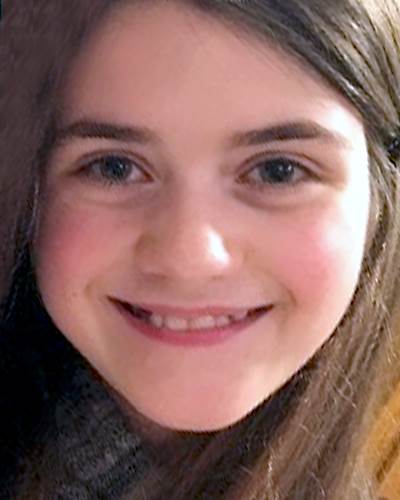
In the late winter of 1969, a young 21-year-old mother named Laura Flink, also known to her friends as Sam, disappeared from the small coastal community of Pacific Beach, Washington. On February 21st, she was last seen around 4:00 p.m., driving a red 1967 Ford Ranchero on County Road 101, heading towards Pacific Beach. Laura, a waitress and the mother of a 16-month-old son, was reportedly on her way to Moclips to pick up a couch and some children's clothing.
She was wearing a green sweatshirt, green stretch pants, moccasin shoes, and a gold corduroy jacket at the time she went missing. The circumstances surrounding her drive that day were complex; she had recently gained full custody of her son after a contentious dispute with a woman named Barb Askea, who had wanted to adopt the child. It was Barb who had offered Laura the furniture and clothing, insisting she pick them up that specific day. Concerned friends and her roommate had advised her not to go alone due to previous altercations with Barb, but unable to find anyone to accompany her, Laura set out by herself.
The days following Laura's departure brought a series of unsettling discoveries. On February 23rd, her brown leather wallet was found on a sidewalk in the nearby town of Hoquiam and was mailed to her post office box, though she would never retrieve it. The following day, February 24th, the red Ford Ranchero she had been driving was found abandoned in the 700 block of J Street in Hoquiam, outside a tavern. The discovery of her personal belongings and the vehicle she was driving, miles from her intended destination and with no sign of Laura, deepened the mystery of her disappearance and intensified the fears of those who knew her. The initial investigation into her vanishing yielded few answers, leaving her family and friends in a state of painful uncertainty.
Decades have passed since Laura Flink was last seen, yet her case remains unsolved, a lingering shadow over the Grays Harbor County community. For many years, Barb Askea denied that Laura had ever arrived in Moclips on that fateful day. However, in a 2006 phone interview with police, a year before her own death, a gravely ill Askea changed her story, admitting that Laura had indeed come for the items and that they had gone for drinks at the Moclips Tavern afterward. This admission, coming so many years later, only added to the suspicion surrounding her, though she passed away without providing any further information. Investigators have long suspected that Laura was a victim of homicide and that Barb Askea was involved, though likely not alone. Laura's son, who was just a toddler when she disappeared, was raised by his maternal grandparents and did not learn the truth about his mother's case until he was a teenager. He continues to hope for answers and the chance to bring his mother to a final resting place. The case of Laura Flink is a somber reminder of a young life cut short and a family left to grapple with questions that have echoed through generations.Last Seen: Feb 21, 1969