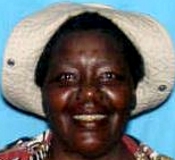
In the late summer of 1980, a young 21-year-old mother named Cherita Janice Thomas vanished from the small community of Au Sable Township, Michigan. On the evening of August 3rd, Cherita, a Black female, had been enjoying a night out with her friend and neighbor, Patricia Call. After visiting a local bar and a baseball game, Cherita borrowed Patricia's brown AMC Matador to go and pick up her four-year-old daughter and Patricia's children from the babysitter. She was last seen wearing a white blouse and maroon pants. The plan was simple: get the children, drop off the car at her friend's house, and then head home to her fiancé. However, Cherita would never complete that short journey. The borrowed car began to have trouble, stalling once at the intersection of U.S. 23 and River Road where three people helped her get it started again. It wasn't long before the vehicle stalled a second time on Sunset Street, a mere two blocks from the babysitter's residence. It was there, at approximately 11:15 p.m., that witnesses reported seeing Cherita getting into a blue pickup truck driven by a white male with a beard. The truck was seen driving off in the direction of Old U.S. 23, and Cherita has not been seen or heard from since.
The initial hours after Cherita's disappearance were filled with confusion and growing concern. When Patricia Call returned home at 2:30 a.m., she noticed her car was not in the driveway as planned. A call to her sister confirmed the children had never been picked up. Patricia then alerted Cherita's fiancé, who immediately began to search for her. They soon discovered the abandoned AMC Matador parked on the side of the road. Inside the car were Cherita's cigarettes, her house keys, and a note with directions to the babysitter's house, but the car keys were missing. The investigation into her disappearance would span decades, marked by a series of complex and often misleading leads. For many years, a violent federal fugitive who was in the area at the time and drove a similar blue pickup truck was considered a primary suspect. However, he was eventually interviewed in prison and had an alibi, ruling him out of the investigation. The case was further complicated by a bizarre incident involving a cadaver dog handler who was later found to have fabricated evidence.
Years later, the focus of the investigation shifted to a man named Jimmie Allen Nelson, who was Patricia Call's brother-in-law and had even participated in the initial search for Cherita. Nelson, who resembled the description of the man Cherita was last seen with and drove a blue truck, gave conflicting statements to the police over the years. He initially denied seeing her that night but later admitted to giving her a ride after her car broke down. In 2004, Nelson was arrested and charged with obstructing the investigation, and in 2005, he was charged with her murder. He was eventually convicted of the murder, but this conviction was later overturned in 2014 due to new evidence that reportedly implicated another individual. The details of this new evidence remain sealed. The case of Cherita Janice Thomas is a deeply troubling story of a young mother who vanished under suspicious circumstances. Despite the passage of time, the investigation has been fraught with unusual turns and a lack of definitive answers, leaving her family and community without closure. Foul play is suspected in her disappearance, and her body has never been found.
Cherita Janice Thomas was a 21-year-old woman and young mother who was last seen in Au Sable Township, Michigan, on August 3, 1980, although some published case summaries list her as 20 at the time. She had black hair and brown eyes, stood about five feet five inches tall, and weighed approximately 135 pounds. That evening, Cherita wore maroon pants and a white blouse as she went out with her friend and next-door neighbor, Patricia Call. The two women visited a local bar and then attended a softball or baseball game, leaving Cherita’s four-year-old daughter and Patricia’s two children with Patricia’s sister. What began as a social summer evening ended with Cherita stranded on the roadside, entering a blue pickup truck, and disappearing without ever reaching the child who was waiting for her.
Cherita left the game before Patricia and borrowed Patricia’s brown AMC Matador. Her plan was straightforward: she would drive to the babysitter’s home, collect the children, leave Patricia’s vehicle in Patricia’s driveway, and then return to her own home. While traveling toward the babysitter’s residence, the Matador stalled near the intersection of U.S. Route 23 and River Road. Three people passing through the area reportedly helped Cherita restart the vehicle, allowing her to continue the journey. The mechanical trouble soon returned, however, and the car stalled again on Sunset Street, only about two blocks from the babysitter’s home and less than a mile from the local police station. She had come painfully close to reaching her destination, but the disabled car left her vulnerable on the roadside late at night.
At approximately 11:15 p.m., witnesses saw Cherita getting into a blue pickup truck driven by a bearded white man. The truck then traveled away in the direction of Old U.S. 23. No confirmed account established whether Cherita knew the driver, accepted what she believed was a short ride, or entered because she had been promised assistance with the stalled car. When Patricia returned home, the Matador was not in her driveway as planned. She telephoned her sister and learned that Cherita had never arrived to collect the children. Patricia then went to Cherita’s home, where Cherita’s fiancé said she had not returned there either. The adults began searching and eventually found the Matador abandoned beside the road. Its keys were gone, but Cherita’s cigarettes, house keys, and a written note containing directions to the babysitter’s home remained inside. Cherita herself was nowhere nearby.
The belongings left in the car made the disappearance especially alarming. Cherita was a smoker, yet her cigarettes remained behind, and the presence of her house keys suggested that she expected to return home. The written directions showed that she had still been focused on reaching the babysitter and picking up the children. There was no public evidence that she had packed for a departure, arranged to abandon her daughter, or planned to leave the area. Her disappearance instead appeared to begin with an unexpected vehicle breakdown and a ride in a pickup truck whose driver became central to the investigation. Foul play was suspected, but without Cherita’s body or an established crime scene, investigators faced the difficult task of determining what happened after the truck left Sunset Street.
Police initially investigated a violent federal fugitive who had reportedly been seen in the area around the time Cherita vanished. The possibility that the fugitive had abducted her drew attention away from other people who were closer to the circumstances of her disappearance. Thirteen years later, authorities interviewed that man in prison and determined that he had an alibi, ruling him out as a suspect. Investigators then returned their attention to Jimmie Allen Nelson, Patricia Call’s brother-in-law. Nelson had lived on Sunset Street with his wife and children in 1980, worked for a logging company, drove a blue pickup truck, and reportedly resembled the bearded man witnesses had seen with Cherita. He had also taken part in the original search for her, placing him near both the family and the early investigation.
Nelson’s accounts of the night Cherita disappeared changed over time. He initially denied seeing her, but later acknowledged that he had picked her up after her car broke down. He claimed that he first drove Cherita to a friend’s home and later took her to Wiltse’s Restaurant. According to his account, the restaurant had closed, but employees who were cleaning allowed Cherita to enter. Nelson said he had concealed this information because Cherita asked him not to reveal it. Investigators found the explanation suspicious, and other witnesses reportedly said Nelson had asked them to lie in support of his story. Those witnesses refused, adding to authorities’ belief that he was hiding the truth about his contact with Cherita.
In 2004, investigators arrested Nelson in Houston, Texas, accusing him of lying to police and obstructing the investigation into Cherita’s probable murder. He was charged with murder in January 2005, along with several counts of perjury. The murder charge and nine perjury counts were dismissed later that year because prosecutors did not believe the available evidence was sufficient to proceed. In 2006, however, a jury convicted Nelson of five counts of perjury and one count of obstruction of justice while acquitting him of eight other perjury charges. He received a sentence of one year in jail and two years of probation, but credit for time already served meant that he spent less than another month in custody.
The murder investigation continued, and Nelson was charged again in April 2009. Prosecutors advanced a theory that Cherita had been killed in a racially motivated hate crime, pointing to Nelson’s reported reputation as a violent racist and the predominantly white, conservative character of the area where she disappeared. Cherita’s remains had never been found, yet the state pursued a case based on witness testimony, Nelson’s inconsistent statements, and circumstantial evidence concerning the blue truck and his admitted contact with her. In October 2010, a jury convicted Nelson of second-degree murder. He was sentenced to serve between 25 and 50 years in prison, appearing for a time to provide Cherita’s family with a legal answer after three decades of uncertainty.
That conviction did not remain in place. In February 2014, the case against Nelson was overturned, with the prosecutor supporting the decision. Court proceedings indicated that new, sealed evidence implicated another person in Cherita’s presumed murder and created enough doubt that a jury would probably not convict Nelson if the case were tried again. The nature of that evidence and the identity of the other individual were not made public. Nelson’s conviction was set aside, leaving him no longer legally responsible for Cherita’s disappearance and presumed death. No subsequent suspect has been publicly charged, and the sealed evidence has prevented Cherita’s family and the public from understanding what new theory altered the course of the case.
The Oscoda Township Police Department remains the principal investigating agency, with assistance also associated with the FBI’s Bay City office. Cherita’s case continues to appear in NamUs as an unresolved disappearance. Investigators have preserved the description of the blue pickup and the circumstances surrounding her stalled vehicle, while efforts have also been made to obtain family DNA for possible comparisons with unidentified remains. More than four decades after Cherita vanished, no publicly announced discovery has located her, identified a burial site, or conclusively established who was driving the truck in which she was last seen.
Cherita’s disappearance left her small daughter without a mother and transformed a simple trip to a babysitter’s home into a mystery that has survived changing suspects, criminal charges, a murder conviction, and the eventual reversal of that conviction. The fact that she was only blocks from the waiting children makes the final moments of her known journey particularly painful. In overview, Cherita Janice Thomas disappeared after her borrowed car broke down twice in Au Sable Township on August 3, 1980. Witnesses last saw her entering a blue pickup driven by a bearded man, and Jimmie Allen Nelson was later prosecuted and convicted of her murder before new evidence caused that conviction to be overturned. Cherita has never been found, no one currently stands convicted in connection with her disappearance, and her case remains an unresolved search for both her whereabouts and the truth about who took her away that night.
Last Seen: Aug 3, 1980