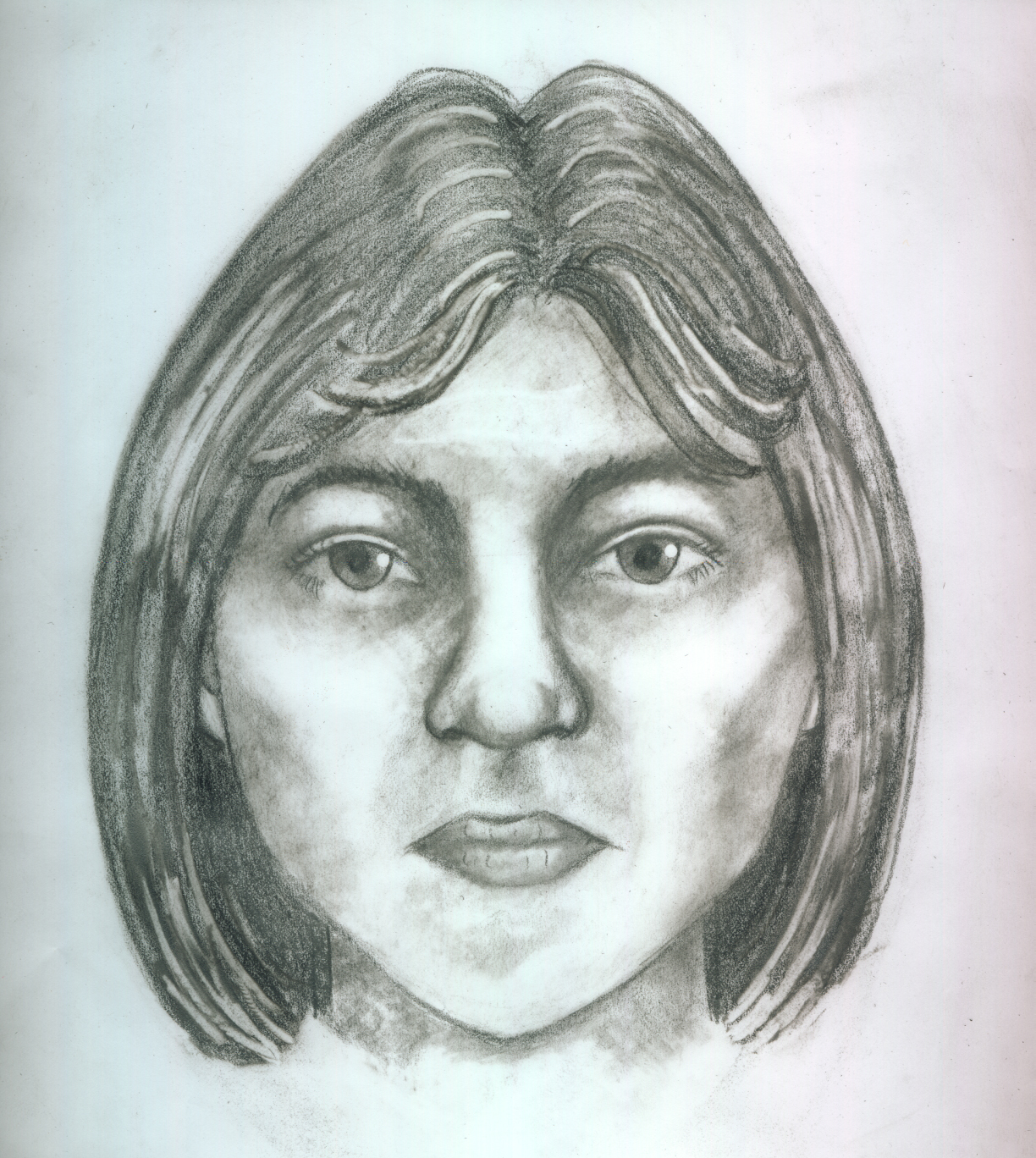
On February 5, 1981, a 14-year-old girl named Dean Marie Pyle Peters, affectionately known as 'Deanie,' vanished from Grand Rapids, Michigan. That evening, she was with her mother at Forest Hills Central Middle School to watch her younger brother's wrestling practice. At some point during the event, Dean told her mother she was going to the restroom but never came back.
She was wearing a brown ski jacket, a pink sweater, blue Levi's jeans, and a cream-colored scarf that had the word 'SKI' written on it in dark brown letters. Dean, who had brown hair and brown eyes, was a student at the school and had dreams of becoming a model. Her disappearance on that cold and snowy day would evolve into one of the most perplexing mysteries in Kent County.
The initial investigation into Dean's disappearance quickly ruled out the possibility of her being a runaway. She had left behind personal belongings that she was known to never go anywhere without, including her wallet, makeup, and purse. An immediate search of the area commenced, involving law enforcement and volunteers. The school's janitor was briefly considered a person of interest, and investigators even checked the school's incinerator, but he was soon cleared of any involvement. Despite extensive searches, including the use of divers in a nearby pond and cadaver dogs, no trace of Dean was found. Students who were at the school that evening were questioned, but no one reported seeing her in or near the restroom, adding to the confusion of her last known movements.
Over the decades, several theories and potential suspects have emerged, but none have led to a resolution. One theory involved a 17-year-old named Bruce Bunch, who allegedly confessed to friends that he had accidentally hit Dean with his car in the school parking lot, panicked, and buried her body. Bunch, who died in 2008, was never charged in connection with the case. Another man claimed that he and others had accidentally struck a girl named 'Deanie' with their car in a school parking lot and later buried her body along the Flat River. In a more recent development in July 2021, a man named James Douglas Frisbie was charged with perjury related to the investigation. Prosecutors alleged he lied about information he provided to the police regarding possible suspects. However, these charges were later dismissed. Foul play is suspected in Dean's case, and she was legally declared dead in 1991, ten years after she vanished.
The case has left an indelible mark on Dean's family and the community. Her mother and stepfather eventually moved to Arizona. Friends and former classmates have gathered to remember her and discuss the case, hoping to keep her memory alive and generate new leads. Artwork depicting an age-progressed image of Dean was even created and unveiled to help keep the case in the public eye. The disappearance of Dean Pyle Peters remains an unsolved case that has haunted Kent County for decades. Despite numerous interviews, searches, and the investigation of various leads, what happened to the 14-year-old girl after she walked out of the school gymnasium is still unknown. The lack of answers has left her loved ones without closure, forever wondering about her fate on that winter evening in 1981.
Dean Marie Pyle Peters, known to those close to her as “Deanie,” was a 14-year-old White girl when she disappeared from Grand Rapids, Michigan, on February 5, 1981. She was last known to have been at school, an ordinary setting that should have offered familiarity and safety, but she never returned to her family and has not been reliably seen since. Dean was approximately five feet two to five feet three inches tall and weighed about 110 pounds. She had shoulder-length, medium-brown hair, brown eyes, pierced ears, and a birthmark on her lower back. When she vanished, she was wearing a pink sweater, blue Levi’s jeans, white knee socks, and a brown ski jacket. She also had a cream-colored scarf bearing the word “SKI” in dark-brown letters. What happened after she was last seen remains unknown, leaving her family with a disappearance that began during a routine school day and continued without a confirmed explanation.
The surviving public record provides frustratingly little detail about Dean’s final known movements. It does not clearly describe when she arrived at school, which classes or activities she attended, who spoke with her last, or the precise point at which others realized she was missing. There is no publicly documented indication that she had prepared to run away, arranged transportation, packed clothing, or told anyone that she planned to leave Grand Rapids. No vehicle is listed in connection with her disappearance, and the available information does not establish whether she left the school grounds willingly, was persuaded to go somewhere with another person, or was taken against her will. Because Dean was only 14, the absence of any dependable trail after she was last seen caused immediate and lasting concern that she may have encountered someone who intended to harm or exploit her.
The clothing Dean wore has remained an important part of her identification. Her brown ski jacket, pink sweater, blue jeans, white socks, and cream scarf would have made her recognizable to anyone who saw her that day. She may also have been wearing earrings, although the specific style is unknown. Investigators have preserved photographs of Dean and, as the years passed, specialists produced age-progressed images showing how she might have appeared as an adult. One progression depicted her at approximately 40 years old, while a later image portrayed her at about 47. These reconstructions were created because a missing child’s face changes substantially over time, and investigators could not rule out the possibility that Dean might have survived and lived under another name or in circumstances that prevented her from returning home.
Dean’s parents also provided DNA reference samples to assist with the investigation. Samples from both her mother and father were processed through the Federal Bureau of Investigation Laboratory, and available genetic profiles were entered into the national DNA system. Those family samples can be compared with unidentified remains recovered anywhere in the United States, offering a modern investigative tool that did not exist when Dean disappeared in 1981. The collection of DNA does not mean that remains believed to be Dean’s have been found; rather, it gives authorities a way to test future discoveries and to revisit unidentified-person cases that may have been entered into national databases years after her disappearance.
The Kent County Sheriff’s Department has remained the investigating agency in Dean’s case, which is also listed with the National Center for Missing & Exploited Children. Publicly available records do not identify an arrest, a charged suspect, or a person formally named as responsible for her disappearance. They also do not disclose physical evidence that conclusively shows where she went after leaving the area where she was last seen. With no publicly confirmed later sighting and no known recovery, investigators and Dean’s family have been left to consider several possibilities, including that she encountered someone near the school, accepted a ride from a person she knew, or was approached by a stranger. None of those possibilities has been proven, and the limited public information makes it important not to treat speculation as fact.
More than four decades have passed since Dean disappeared, but the years have not diminished the uncertainty surrounding her fate. Those who loved her were forced to watch birthdays, holidays, and family milestones pass without knowing whether she was alive, whether she needed help, or whether someone had concealed what happened to her. Her photographs and age-progressed images preserve the face of the teenager who disappeared, while the DNA supplied by her parents represents the family’s continuing effort to make sure she can be identified if new evidence is ever discovered. In overview, Dean Marie “Deanie” Pyle Peters was a 14-year-old girl last seen at school in Grand Rapids on February 5, 1981; she vanished without a confirmed destination or subsequent sighting, no publicly identified suspect has been charged, and her unresolved case remains an enduring search for the missing child who never came home.Last Seen: Feb 5, 1981